Goertek Unveils Comprehensive XR Portfolio at CES 2026, Highlighting Full-Scene AI Glasses and Advanced Optical Solutions

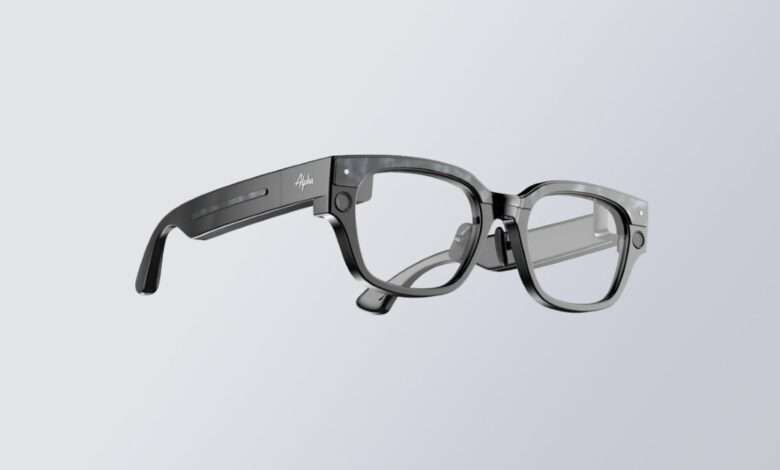
Goertek, a key player in the extended reality (XR) ecosystem, marked its presence at this year’s CES in Las Vegas, which opened on January 6, with the launch of its expansive “XR New Year Package.” The showcase features a full spectrum of innovations, from the flagship binocular full-color AR glasses “Rubis”—which integrate a Tri-Chip architecture and EMG interaction—to the sleek, lightweight “Spinel” AI glasses and the “Euler1.5” mixed reality (MR) reference design. The exhibit also includes a diverse array of AR optics, VR optics, and sensing solutions, collectively demonstrating the breadth of Goertek’s integrated capabilities and the maturity of China’s smart manufacturing in the global consumer electronics sector.
I. Flagship Innovation: Binocular Full-Color AR Glasses Reference Design “Rubis” Debuts with Tri-Chip Architecture and EMG Interaction
The path to mainstream adoption of consumer AI-powered AR glasses has been hindered by the fundamental challenge of balancing high-quality display, computational efficiency, and seamless interaction. The newly unveiled “Rubis” full-color, multimodal AR glasses reference design presents a system-level engineering approach to this complex balancing act.
At the core of the near-eye display system, “Rubis” incorporates Goeroptics’ proprietary full-color etched waveguide display module. This vertical-format optical solution enhances adaptability to real-world use cases, clearly rendering content such as camera previews, AI prompts, and translation overlays while minimizing obstruction of the user’s natural field of view and reducing visual isolation.
Departing from conventional single-system-on-chip designs, the “Rubis” employs a heterogeneous architecture that integrates MCU, ISP, and NPU chips. This structure optimizes the data pipeline from camera capture through image processing, neural network computation, and final display via efficient inter-chip communication. The distributed computing approach not only delivers superior power-performance efficiency but also enables the glasses to run persistent, lightweight object-detection models on the dedicated NPU at ultra-low power—laying the technical foundation for a true “Always-On AI” experience.
From an industrial design perspective, the “Rubis” model blends sheet-material accents into a classic frame silhouette, complemented by a modular nose pad system that prioritizes both individual fit and long-wear comfort.
Addressing a critical barrier to intuitive control, the “Rubis” is paired with an accompanying EMG neural wristband. This solution was developed in-house and achieves gesture recognition accuracy exceeding 90%. Through highly sensitive sensors, users can control the AR glasses reliably with subtle finger motions, effectively overcoming the limitations of touch-based interfaces and enabling discreet, effortless interaction.
II. Lightweight AI Glasses and Sub-100g MR Design: New Approaches to Wearable Comfort
Alongside its exploration of next-generation flagship concepts, Goertek also unveiled a suite of reference designs that directly address current market demands for lightweight form factors and fluid interactivity in smart glasses and MR headsets.
1. AI Glasses Reference Design “Spinel”: Redefining Daily Wear with an Ultra-Lightweight Form
The AI glasses reference design “Spinel” achieves a breakthrough in ergonomics with a total weight of just 35g. It pairs a fashionable aesthetic and extended battery life with high-definition imaging capabilities, establishing a foundation for all-day wearability.
Its imaging system supports 4K (4032×3024) photo capture and 1080p/30fps continuous video recording for up to one hour, enhanced with Electronic Image Stabilization (EIS) and High Dynamic Range (HDR) functionality. This positions the device not only as a tool for everyday life documentation but also as a capable source for high-quality video output, serving as a practical, hands-free shooting accessory.
Furthermore, the “Spinel” integrates proactive AI visual perception. Through continuous, low-power capture of the environment at low resolution and frame rate, the device can transition from a reactive “command-and-response” model to one that anticipates user needs, creating a technical pathway for context-aware, proactive services.
2. “Rox Vision”: An Instant AI Upgrade for Traditional Eyewear
To address the vast installed base of conventional eyewear users, Goertek introduced an innovative accessory solution at CES: the “Rox Vision” AI Smart Glasses Accessory Reference Design.
“Rox Vision” challenges the integrated design paradigm of traditional smart glasses by proposing a novel, modular approach. It decouples core functionalities—visual capture, audio interaction, and AI processing—into a single, compact accessory that can be easily attached to standard glasses.
This strategy preserves the essential optical correction and style of existing eyewear while adding generative AI interaction capabilities at a potentially accessible cost point, demonstrating the practical viability of a “snap-on AI assistant” in the wearables space.
Tackling the critical comfort challenge inherent to add-on devices, “Rox Vision” employs advanced structural stacking and high-density PCB integration to house high-resolution imaging modules and sufficient battery capacity within a micro-footprint. The total weight is rigorously controlled under 15g, achieving a near-imperceptible wear experience.
For core sensing, the design incorporates a 105° ultra-wide field-of-view camera in a minimized module size, ensuring comprehensive and immersive First-Person View (FPV) footage that provides high-fidelity input for AI visual analysis. In audio, leveraging vertical integration, the product utilizes Goertek’s proprietary customized SBS speaker system and MEMS microphones to deliver a high-quality, closed-loop voice interaction experience.
3. Breaking the 100g Barrier: A Lightweight Blueprint for MR Headsets
While MR technology gains momentum, device weight remains a significant physical barrier to prolonged use, with many all-in-one headsets inducing fatigue within thirty minutes of wear.
Goertek’s newly unveiled Ultra-Lightweight MR Reference Design applies advanced engineering in structural stacking and material selection to reduce the core headset mass to approximately 100g—roughly one-fifth the weight of conventional devices—making the vision of “imperceptible wear” a possibility.
Despite its radical weight reduction, the design does not compromise on visual fidelity. It incorporates a 1.35-inch 4K Micro-OLED display paired with a self-developed 3P Pancake optical module, delivering 38 Pixels Per Degree (PPD) retinal-grade clarity within a 100-degree field of view. The design fully integrates Video See-Through (VST), 6 Degrees of Freedom (6DoF), and other interactive solutions. This configuration is purpose-built to comfortably support extended sessions of media consumption, light productivity tasks, and casual gaming, charting a clear path forward for mainstream MR adoption.
III. From AR Full-Color Polymer Waveguides to Electrically Tunable Liquid Crystal Lenses: Defining the Next Frontier in XR Optics
At CES, Goertek’s exhibition further extended to a comprehensive suite of optical solutions for AR and MR applications, with a particularly noteworthy breakthrough in Electrically Tunable Liquid Crystal Lens technology.
In the realm of AR optics, Goeroptics unveiled its full-color polymer optical module, “F15Pi,” engineered to strike an optimal balance between lightweight design and high-fidelity image quality. Polymer materials offer inherent advantages over glass, including reduced weight and improved durability, making them a safer choice for lightweight AR eyewear. Historically, however, their lower refractive index has often resulted in optical artifacts such as pronounced rainbow effects. At this year’s CES, Goeroptics demonstrated significant progress by utilizing high-refractive-index polymer materials, optimized micro-nano structures, and ergonomic design to remove rainbow artifacts while achieving a waveguide grating transmittance exceeding 92%. Coupled with an industry-leading, highly efficient full-color Micro-LED light engine—remarkably compact at just 0.2cc and 0.5g—this module presents a viable optical solution for all-day wearability.
Pushing the boundaries of advanced optical materials and processes, Goeroptics also showcased its fully bonded Silicon Carbide (SiC) etched waveguide module. Using the exceptionally high refractive index of SiC, this module achieves a record-breaking profile of just 0.65mm in thickness and a weight of 3.5g, establishing a new industry benchmark for slimness and lightness. At a 30° field of view, it delivers crisp imagery with excellent color uniformity.
Furthermore, Goeroptics introduced the F25Ge full-color etched waveguide, specifically engineered for high-ambient-light outdoor scenarios. When paired with a 0.2cc high-efficiency full-color Micro-LED light engine, it achieves a peak intraocular brightness of 4,200 nits.
In the MR domain, Pancake solutions continue to advance toward greater miniaturization. The Xinghe LE51-D integrates optical power adjustment from -7.00D to +2.00D within a slim profile of just 14mm—a significant benefit for the global population of myopic users—and features a 1.03-inch Micro-OLED display offering an 85.5° field of view. For applications demanding an even thinner form factor, the Xinghe LE52 utilizes a 0.68-inch screen with a total track length (TTL) of only 13.6mm.
Regarding groundbreaking advancements in core XR optical technology, Goertek unveiled its Electrically Tunable Liquid Crystal Molecular Focusing solution at CES. As widely recognized in the industry, Vergence-Accommodation Conflict (VAC) remains a fundamental challenge in XR. This conflict arises from a mismatch between the focal distance of light rays from a virtual object and the actual focusing distance required by the human eye, causing a dissonance between vergence (eye rotation) and accommodation (lens adjustment). The result is user discomfort, including visual fatigue, headaches, blurriness, and even motion sickness.
Electrically Tunable Liquid Crystal Molecular Focusing technology enables dynamic optical adjustment and vision correction, addressing this persistent industry problem. Specifically, its variable-focus liquid crystal lens employs an electronic drive mechanism. By modulating the applied voltage, the alignment of the liquid crystal molecules is altered, enabling a continuous diopter adjustment range from -3.00D to +3.00D to compensate for myopia and hyperopia.
Notably, this liquid crystal lens can be fabricated with a thickness of less than 1mm and an aperture exceeding 25mm. Its slim, lightweight, and highly integrable profile allows for application not only within VR and MR headsets but also for embedding into the optical path of AR glasses. This integration enables users with refractive errors to experience clear vision without the need for additional corrective lenses, substantially improving wearability and user convenience.
From architectural innovations in chipset design and interaction paradigms to breakthroughs in optical materials, Goertek’s CES 2026 portfolio responds directly to core industry hurdles in display performance, wearability, and usability. As the XR sector moves toward broader commercialization, Goertek’s demonstrated ability to integrate solutions from underlying technology to complete product design provides the market with versatile and practical pathways for adoption.
Looking ahead, the diversity of technical approaches on display points toward a maturing and increasingly segmented XR ecosystem. The market’s response to these various implementations will ultimately steer the industry’s evolution in meeting real-world user needs.