BYTON Gears Up for the 2019 Production Launch of M-Byte at CES Las Vegas

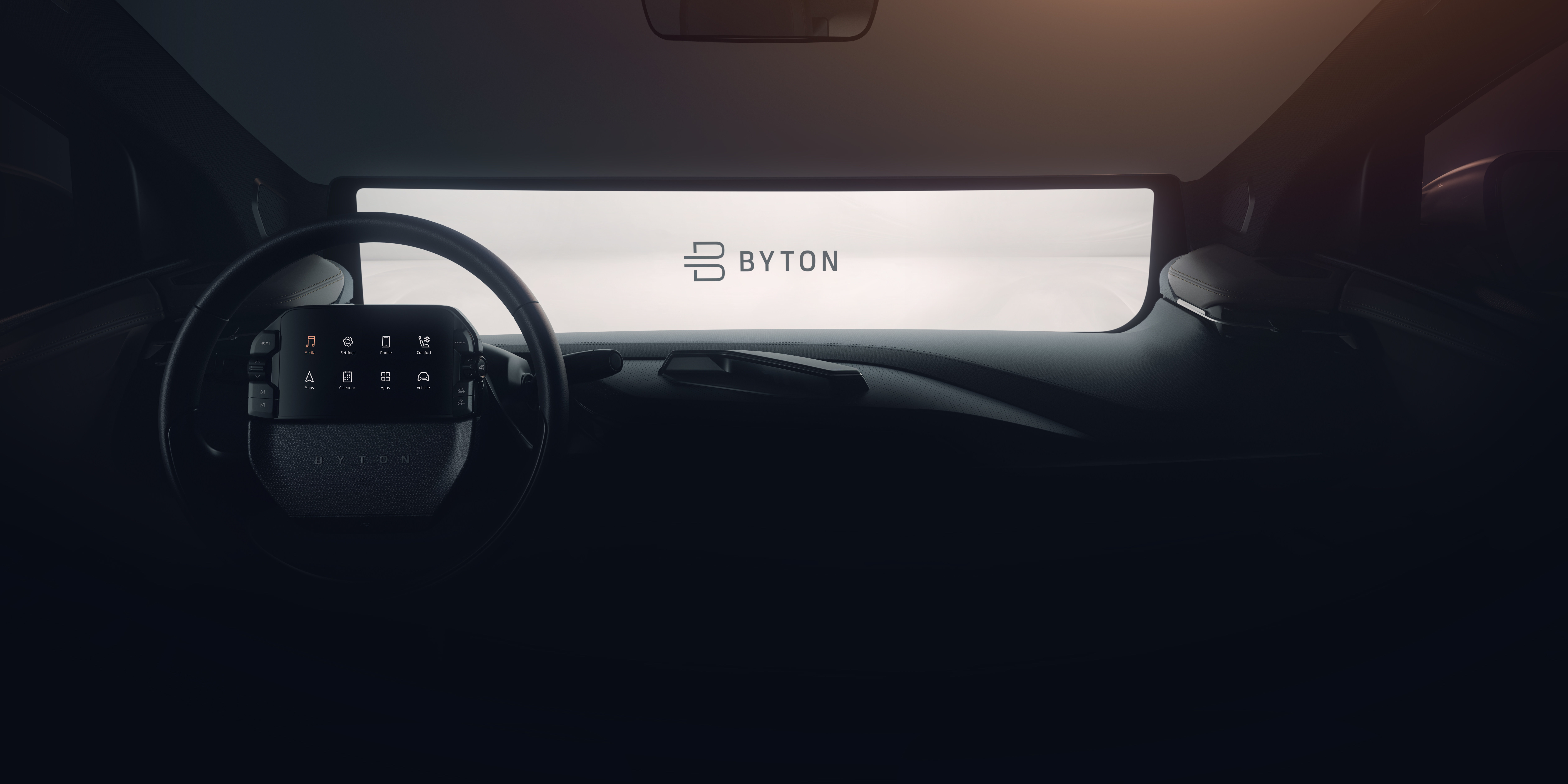
LAS VEGAS, Jan. 3, 2019 /PRNewswire/ — Intelligent electric vehicle maker BYTON will showcase its latest innovations in vehicle interiors, user interface (UI), and technology platforms at CES Las Vegas 2019, its sophomore appearance at the conference. In 2018, BYTON debuted its M-Byte SUV Concept and one year later it’s readying the M-Byte SUV for production, scheduled for late 2019. The groundbreaking EV goes on sale in China starting at the end of 2019 and in the U.S. and Europe in mid-2020.
BYTON’s return to CES Las Vegas illustrates how rapidly the company is emerging as a leader in the electric vehicle industry and changing the future of shared mobility, reflecting the forces of electrification, autonomy, and connectivity as they alter the face of the traditional automotive industry. BYTON’s vehicles are smart devices on wheels, featuring high-speed connectivity and the industry’s first Shared Experience Display (SED), a coast-to-coast, full-dash screen that delivers an unmatched digital user experience. With its cutting-edge and intelligent in-car UI, BYTON is seamlessly blending digital technology and automotive design to deliver the most intuitive, connected, and personalized mobility experience.
BYTON’s activities at CES Las Vegas 2019 include the following and its booth (#8515) can be found in the North Hall of the Las Vegas Convention Center.
- BYTON Press Conference: On Sunday, January 6, at 3:00 pm PST, BYTON will host a press conference to share several updates of near-production designs for the M-Byte’s interior, UI, and technology platform. In addition, the company’s overall growth and expansion since CES 2018 will be highlighted. Please RSVP to attend the BYTON Press Conference in the Oceanside Ballroom A of Mandalay Bay.
- In-Booth Product Presentations: From Tuesday, January 8, to Friday, January 11, BYTON will host hourly in-booth product presentations showcasing its technology platforms and UI, including its proprietary SED.
About BYTON
It is not about refining cars. It is about refining life.
BYTON aspires to build premium intelligent electric vehicles for the future. Its crafted cars integrate advanced digital technologies to offer customers a smart, safe, comfortable and eco-friendly driving and mobility experience. BYTON aims to create a premium brand rooted in China that has a global reach. Its global headquarters and intelligent manufacturing base are located in Nanjing, China, while its North American headquarters – devoted to intelligent car experience, autonomous driving, whole vehicle integration, and other cutting-edge technologies – is based in the Silicon Valley. The company’s vehicle concept and design center is in Munich, Germany.
Official website: www.BYTON.com