Wheaties Unveils Football Pros and Brothers J.J and T.J. Watt as the Next Faces of the Iconic Wheaties™ Box

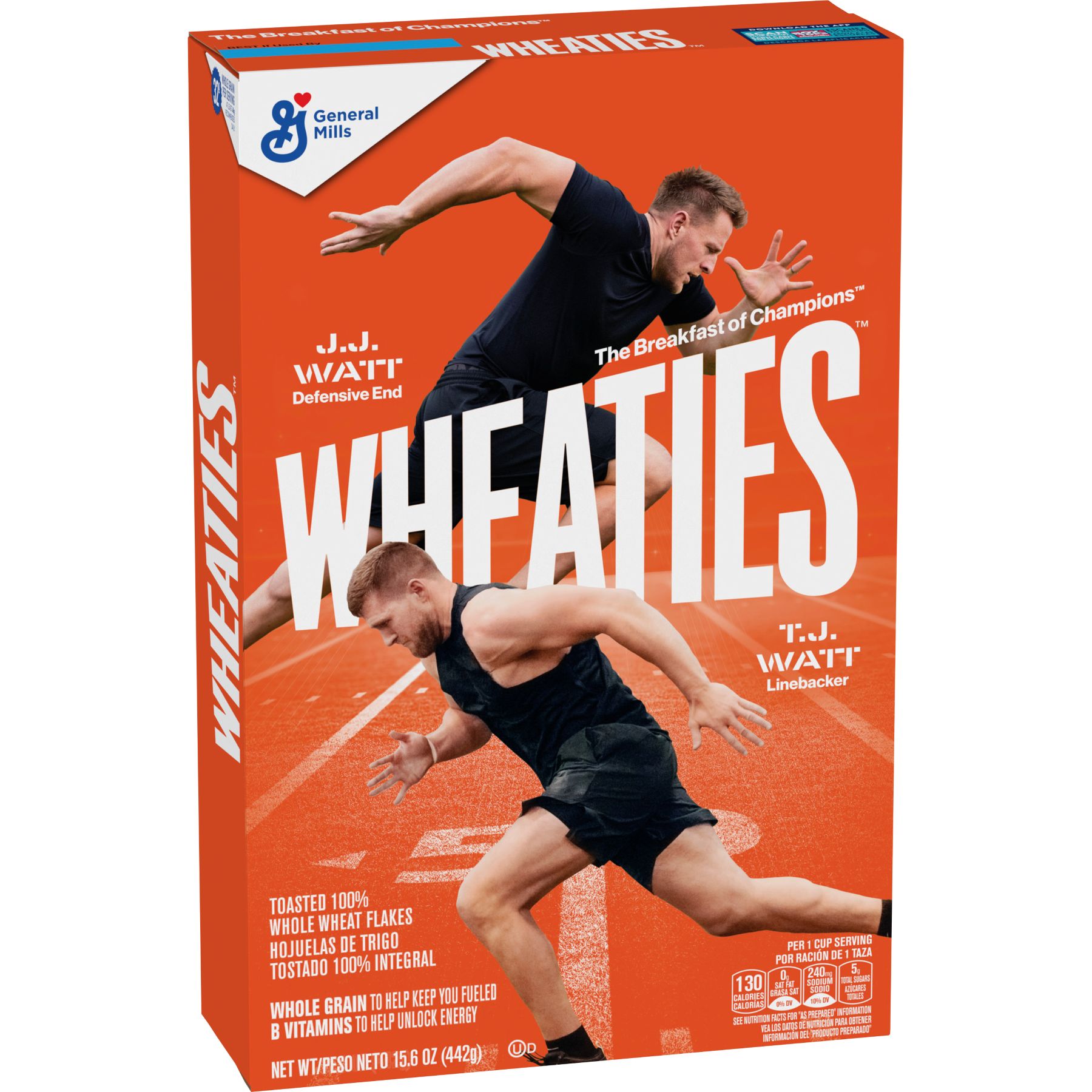
Wheaties announced today that its latest legendary orange box features professional football athletes and brothers J.J. Watt and T.J. Watt. From the backyard to the big game, the Watt brothers have always prioritized family and community throughout their historic football careers—making them the perfect Wheaties Champions and first-ever brother pair to be featured on the Wheaties box.
“It is a childhood dream come true to be on the next Wheaties box”Tweet this
“Built around a uniting love for football, the Watt family is grounded in perseverance, togetherness, and a commitment to doing the right thing when it matters most, while serving communities in their lives outside of football,” said Kathy Dixon, senior brand experience manager for Wheaties. “That’s what being a Wheaties Champion is all about, and one of the many reasons we’re so proud to feature J.J. and T.J. on the cover of this limited-edition box.”
For more than 100 years, the iconic Wheaties box has boasted prominent athletes on the front, honoring what it means to be a Champion and recognizing those who are not only the best at their sports, but who have broken barriers and made significant contributions to the world at large.
After successful high school football careers, the Watt brothers each went on to play at the college level in their home state of Wisconsin. J.J. was selected #11 Overall Pick in the 2011 draft and went on to have a groundbreaking 11-year professional football career before retiring in Arizona after the 2022 season. T.J., who was named the best defensive player in the league in 2021, was drafted in the first round to play alongside his brother Derek in Pittsburgh in 2017, where he became the first rookie starting linebacker for the team in 30 years.
While maintaining successful athletic careers, J.J. and T.J. have kept service at the forefront of their lives outside the sport. Notably, J.J. founded the Justin J. Watt Foundation that provides after-school opportunities for children to get involved in athletics in a safe environment. J.J. and T.J. have both also participated in efforts to help those in need after some of the most impactful events in the United States over the past decade including Hurricane Harvey and participation in the Make-A-Wish foundation. In celebration of the new box, Wheaties is donating $100,000 to the Justin J. Watt Foundation to help in its work of creating safe, after-school athletic opportunities for middle schoolers.
This is the first time that Wheaties has chosen a duo to be featured since 1934, and the first brothers to be on the cereal box together.J.J. and T.J. are also joined by their brother Derek, who is featured on the back of the box. Past athletes highlighted on the Wheaties box include Simone Biles (2022), Michael Jordan (2021) and Lebron James (2020).
“It is a childhood dream come true to be on the next Wheaties box,” J.J. and T.J. said. “To be included among the incredible roster of athletes who have been featured over the years is a true honor. We hope this box is a reminder for athletes and people everywhere to persevere – on the field and in life – and always champion what you’re passionate about.”
The Watt brothers limited-edition Wheaties Box will be available at major retailers nationwide in early August.
ABOUT WHEATIES
Wheaties is an iconic brand that has been a part of American culture for 100 years. In 1934, Wheaties honored Lou Gehrig as its first cover athlete and has celebrated champions on its iconic orange cereal boxes ever since. Some of the greatest athletes in history have been honored on Wheaties boxes. The team behind “The Breakfast of Champions” has redefined what it means to be a Champion and to champion, reserving its cover for athletes who are using their sports platform for something greater. Wheaties believes the world needs more champions who champion. To view more about Wheaties, or shop for products, visit www.wheaties.com.
ABOUT GENERAL MILLS
General Mills makes food the world loves. The company is guided by its Accelerate strategy to drive shareholder value by boldly building its brands, relentlessly innovating, unleashing its scale and standing for good. Its portfolio of beloved brands includes household names such as Cheerios, Nature Valley, Blue Buffalo, Häagen-Dazs, Old El Paso, Pillsbury, Betty Crocker, Yoplait, Totino’s, Annie’s, Wanchai Ferry, Yoki and more. Headquartered in Minneapolis, Minnesota, USA, General Mills generated fiscal 2023 net sales of U.S. $20.1 billion. In addition, the company’s share of non-consolidated joint venture net sales totaled U.S. $1.0 billion.