The Lagunitas Brewing Company Brews its First Sparkling Hard Tea

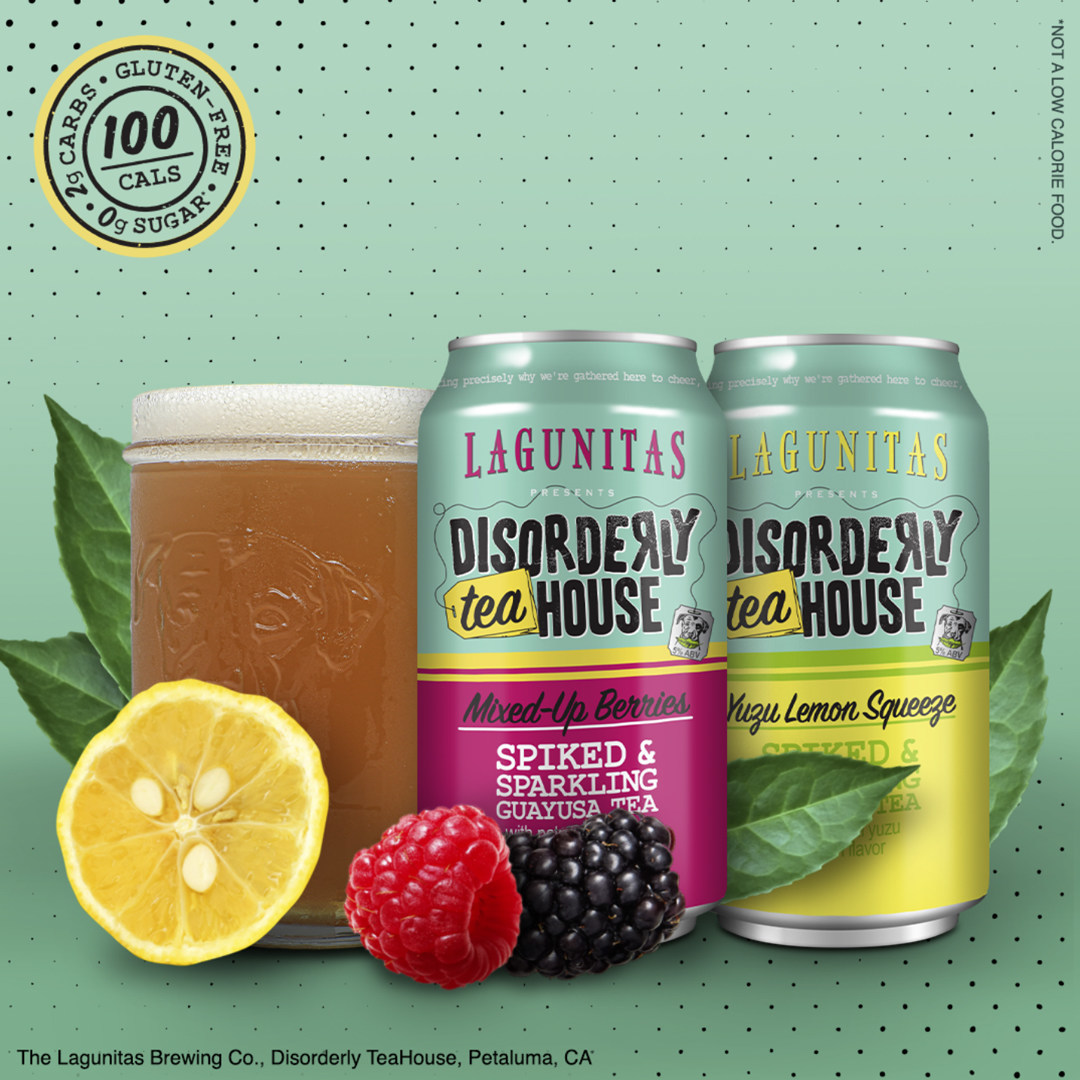
The Lagunitas Brewing Company, a brewery with a history of hop-forward and innovative craft beers, has taken its craft brewing know-how into the world of tea, with the launch of Disorderly TeaHouse premium spiked and sparkling tea. This freshly brewed, just slightly sweet hard tea features natural fruit flavors, like yuzu lemon, raspberry and blackberry.
Disorderly TeaHouse is the first hard tea to be fresh-brewed with premium guayusa tea leaves that are hand-picked by Indigenous farmers from Ecuador. Guayusa [gwahy-yoo-suh] is described as “ancient energy” and Lagunitas deliberately chose it because of its slightly sweet, smooth, and never bitter flavor. After selecting only the finest guayusa tea leaves, Lagunitas brews the tea in-house to give Disorderly TeaHouse its authentic taste. Then, natural fruit flavors are added to provide a crisp finish to Disorderly TeaHouse’s two available varieties: Yuzu Lemon Squeeze and Mixed-Up Berries.
“Lagunitas saw an opportunity to create our first hard tea that taps into people’s growing demand for a better-for-you alcoholic beverage — coming in at just 100 calories with 0 grams of sugar* and gluten-free. Nothing artificial,” said Paige Guzman, Lagunitas’ Chief Marketing Officer. “We’ve seen the hard seltzer and premium malt beverage market become so oversaturated, and wanted to offer up an alternative that spoke to the authenticity of our heritage in the craft brewing process and gives consumers a more premium offering.”
Hard teas are building in popularity among consumers. In fact, tea is growing at 50%, which is 8 times faster than total beer.*
“Our brewers have been fans of guayusa tea for years because of the clean, unique flavor and smooth energy it produces; it felt natural to innovate using 100% hand-selected and hand-harvested guayusa tea as the featured ingredient for Disorderly TeaHouse, elevating the whole profile of the beverage,” said Jeremy Marshall, Lagunitas BrewMonster. “And then we don’t load it up with artificial sweeteners or flavors. It’s a premium, balanced tea-forward taste paired with delicious and thoughtful natural fruit flavors that we think people will love, especially as we move into the warmer seasons.”
Spilling the Tea on Disorderly TeaHouse
In true Lagunitas fashion, the name is inspired by its rebellious nature and history. Back in 2005, the brewery was served a citation for keeping a “disorderly house” by the California Department of Alcoholic Beverage Control, and the brewery was promptly shut down temporarily. Disorderly TeaHouse reflects the combination of the charge and a traditional tea house.
Disorderly TeaHouse is a different kind of brew that brings a twist to classic tea flavors. Both of the current varieties are earthy and herbal along with a splash of flavorful fruits. The Yuzu Lemon Squeeze has a whisp of aromatic, tart yuzu citrus love, while Mixed-Up Berries has subtly sweet raspberry and blackberry fruitiness. Each Disorderly TeaHouse has only 5% Alcohol by Volume, 100 calories, 2 grams of carbs, 0 grams of sugar** and gluten-free. So #SteepOnThat!
Ready to get a little Disorderly? Disorderly TeaHouse comes in 19.2 oz. single-serve cans for MSRP $2.99 and single-flavor 6-packs of 12 oz. cans for MSRP $11.99. It is available nationally at various retailers, including Sprouts, Meijer, Whole Foods, Trader Joe’s, and Safeway, among others. Check out Lagunitas’ brew finder to pick up some today or have some delivered to your door.
For more details about Disorderly TeaHouse, visit: https://lagunitas.com/disorderlyteahouse/
About The Lagunitas Brewing Company
When The Lagunitas Brewing Company started on a kitchen stove back in 1993, no one could have imagined that a small, Northern California brewery would expand to more than 38 countries and have the #1 selling IPA in the world. During its history of making innovative craft brews, it has created an iconic line of hop-forward beers including: Lagunitas’ Flagship IPA, Daytime, Hazy Wonder, A Little Sumpin’ Sumpin’, Maximus and Super Cluster. And there is now a seat at the bar for everyone. Lagunitas’ next chapter of innovations include a craft brewed non-alcoholic beer, seltzer and hard sparkling tea for full-flavored imbibing: IPNA, Hoppy Refresher, and Disorderly TeaHouse. Even as its offerings have evolved, its passion for edgy brewing, fresh music, strong sense of community, and of course, dogs, have remained the backbone of brewery. To learn more about The Lagunitas Brewing Company, visit: www.LAGUNITAS.com.
*Source: Numerator Cross Purchase Last 6 months ending 4/30/2021
**Per 12 oz. Serving. Not a low-calorie food.