Nickel-hydrogen technology is safe, durable, and long-lasting – now it’s affordable too.
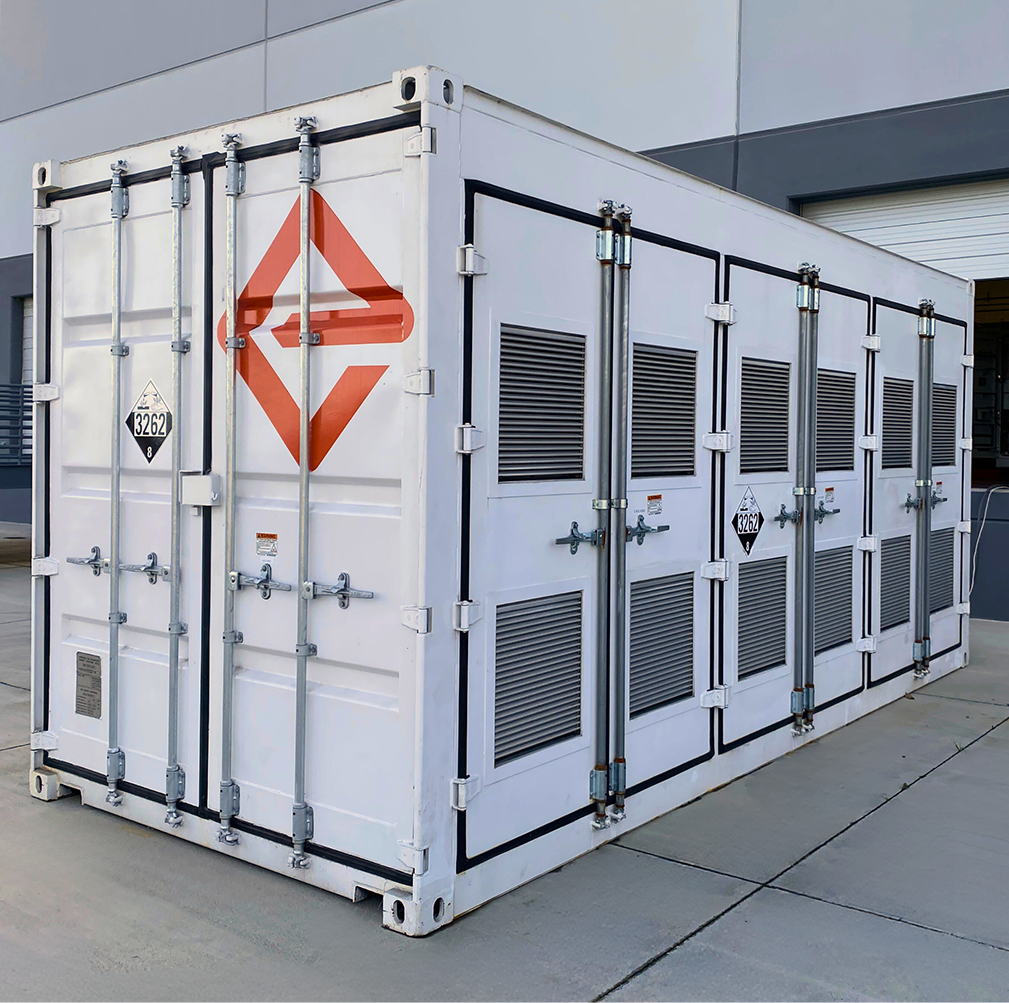
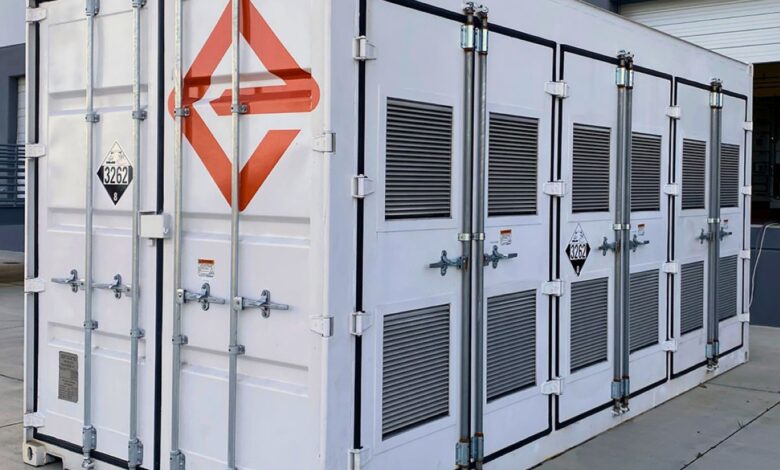
EnerVenue’s batteries don’t require energy-consuming temperature control or maintenance and can be stored anywhere, including in the company’s “EnerStation” battery station, pictured here.
Credit: EnerVenue, Inc.
Battery technology that has powered the International Space Station, the Hubble Space Telescope, and numerous satellites is now storing energy on Earth, enabling intermittent renewable energy sources to provide steady power.
These extremely durable batteries were made more affordable for the average consumer by California-based EnerVenue Inc., which was able to bring down the cost of the technology by removing the need for expensive platinum, making terrestrial applications more feasible. With the cost-saving innovations, the batteries could be used for power plants, businesses, and homes.
NASA first used nickel-hydrogen batteries in 1990 for the Hubble Space Telescope — the technology’s debut in low-Earth orbit on a major project. It was the primary power system for the International Space Station for more than 18 years before eventually being replaced by lithium-ion batteries.
Each nickel-hydrogen cell consists of a nickel cathode — the positive electrode — and a hydrogen-catalyzed anode, which typically uses expensive platinum. Charging the battery generates hydrogen inside the highly pressurized vessel, which then gets reabsorbed on discharge.
Dr. Yi Cui , EnerVenue Chief Technology Advisor, developed a technique to remove platinum from these batteries, dramatically reducing costs of technology that had grown more sophisticated over decades of NASA adapting it to high-level missions. Much of the groundwork for EnerVenue’s batteries was laid by NASA.
Having laid the foundation and tested it in space, NASA paved the way for a durable power source that is now available for several applications on Earth.
About The Author