Crews at NASA’s Stennis Space Center recently completed activation of interstage gas systems needed for testing a new SLS (Space Launch System) rocket stage to fly on future Artemis missions to the Moon and beyond.
The activation marks a milestone in preparation for future Green Run testing of NASA’s exploration upper stage (EUS) in the B-2 position of the Thad Cochran Test Stand. For Green Run, teams will activate and test all systems to ensure the stage is ready to fly. Green Run will culminate with a hot fire of the stage’s four RL10 engines, just as during an actual mission.
The interstage simulator component will function like the SLS interstage section that protects the upper stage during Artemis launches. The interstage simulator will do the same during Green Run testing of the stage at NASA Stennis.
The interstage simulator gas system will provide helium, nitrogen, and hydrogen to the four RL10 engines for all wet dress and hot fire exercises and tests.
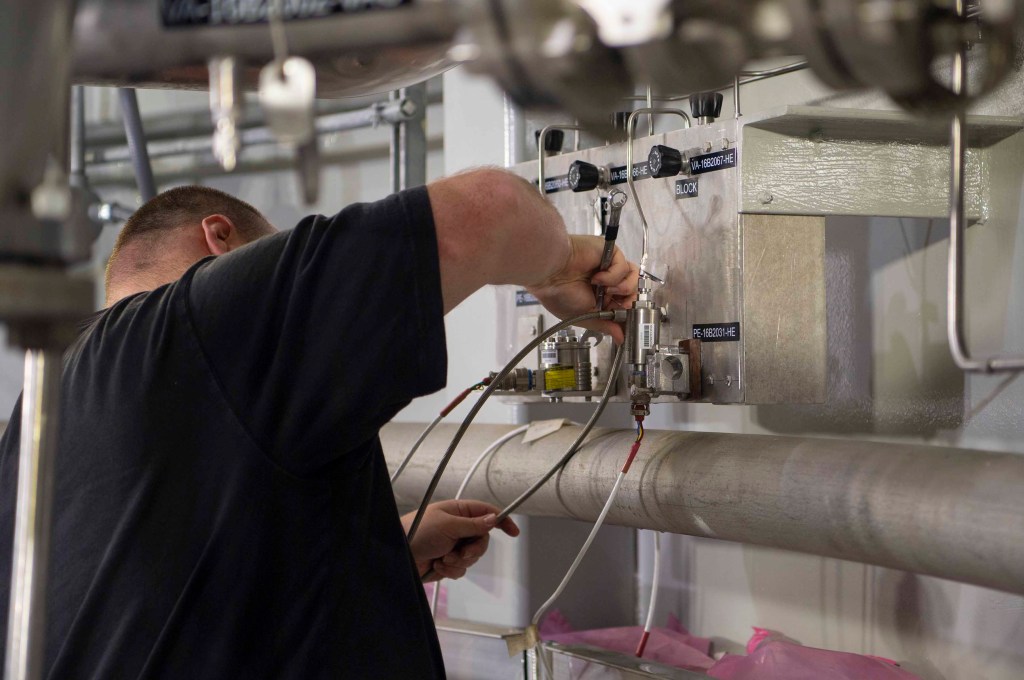
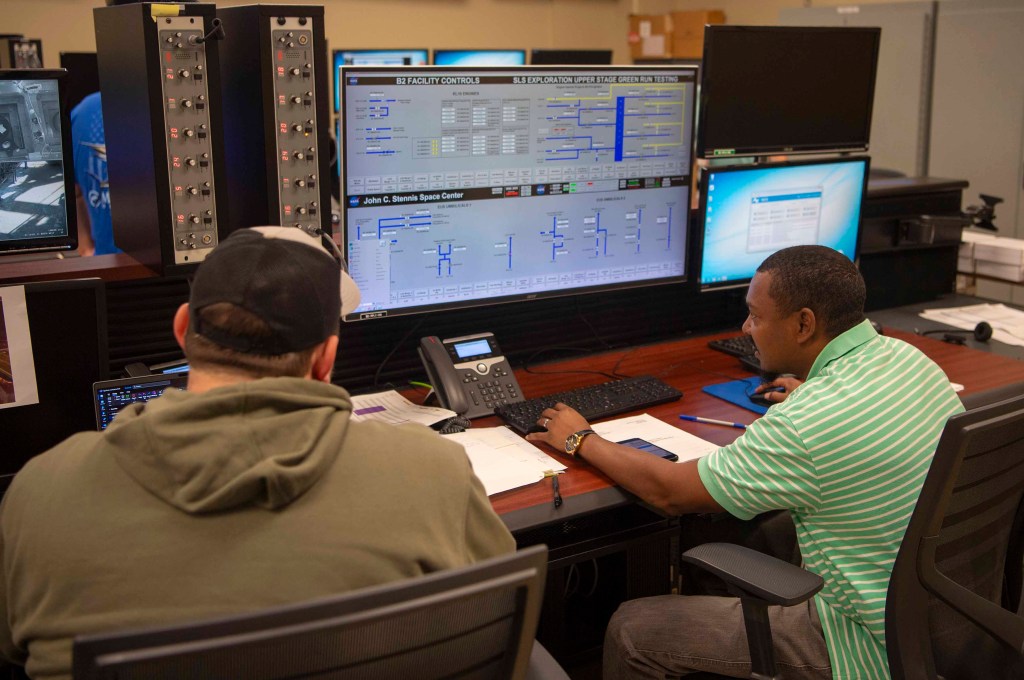
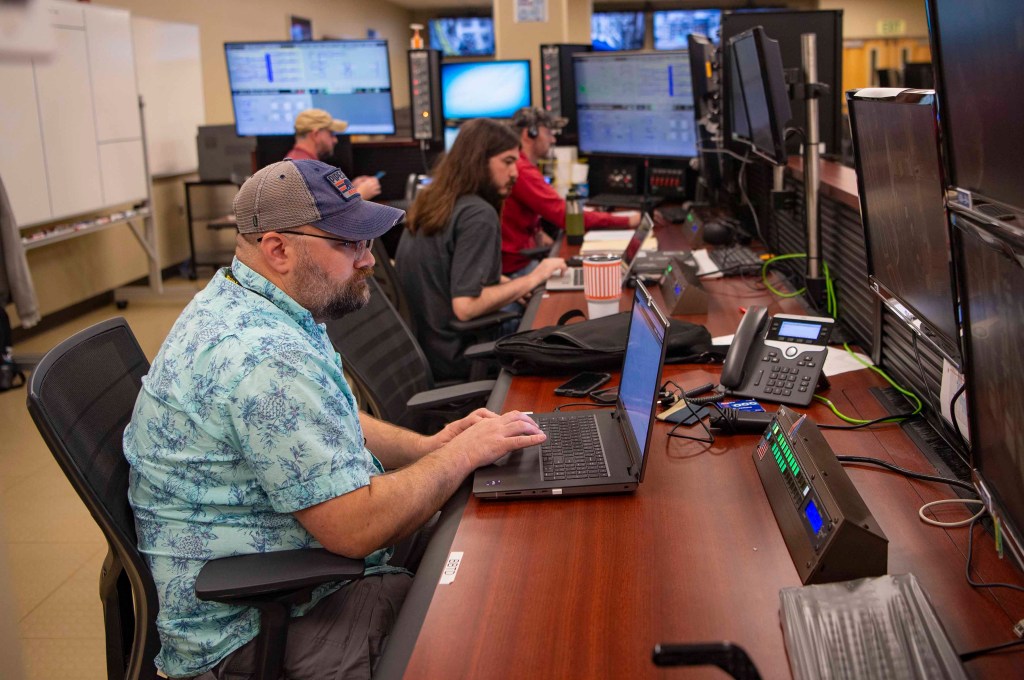
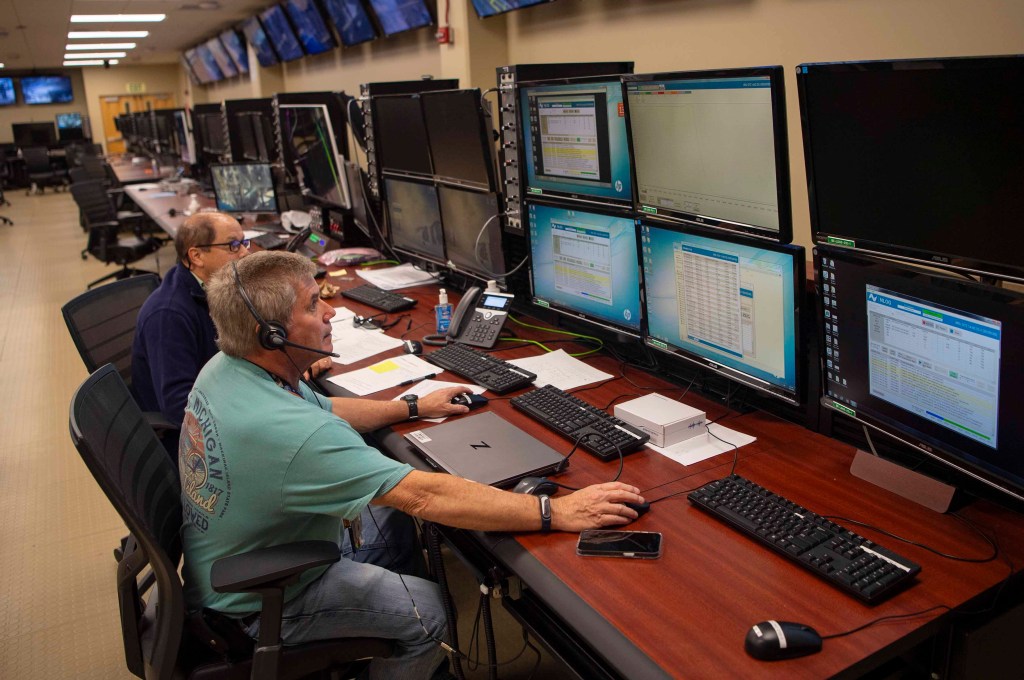
During the activation process, NASA Stennis crews simulated the engines and flowed gases to mirror various conditions and collect data on pressures and temperatures. NASA Stennis teams conducted 80 different flow cases, calculating such items as flow rates, system pressure drop, and fill/vent times. The calculated parameters then were compared to models and analytics to certify the gas system meets performance requirements.
Syncom Space Services engineering tech Brandon Fleming tightens a pressure transducer on the Thad Cochran Test Stand at NASA’s Stennis Space Center in early March. Various transducers were used to provide data during subsequent activation of the interstage simulator gas systems at the stand. The activation marks a milestone in preparation for future Green Run testing of NASA’s exploration upper stage (EUS) in the B-2 position of the Thad Cochran Test Stand.NASA/Danny NowlinNASA engineers Chad Tournillon, left, and Robert Smith verify the functionality of the control system in early March for activation of the interstage simulator gas systems on the Thad Cochran Test Stand at NASA’s Stennis Space Center. The activation marks a milestone in preparation for future Green Run testing of NASA’s exploration upper stage (EUS) in the B-2 position of the stand.NASA/Danny NowlinMembers of the engineering and operations team review data as it is collected in early March during activation of the interstage simulator gas systems on the Thad Cochran Test Stand at NASA’s Stennis Space Center. Pictured are NASA’s Mark Robinson, Robert Simmers, Jack Conley, and Nick Nugent. Activation of the gas systems marks a milestone in preparation for future Green Run testing of NASA’s exploration upper stage (EUS) in the B-2 position of the Thad Cochran Test Stand.NASA/Danny NowlinNASA engineers Pablo Gomez, left, and B.T. Wigley collect data in early March during activation of the interstage simulator gas systems on the Thad Cochran Test Stand at NASA’s Stennis Space Center. The activation marks a milestone in preparation for future Green Run testing of NASA’s exploration upper stage (EUS) in the B-2 position of the NASA Stennis stand.NASA/Danny NowlinSyncom Space Services employees Brandon Fleming, Robert Sheaffer, and Logan Upton review paperwork in early March prior to activation of the interstage simulator gas systems on the Thad Cochran Test Stand at NASA’s Stennis Space Center. The activation marks a milestone in preparation for future Green Run testing of NASA’s exploration upper stage (EUS) in the B-2 position of the stand.NASA/Danny NowlinNASA engineers Pablo Gomez, left, and B.T. Wigley collect data in early March during activation of the interstage simulator gas systems on the Thad Cochran Test Stand at NASA’s Stennis Space Center. The activation marks a milestone in preparation for future Green Run testing of NASA’s exploration upper stage (EUS) in the B-2 position of the NASA Stennis stand.NASA/Danny Nowlin
Crews now will work to activate the umbilical gases and liquid oxygen systems. The NASA Stennis team will then conduct water system activation, where it will flow the flame deflector, aspirator, diffuser cooling circuits, purge rings and water-cooled fairing.
Afterward, the team will deploy the FireX system to check for total coverage, expected to be completed in the summer.
Before the exploration upper stage, built by Boeing at NASA’s Michoud Assembly Facility in New Orleans, arrives at NASA Stennis, crews will perform a final 24-hour check, or stress test, across all test complex facilities to demonstrate readiness for the test series.
I am the owner of Cerebral-overload.com and the Verizon Wireless Reviewer for Techburgh.com. My love of gadgets came from his lack of a Nintendo Game Boy when he was a child . I vowed from that day on to get his hands on as many tech products as possible. My approach to a review is to make it informative for the technofile while still making it understandable to everyone. Ben is a new voice in the tech industry and is looking to make a mark wherever he goes. When not reviewing products, I is also a 911 Telecommunicator just outside of Pittsburgh PA.
I am the owner of Cerebral-overload.com and the Verizon Wireless Reviewer for Techburgh.com. My love of gadgets came from his lack of a Nintendo Game Boy when he was a child . I vowed from that day on to get his hands on as many tech products as possible. My approach to a review is to make it informative for the technofile while still making it understandable to everyone. Ben is a new voice in the tech industry and is looking to make a mark wherever he goes. When not reviewing products, I is also a 911 Telecommunicator just outside of Pittsburgh PA.
Twitter: @gizmoboaks