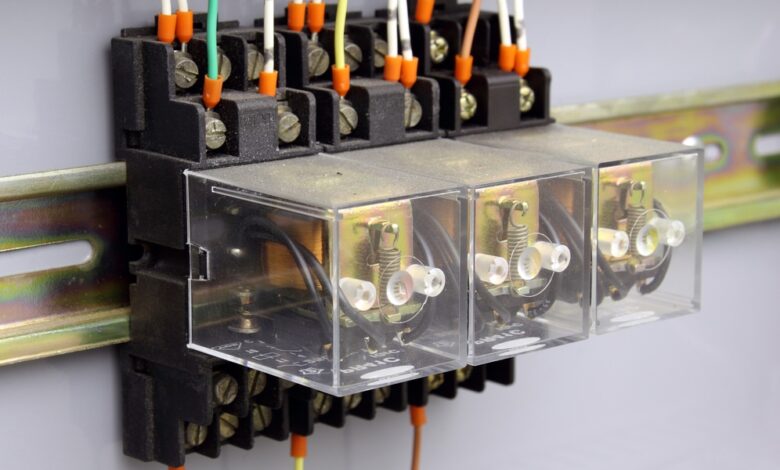
Electrical relays are unsung heroes of electrical systems. These devices, while small and seemingly simple, support the smooth operation of many machines and systems around us.
From automobiles to industrial equipment, electrical relays help control currents and enable automation. In this guide, we’ll explain what electrical relays are and what they do in electrical systems.
How Electrical Relays Work
At its simplest, a relay is an electrically operated switch rather than a manual one. The process begins when an electrical current activates a coil within the relay. This coil generates a magnetic field, which moves a metal armature. The movement of the armature either opens or closes contact points inside the relay, controlling the flow of a larger current through a separate circuit.
This process allows a small electrical signal to control a larger one. Relays are particularly useful for isolating and regulating circuits while ensuring there is no direct electrical connection between controlling and controlled circuits. This principle safeguards the systems in question, as relays can handle high-current loads without overloading the control point.
Types of Electrical Relays
To recognize what electrical relays are and what they do, we must understand that there’s more than one type of relay. Electrical relays come in various forms.
Electromechanical Relays
The most common type of relay is the electromechanical relay, which uses moving components to switch contacts. These are well-suited for general use and are frequently found in household appliances.
Solid-State Relays (SSRs)
Solid-state relays are a modern alternative that relies on electronic components instead of moving parts. SSRs operate silently and are faster, making them ideal for applications requiring high-speed switching.
Time Delay Relays
Time delay relays control circuits after a predetermined time interval. These are most common in automation processes where precise timing is critical.
Specialized Relays
There are also more specialized relays, such as latching relays and thermal relays, that cater to industries with specific operational requirements. These relays can deliver targeted outcomes for unique applications that other relays cannot.
Applications of Electrical Relays
All of the types of electrical relays have specific applications. One of their most common applications is automobiles. Relays control various systems in cars, such as the headlights, air conditioning system, and ignition systems. By enabling low-current switches to control high-current circuits, relays protect sensitive electronics and ensure safety.
Industrial automation is another major area where relays shine. Manufacturing and production facilities rely on relay-based automation to maintain efficiency. These devices control heavy machinery, conveyor belts, and robotic arms.
Why Electrical Relays Matter
Electrical relays are vital components in modern technology because they manage power, isolate circuits, and control equipment. These characteristics contribute to machinery’s safety, efficiency, and automation in numerous industries.
From industrial automation to supporting the operation of vehicles, relays quietly enhance functionality and reliability. Understanding their working principles, types, and applications is crucial for engineers and professionals dealing with advanced electrical systems.
About The Author