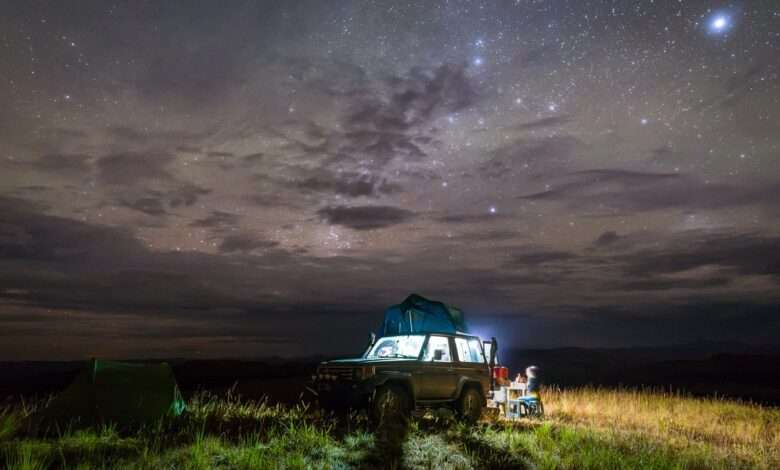
Overlanding is more than just a road trip. It’s an adventure that takes you off the beaten path, typically for extended periods, relying on your vehicle as both your transport and your home base.
Because you’re venturing into remote, rugged terrain, the safety and reliability of your rig are invaluable.
This guide will walk you through how to make your vehicle safe for overlanding, covering everything from lighting to recovery gear. Getting these fundamentals right will give you the confidence to explore with peace of mind, knowing your vehicle is up to the challenge.
Protect Your Vehicle’s Undercarriage
The underside of your vehicle is home to some of its most vulnerable parts, such as the engine oil pan, transmission, and fuel tank. A single well-placed rock can cause catastrophic damage, leaving you stranded.
Skid Plates
Skid plates are pieces of armor, usually made of steel or aluminum, that bolt to the frame of your vehicle.
They shield critical components from impacts. At a minimum, consider skid plates for your engine, transmission, and transfer case.
Many companies offer complete kits that provide full underbody protection.
Rock Sliders
Rock sliders are another form of armor that runs along the sides of your vehicle between the front and rear wheels. They protect your rocker panels from getting crushed on rocks and can also serve as a step to access your roof rack.
Upgrading Lighting for Overlanding
There are many facets to the role of LED lights in enhancing overlanding safety, and one of the most important is the versatility they bring. You can equip light bars, new headlights, and many other lighting solutions that will keep you safe and focused while off-roading.
Having proper lighting is essential for safe and effective overlanding, especially when traveling at night or navigating difficult terrain.
Ready for Any Conditions
Upgraded lighting provides better visibility, enhances safety, and ensures you can tackle challenges long after the sun sets. Start with auxiliary lights, such as LED light bars or pod lights, to illuminate wide areas or focus on specific spots, like trails or campsites.
Consider installing fog lights for improved visibility during adverse weather conditions, such as heavy rain, fog, or dust.
Add Essential Recovery Gear
One of the best ways to make your vehicle safer for overlanding is to equip it with recovery gear.
No matter how well-prepared your vehicle is, getting stuck is a possibility. Having the right recovery gear—and knowing how to use it safely—can turn a potential disaster into a minor inconvenience.
Install a Reliable Winch
A winch is one of the most valuable recovery tools you can have. Mounted to the front of your vehicle, it allows you to pull yourself (or others) out of tough spots.
Choose a winch with a pulling capacity that’s at least 1.5 times your vehicle’s gross weight.
Grab High-Quality Straps and Traction Boards
You’ll also need a recovery kit with a snatch strap (for kinetic recoveries), a tree saver strap (to protect trees when winching), and several D-ring shackles to perform safe recoveries.
Traction boards are another must-have. You can wedge these durable boards under your tires to provide grip in sand, mud, or snow.
Overlanding should be a rewarding adventure. Use the supplies above to make your next trip as safe and satisfying as possible!
About The Author