Librarians: NASA Citizen Science has something for you!
Our new Toolkit for Librarians can help you share NASA citizen science opportunities with your patrons and community members. Rural and urban libraries, informal educators, youth group leaders, and retirement community coordinators can all benefit from this resource. Together, we can open the door for more people to join the fun, learning, and thrill of doing NASA science.
The toolkit prepares a program leader to lead a NASA Science event for people ages 8 and up. The toolkit includes:
- A guide to help you prepare for the event, from choosing and equipping the space, to becoming familiar with the citizen science project that will be the focus of the event
- An editable 8.5” by 11” poster to advertise your event
- A model agenda to follow during your event
- A handout for you and your participants to help you explore NASA-sponsored citizen science project opportunities
The toolkit creators, Sarah Kirn (Participatory Science Strategist, NASA, from the Gulf of Maine Research Institute) and Kara Reiman (librarian), together with NASA’s Citizen Science Officer Marc Kuchner, also recorded a video walk-through of this Toolkit.
“I appreciate this so much!” said one participant. “I have started Citizen Science Kits for circulation over this past year and am excited to share new opportunities with our patrons!”
“Living in a very rural and primarily native community, the kids here are limited with their nearby opportunities, so sharing this with them is a huge win…” said another.
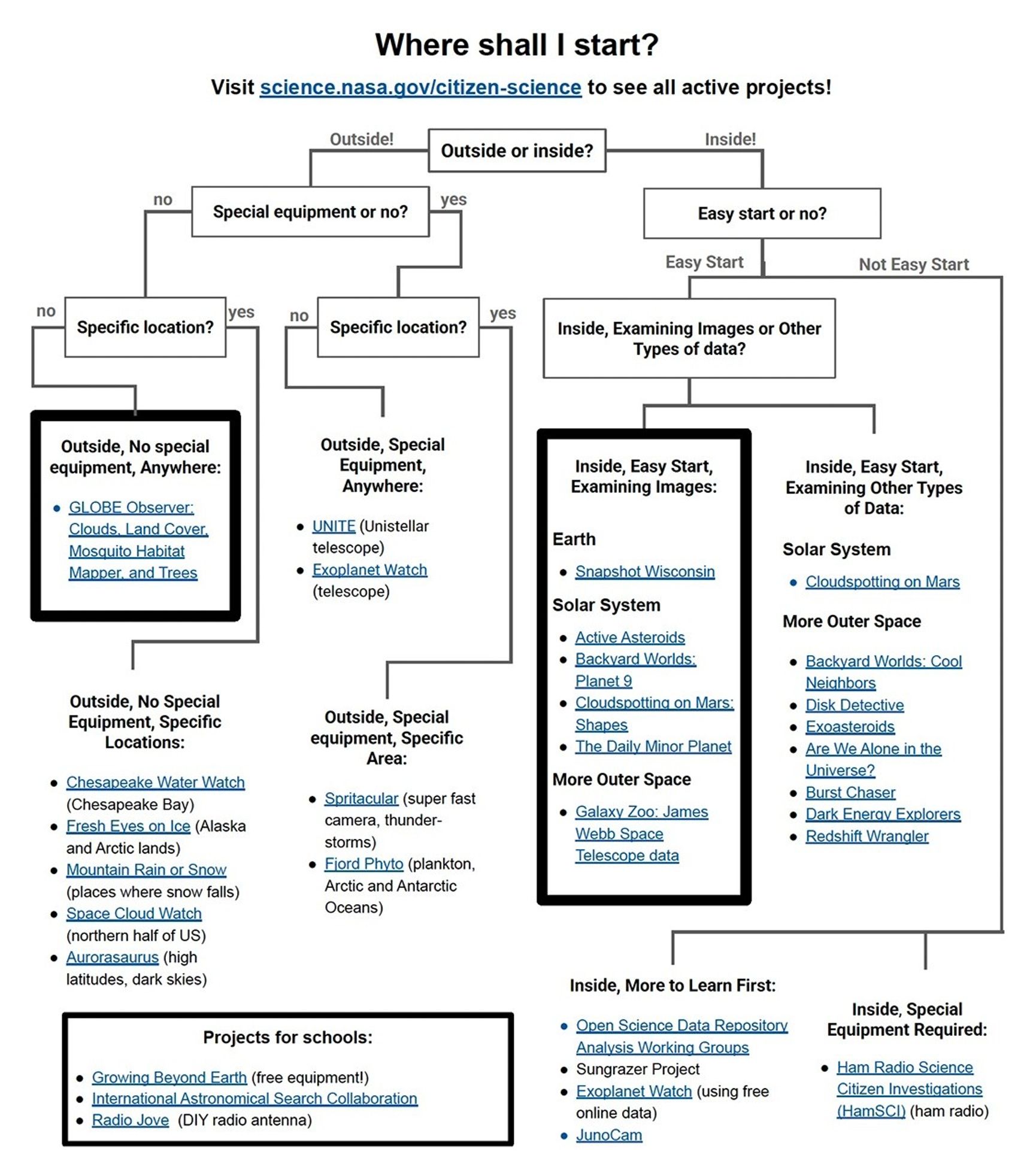
Which NASA citizen project is best for you? You’ll find all these projects at science.nasa.gov/citizen-science, and you’ll find more resources like this in our Toolkit for Librarians!
Sarah Kirn, GMRI + Marc Kuchner, NASA
Learn More and Get Involved

NASA Citizen Science Toolkit for Librarians
Please share this toolkit – or use it yourself – to invite more people to do NASA science with us – who knows what they will discover?!
About The Author