LEXUS UNVEILS “LIMINAL CYCLES” INSTALLATION DESIGNED IN COLLABORATION WITH CRAFTING PLASTICS USA – English


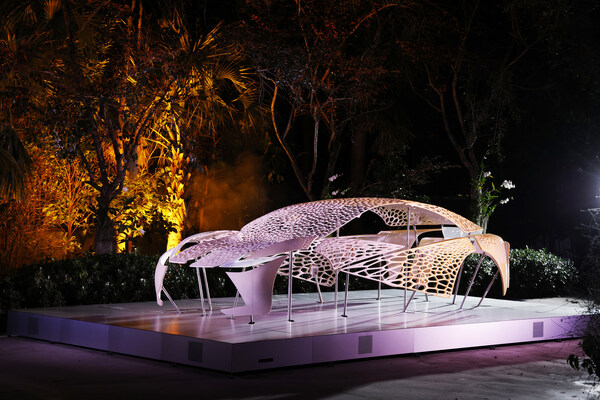
Lexus unveils Liminal Cycles, a multisensory and responsive installation created in collaboration with Bratislava-based research and design studio Crafting Plastics. Presented in partnership with the Institute of Contemporary Art, Miami (ICA Miami), the installation embodies Lexus’ exploration of material innovation, responsive technology and personalization, drawing inspiration from the Lexus LF-ZC (Lexus Future Zero Catalyst) Battery Electric Vehicle (BEV) concept car.
Coinciding with the unveiling of Liminal Cycles, Lexus officially launches its limited-edition capsule collection, featuring 26 collectible design objects by renowned designers Germane Barnes, Michael Bennett (Studio Kër), Suchi Reddy, and Tara Sakhi (T SAKHI) alongside Crafting Plastics. The capsule collection expands on the concepts explored in Liminal Cycles, inviting viewers to consider these objects as manifestations of Lexus’ core ethos of materiality, innovation, performance, sustainability, and technology.
Intended to highlight the possibilities of natural materials and reactive software, Crafting Plastics and Lexus welcome viewers of Liminal Cycles to embark on an immersive journey toward discovery. The installation, situated in the ICA Miami sculpture garden, realizes the adaptability and responsive technology that is central to the developing concept of SDVs (Software Defined Vehicles), which envisions software-enabled customization as a key element of personalized luxury design. By engaging a global art and design audience in its exploration of the SDV concept, Lexus continues to champion bold and uncompromised luxury experiences for the next generation.
Tasked with bringing the SDV concept to life, Crafting Plastics, comprised of co-founders Vlasta Kubušová, Miroslav Král and their team, employed their research practice to create a dynamic, fragmented central “car” sculpture referencing the Lexus LF-ZC at scale. The material foundation of the central sculpture is 3D-printed bioplastic Nuatan®–a bio-based material series that is biodegradable, based on 100% renewable resources and leaves no microplastics behind. Coated with a UV-responsive material skin, the sculpture reacts to environmental stimuli, such as UV radiation and a viewer’s proximity, in real time by changing color and expanding and contracting with breath-like movements. This pulsating mimics the rhythmic movements of natural beings to symbolize the potential harmonies between nature and technology.
Liminal Cycles also features three satellite installations to complement its central sculpture, each incorporating design elements of the LF-ZC to showcase sensory reactions ranging from audio and visual to olfactory. A flower-like sculpture references the shape of the LF-ZC’s steering wheel and entices viewers to interact with its rugged, earthy texture. It responds to human touch with fluctuations in the volume and intensity of the installation’s site-specific sound composition. A second sculpture reimagines the form of the LF-ZC’s headrest as a section of lounge seating which emanates a Lexus-inspired scent in response to visitors’ interaction. Anchoring the four-part installation is a wind-activated, lattice-like sculpture that uses UV-reactive bioplastic material to detect shifts in UV radiation, responding to this stimuli with a subtle reveal of the Lexus logo across the delicate structure. Each response discovered throughout the installation is an expression of the expansive possibilities of material innovation and software-enabled reactive design.
On view through December 15, Liminal Cycles marks Lexus’ third year partnering with ICA Miami and the brand’s ninth year participating in Miami Art & Design Week. Through their collaboration and presentation of world-class installations, Lexus and ICA Miami are committed to building inspiring experiences that encourage thoughtful dialogue centering on creativity and design.
Founded by Vlasta Kubušová and Miroslav Král, Crafting Plastics is recognized as a global advocate for the adoption of biobased materials within mainstream creative industries from fashion and product design to interior homewares. With the groundbreaking development of their proprietary Nuatan® material series, Crafting Plastics challenges a design landscape where planned obsolescence and significant environmental waste is the norm. Through this collaboration, Lexus and Crafting Plastics employ an elevated approach to responsible design that combines beauty, utility and endurance, with an emphasis on reuse and reintegration.
“This installation presents a rare opportunity to explore an ambitious creative project that demonstrates the extensive capabilities of biomaterials with minimal compromises,” says Vlasta Kubušová, co-founder of Crafting Plastics. “We are proud to showcase our vision alongside Lexus, a brand that shares the same values of sustainability and innovation in design. We hope that visitors will be inspired by the possibilities of bio-based materials and begin to view them as an asset of our shared future.”
Lexus in Design Capsule Collection
Expanding upon its dedication to the future of sensorial design and holistic luxury experience, Lexus introduces an exclusive capsule collection of 26 collectible design objects crafted by a group of leading design talents. Selected for their individual explorations of sustainability, sensory design, and material innovation, Lexus in Design collaborated with five visionary designers–Crafting Plastics, Germane Barnes, Michael Bennett (Studio Kër), Suchi Reddy, and Tara Sakhi (T SAKHI)–for this one-of-a-kind collection. For the collection, the five designers each created an edition of bespoke objects inspired by key elements of Lexus’ brand ethos–personalization, sustainability, materiality, technology, and performance. The objects serve as sensory vessels, designed to hold a specially crafted Lexus fragrance in candle or diffuser form.
Throughout the collection, the designers employ materials ranging from amber glass, gold leaf, fired clay and ceramic, to biodegradable plastic, interlocking slit paper, and recycled aluminum from a Lexus hood. The resulting collection balances innovation with heritage, the ephemeral with the collectible, and technology with human nature to transport viewers on an immersive and sensory journey.
Each designer’s creations unite Lexus’ design ethos with their existing practice.
- Crafting Plastics’ Ephemerables series marries the core ethos of personalization with their use of bioplastics in modular, customizable and biodegradable forms.
- Germane Barnes’ ceramic vessels in his series, The Beauty of Labor, echo his award-winning research to reflect the value of high-quality performance in all aspects of design.
- Tara Sakhi (T SAKHI)’s Memory series encounters sustainability as an expressive representation of material evolution, resulting in exceptional luxury design achieved through the fusion of recyclable material.
- Michael Bennett presents a series of amber glass vessels, titled Synesthesia, as an exercise in materiality and repetition inspired by Lexus’ meticulous design process.
- Suchi Reddy foregrounds the role of technology in the design process with Bloom, a tabletop centerpiece for flowers and scents, employing interlocking slit paper to explore the intersection of technology-enabled intelligent design.
Lexus in Design x dilo Candle
Alongside the capsule collection, Lexus also launches a custom scent developed in close collaboration with clean fragrance brand dilo and created specifically for integration into the capsule collection and Liminal Cycles installation. The fragrance will also be available as a limited-edition candle and features prominent top notes of blood orange and bergamot, paired with nature-inspired hints of cedar and moss and a renewing base of amber and fir. The candle’s overall olfactory profile welcomes notions of progress and renewal balanced with a grounding alignment with nature. Renowned for its innovative scents and clean formulas, dilo uses 100% US-grown soy wax, non-phthalate fragrances, and clean burning cotton wicks.
“We are honored to collaborate with some of the world’s leading designers to bring Lexus’ vision of holistic luxury and personalized experience to life through this year’s installation and launch of our capsule collection,” says Heather Updegraff, general manager of Lexus International Strategic Communications. “These works embody the potential of responsive technology, sustainable materials, and sensory-driven design, offering a tangible glimpse into the future while inspiring viewers to contemplate these concepts in their everyday lives.”
The Lexus in Design capsule collection will be on view at ICA Miami and Alcova Miami during Miami Art & Design Week 2024. Pieces from the collection will be available for purchase at the ICA Miami gift shop and online at HBX.com, with sales profits going toward the support of ICA Miami’s sustainability initiatives.
Once again, in the ICA Miami sculpture garden, Lexus will present Lexus Art Series: Art and Innovation Talks with Whitewall alongside the Liminal Cycles installation. On Wednesday, December 4, two panels will engage the public in inspiring discussions centering on materiality and sustainability in luxury and automotive design. Moderators, Katy Donoghue (Whitewall Editor-in-Chief) and Tamara Warren (Co-founder & CEO of LE CAR) will be joined on stage by designers Vlasta Kubušová (Crafting Plastics), Suchi Reddy, Germane Barnes, Michael Bennett (Studio Kër) and Tara Sakhi (T SAKHI) as well as Sellene Lee, Chief Designer at Calty Design Research.
ABOUT LEXUS
Lexus launched in 1989 with a flagship sedan and a guest experience that helped define the premium automotive industry. In 1998, Lexus introduced the luxury crossover category with the launch of the Lexus RX. The luxury hybrid sales leader, Lexus delivered the world’s first luxury hybrid and has since sold over 2.33 million electrified vehicles including HEVs, PHEVs, and BEVs.
A global luxury automotive brand with an unwavering commitment to bold, uncompromising design, exceptional craftsmanship, and exhilarating performance, Lexus has developed its lineup to meet the needs of the next generation of global luxury guests and is currently available in over 90 countries/regions worldwide.
Lexus associates/team members across the world are dedicated to crafting amazing experiences that are uniquely Lexus, and that excite and change the world.
ABOUT CRAFTING PLASTICS
Crafting Plastics is an award-winning interdisciplinary design and research studio founded by Vlasta Kubušová and Miroslav Král in 2016. The studio’s practice focuses on the research, development and implementation of a new generation of advanced ecological bio-based materials, both currently and in the future. Operating at the intersection of science and design, Crafting Plastics revolutionizes the properties and aesthetics of ephemeral materials, such as naturally-derived bioplastics, to offer durable design solutions across diverse industries. At the forefront of its practice, Crafting Plastics works to develop natural and scalable bioplastics to elevate the application and uses of the material within design and architecture. Nuatan®, the material brand developed by Crafting Plastics, is an ecological alternative to fossil-fuel-based plastic, created using 100% biobased and biodegradable biopolymer blends. Additionally, the studio is conducting innovative research on advanced environmentally responsive materials that act as sensing systems and enhance the relationship between humans and nature.
Crafting Plastics has worked with renowned brands such as Dior, Nike and Lexus, and presented projects at distinguished institutions worldwide, including the Victoria & Albert Museum, ALCOVA, MAK Vienna and Salon de Mobile. The studio has earned international acclaim, receiving nominations for the Slovak National Design Award, German Design Award (2018, 2021) and Beazley Designs of the Year at the London Design Museum. In 2022 Crafting Plastics was recognized by Dezeen as one of the world’s top emerging studios and in 2018 co-founder Vlasta Kubušová was featured in Forbes Slovakia’s 30 Under 30 List, underscoring Crafting Plastic’s pioneering role in circular design and sustainable material innovation.
ABOUT DILO
Founded in 2017 in Philadelphia, dilo launched as a product designer and manufacturer of comfort goods – candles, room sprays, reed diffusers – all that tell a story beyond their typical use. In the years to follow dilo filled out collections with Eau de Parfum, Apparel, Incense, and other home and personal care products, all designed and created carefully to ensure that they are of the cleanest in the industry. Largely picked up by independent retailers, dilo can be found in all 50 States and in several countries within Europe, Asia, and Australia.