An Intertwined History: The Earth Observer and EOS
The Earth Observer, a newsletter issued for more than 36 years, will release its last online content at the close of 2025. This newsletter evolved in parallel with NASA’s Earth Observing System (EOS). It is almost impossible to speak of this newsletter without mentioning EOS. As The Earth Observer prepares its final publication, NASA also plans to shutter its three EOS flagship satellites (discussed below) possibly as early as the end of 2026.
While EOS was “much more than its satellites,” one cannot deny that the satellite missions and their iconic images provide an entry point to the overarching work conducted by the EOS science teams for almost three decades. These efforts spanned crucial complementary ground- and aircraft-based observations along with focused field campaigns to coordinate observations across multiple levels of Earth system time and spatial scales. The teams worked (and continue to work) closely with the NASA Earth Science Division Earth Observing System Data and Information System (EOSDIS) and related Science Investigator Processing System (SIPS) facilities, as well as developed and enhanced the algorithms that support the satellite products. Readers who wish to learn more about these topics should consult The Earth Observer’s archives page, which contains much of the history of this work.
During this point of inflection, The Earth Observer’s publication team felt it important to pause and reflect on the significance of the work detailed in the newsletter throughout this brief slip of time. The result is the article that follows.
A Flagship of an Idea: Almost Four Decades of Science
As described in the article, A Condensed History of the Earth Observing System (EOS) [June 1989, 1:3. 2–3], what would become known as EOS had its foundation in the recommendations of an ad hoc NASA study group that convened in 1981 to “determine what could and should be done to study integrated Earth science measurement needs.” Initially, the study group envisioned several large platforms in space, each with numerous instruments that would be serviced by the Space Shuttle, similar to servicing of the Hubble Telescope on several occasions. Known as System Z [Sept.–Oct. 2008, 20:5, 4–7], this early vision “laid the groundwork for a Mission to Planet Earth” but was reimagined after the tragic loss of the Space Shuttle Challenger in Jan. 1986. An article written at the end of the Shuttle program included a sidebar that detailed the impracticality of launching shuttle missions into polar orbit to service EOS satellites, see Polar Shuttle Launches: The Path Almost Taken, Sept.–Oct. 2011, 23:5, 6–7]. Eventually, the large space platform concept morphed into several mid-size flagship satellite missions, known today as Terra, Aqua, and Aura. Smaller satellite missions would supplement and enhance the data gathered by the “big three” satellites – see Figure 1.
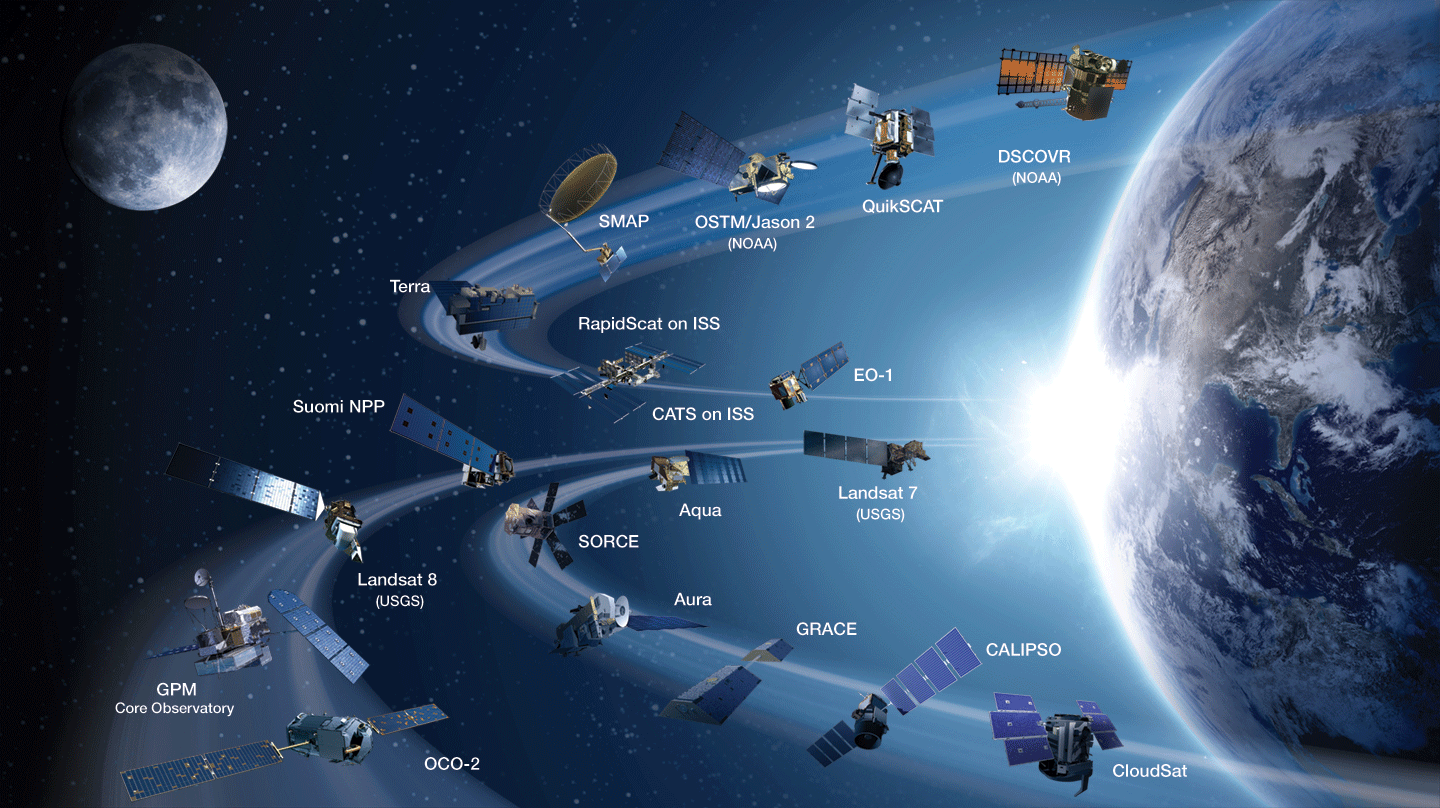
Figure 1. NASA’s current Earth-observing fleet, which includes 20 missions.
Figure credit: NASA
Technological advances further enhanced and refined this vision, allowing satellites to fly in close formation to capture near-simultaneous measurements in much the same way they would if they were on a single platform. The Afternoon Constellation, or A-Train, is a shining example of this international effort and is described in more detail below.
NASA released the first EOS Announcement of Opportunity in 1988, and a panel selected the winning proposals. An EOS Project Science Office was established to manage the projects. During this time of rapid development, NASA leadership was keenly aware of the need to keep the international EOS community abreast of the latest information. Enter The Earth Observer newsletter. First published in March 1989, the newsletter was the natural conduit to bridge this communication gap. To set the stage of how things have changed, an early article, titled Direct Transmissions of EOS Data to Worldwide Users [July–Aug. 1990, 2:6, 2–4], introduced the readership to the World Wide Web, which promoted “a ‘place’ where scientists communicate with each other and with the data they have collected with the help of their professional colleagues from the engineering and operations disciplines.”
In the more than 1000 printed pages published in the past three decades, The Earth Observer has chronicled the story of EOS and NASA’s broader Earth Science program. The publication has captured – often in meticulous detail – the intensive work behind the scenes that has gone into the development of the technologies, algorithms, and data centers that gather data from Earth observing satellites, suborbital observations, and other experiments to inform end users who use the data to address societal issues.
In the years before the first EOS missions launched, the newsletter reported in earnest on Investigator Working Group (IWG) meetings, Payload Panel Reviews (reviewing the instruments planned for the EOS platforms), and Mission and Instrument Science Team Meetings. As EOS matured, the newsletter began reporting on the development and implementation of specific science missions, launches, milestones, and research generated from the data collected. The editorial staff began publishing more feature articles to appear along with the meeting and workshop reports. The newsletter shared news stories developed by NASA’s Earth Science News Team and other bimonthly content (e.g., Education Update, Science in the News). “The Editor’s Corner” column in the newsletter gave the EOS Senior Project Scientist a platform to offer commentary on current events in NASA Earth Science as well as on the content of the current issue of the newsletter. While not formally named for the first few issues, an editorial article has been a cornerstone of the publication since the beginning.
The Earth Observer has produced several articles reflecting on its interwoven history with EOS, such as The Earth Observer: Twenty-Five Years Telling NASA’s Earth Science Story [March–April 2014, 26:2, 4–12] and A Thirtieth Anniversary Reflection from the Executive Editor [March–April 2019, 31:2, 4–6]. These stories expand upon the topics covered in the brief review presented in this article.
About The Author