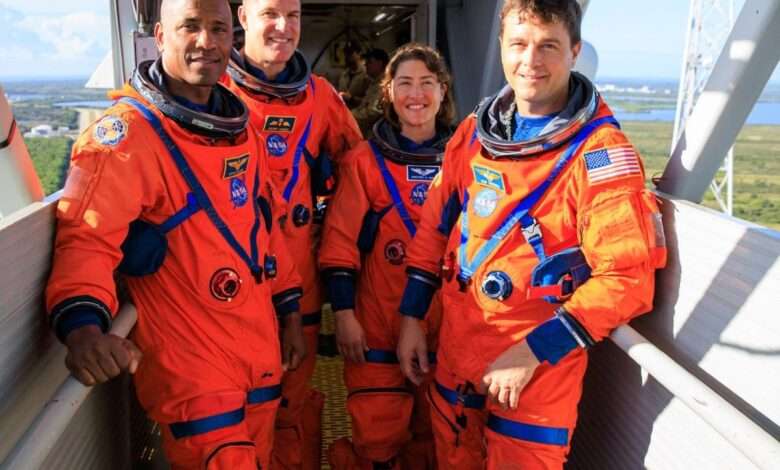
Four astronauts will soon travel beyond low Earth orbit and fly around the Moon on Artemis II, a mission that will test NASA’s systems and hardware for human exploration of deep space.
Since June 2023, NASA astronauts Reid Wiseman, Victor Glover, Christina Koch, and CSA (Canadian Space Agency) astronaut Jeremy Hansen have been preparing for their lunar journey. The approximately 10-day mission will test the SLS (Space Launch System) rocket and Orion spacecraft, named Integrity by the crew, while requiring the quartet to operate with greater autonomy and make critical decisions far from Earth.
Training for Artemis II is all risk mitigation. By preparing the astronauts and flight controllers for what they might encounter, we enable mission success.

Artemis II Chief Training Officer
Jacki Mahaffey
Unlike missions to the International Space Station, Artemis II offers no nearby safe harbor and no option to be back on Earth within hours of a problem. Training reflects that reality. Crews are prepared not just to follow procedures, but to understand spacecraft systems well enough to adapt when conditions change.
Training began with mission fundamentals, including how Orion and SLS systems function individually and together. From there, the crew progressed through phases of training that moved from routine on-orbit operations to more complex mission segments such as ascent, entry, and landing. Each phase builds on the last as the crew moves closer to flight.
In parallel, astronauts trained in medical operations, exercise systems, spacesuits, and daily life aboard Orion. Together, these elements form a single, integrated mission timeline.
Observing the Moon Through the Lens
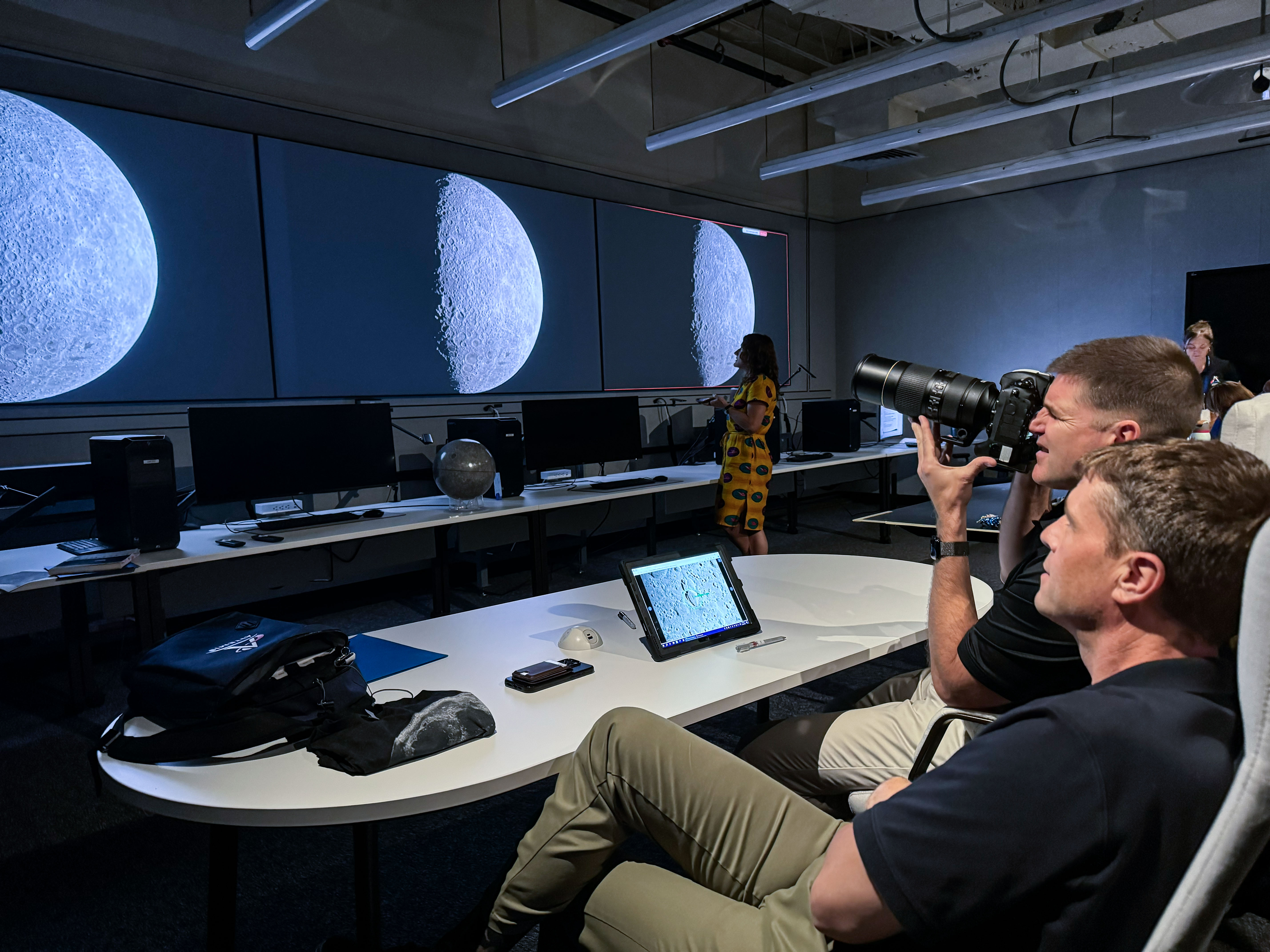
The Artemis II crew practices lunar photography at NASA’s Johnson Space Center in Houston.
NASA/Kelsey Young
A key part of Artemis II training includes lunar observation and photography. At NASA’s Johnson Space Center in Houston, astronauts studied the Moon’s far side, learning to identify crater shapes, surface textures, color variations, and reflectivity.
Although Artemis II will not land on the Moon, the crew will conduct detailed observations from lunar orbit to prepare for future Artemis missions.
About The Author