
NASA
-
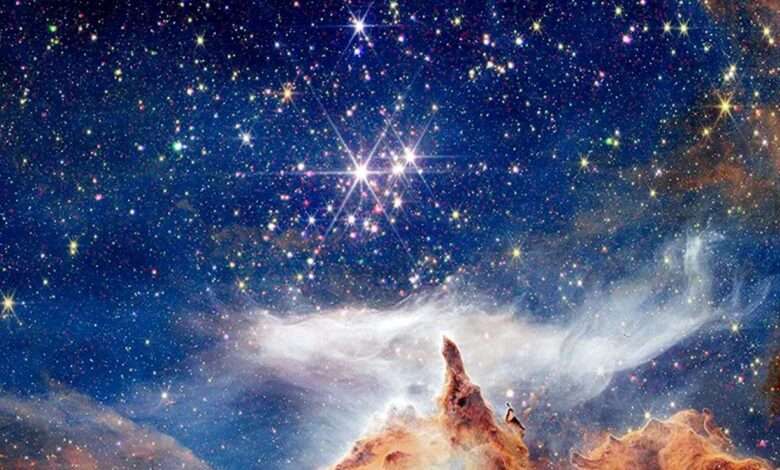
Chandra, Webb Catch Twinkling Lights
Data from Chandra adds red, green, and blue twinkling lights in this Dec. 22, 2025, image of Pismis 24 from NASA’s James Webb Space Telescope. Pismis 24 is a young cluster of stars in the core of the nearby Lobster Nebula, approximately 5,500 light-years from Earth in the constellation Scorpius. Home to a vibrant stellar nursery and one of the closest…
Read More » -
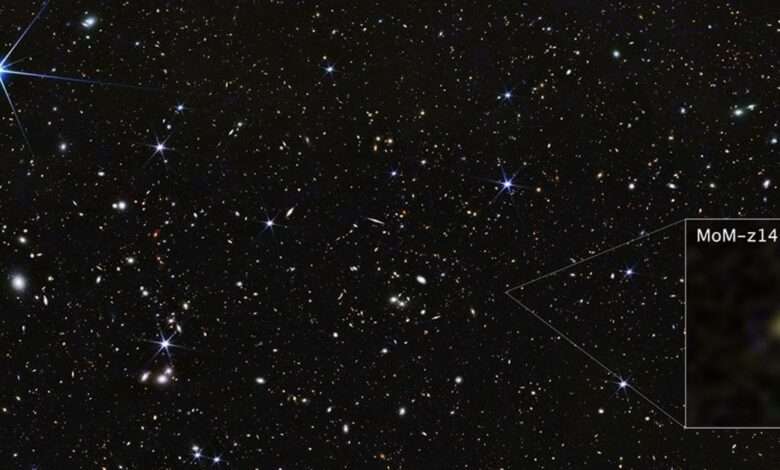
NASA Webb Pushes Boundaries of Observable Universe Closer to Big Bang
NASA’s James Webb Space Telescope has topped itself once again, delivering on its promise to push the boundaries of the observable universe closer to cosmic dawn with the confirmation of a bright galaxy that existed 280 million years after the big bang. By now Webb has established that it will eventually surpass virtually every benchmark it sets in these early years, but…
Read More » -
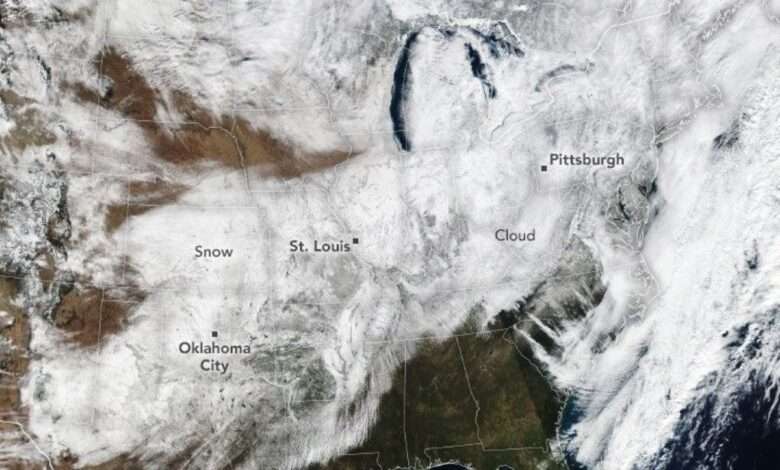
Snow Buries the U.S. Interior and East
A potent winter storm left a wide band of snow stretching from the U.S. Southwest to New England in late January 2026. The heavy snow, along with bitterly cold temperatures, sleet, and ice, created treacherous travel conditions, toppled power lines, and caused widespread school closures, according to news reports. On the afternoon of January 26, the VIIRS (Visible Infrared Imaging Radiometer Suite) on…
Read More » -

Discovery Alert: An Ice-Cold Earth?
The Discovery A candidate planet that might be remarkably similar to Earth, HD 137010 b, has one potentially big difference: It could be colder than perpetually frozen Mars. Key Facts Scientists continue to mine data gathered by NASA’s Kepler Space Telescope, retired in 2018, and continue to turn up surprises. A new paper reveals the latest: a possible rocky planet slightly…
Read More » -
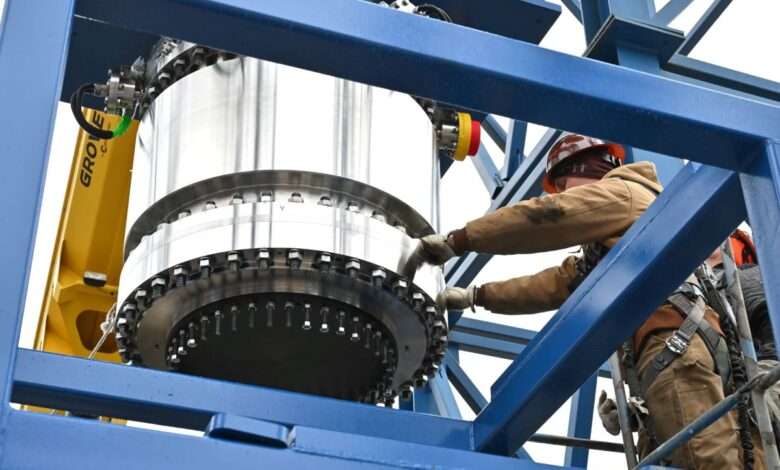
NASA Testing Advances Space Nuclear Propulsion Capabilities
Nuclear propulsion and power technologies could unlock new frontiers in missions to the Moon, Mars, and beyond. NASA has reached an important milestone advancing nuclear propulsion that could benefit future deep space missions by completing a cold-flow test campaign of the first flight reactor engineering development unit since the 1960s. “Nuclear propulsion has multiple benefits including speed and endurance that…
Read More » -
Webb Data Reveals Dark Matter
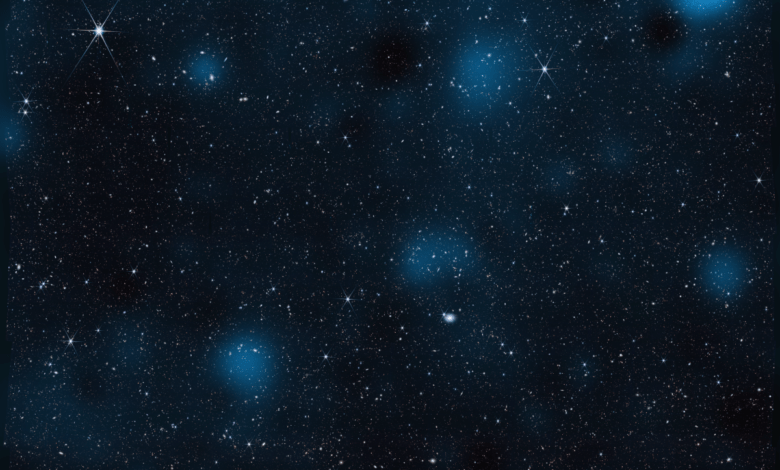
This image from NASA’s James Webb Space Telescope, containing nearly 800,000 galaxies, is overlaid with a map of dark matter, represented in blue. Brighter blue areas indicate a higher density of dark matter. Researchers used Webb data to find the dark matter — which is invisible — via its gravitational influence on regular matter. The area of sky shown here…
Read More » -
NASA Science Flights Venture to Improve Severe Winter Weather Warnings
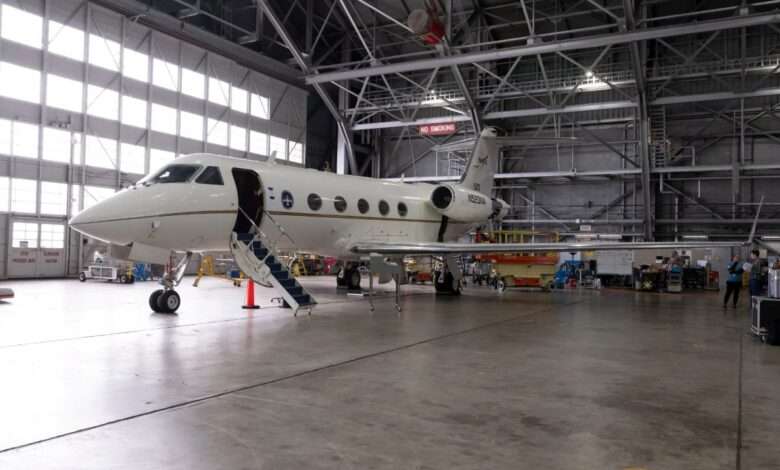
A team of NASA scientists deployed on an international mission designed to better understand severe winter storms. The North American Upstream Feature-Resolving and Tropopause Uncertainty Reconnaissance Experiment, or NURTURE, is an airborne campaign that uses a suite of remote sensing instruments to collect atmospheric data on winter weather with a goal of improving the models that feed storm forecasts. This…
Read More » -
NASA’s Juno Measures Thickness of Europa’s Ice Shell
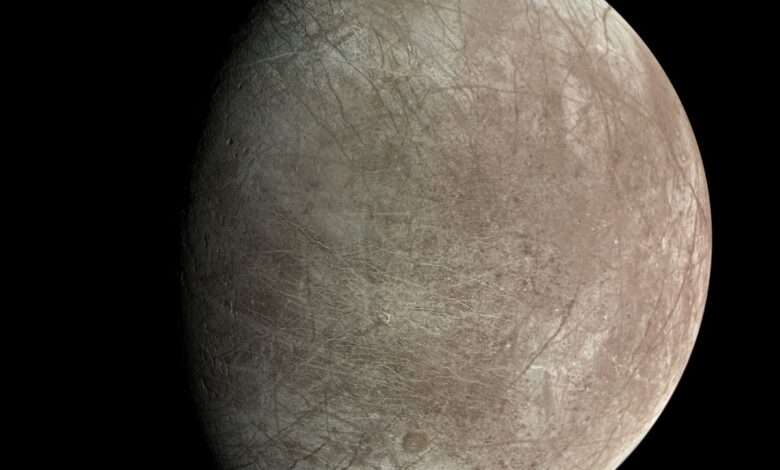
Results from the solar-powered spacecraft provide a new measurement of the thickness of the ice shell encasing the Jovian moon’s ocean. Data from NASA’s Juno mission has provided new insights into the thickness and subsurface structure of the icy shell encasing Jupiter’s moon Europa. Using the spacecraft’s Microwave Radiometer (MWR), mission scientists determined that the shell averages about 18 miles (29 kilometers) thick in the region observed during…
Read More » -
NASA Launches Its Most Powerful, Efficient Supercomputer
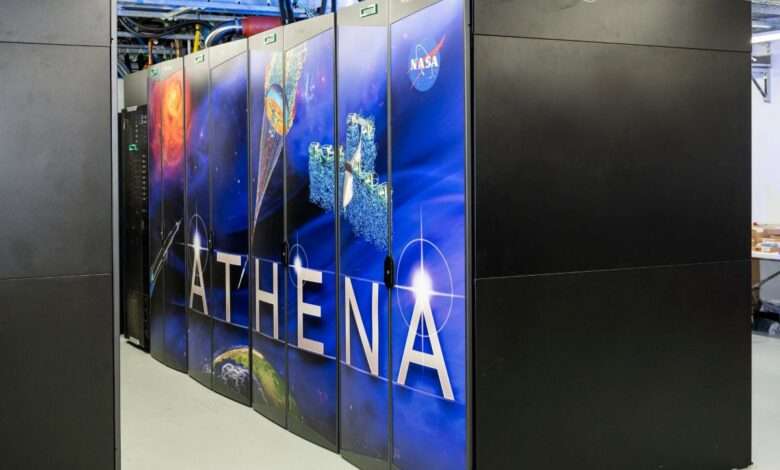
NASA is announcing the availability of its newest supercomputer, Athena, an advanced system designed to support a new generation of missions and research projects. The newest member of the agency’s High-End Computing Capability project expands the resources available to help scientists and engineers tackle some of the most complex challenges in space, aeronautics, and science. Housed in the agency’s Modular…
Read More » -
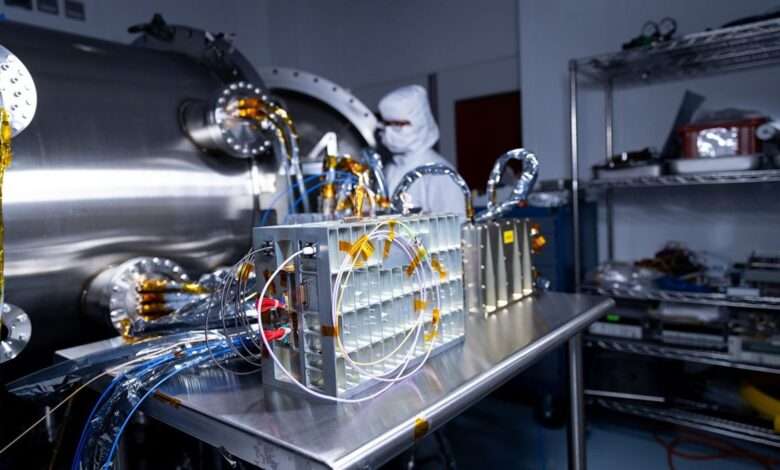
NASA, Partners Advance LISA Prototype Hardware
Engineers and scientists at NASA’s Goddard Space Flight Center in Greenbelt, Maryland, completed tests this month on a second early version of a key element of the upcoming LISA (Laser Interferometer Space Antenna) mission. The LISA mission, a collaboration between ESA (the European Space Agency) and NASA, will use infrared lasers to detect gravitational waves, or ripples in the fabric of space-time. The tests…
Read More »