
NASA
-
NASA’s Artemis II Crew Receives Congressional Space Medal of Honor
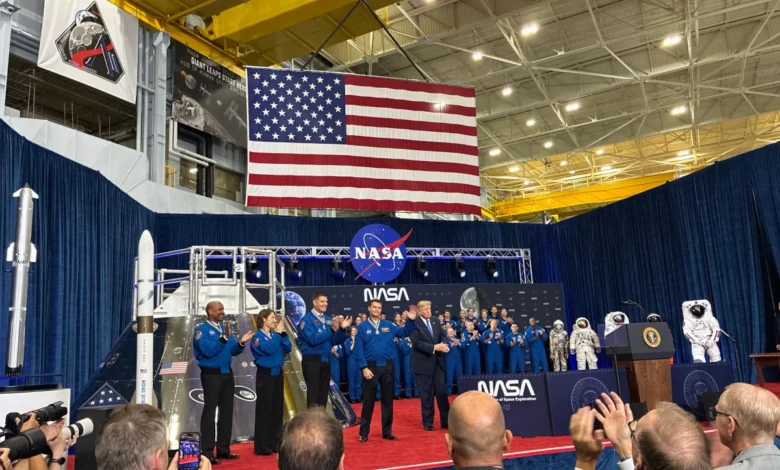
From left to right: NASA astronauts Victor Glover and Christina Koch, CSA (Canadian Space Agency) astronaut Jeremy Hansen, and NASA astronaut Reid Wiseman receive the Congressional Space Medal of Honor from President Donald J. Trump on Aug. 28, 2026, for their service during the Artemis II mission. The Congressional Space Medal of Honor was authorized by Congress in 1969 to recognize an…
Read More » -
NASA Awards First Prize in Phase 2 of Agency’s LunaRecycle Challenge
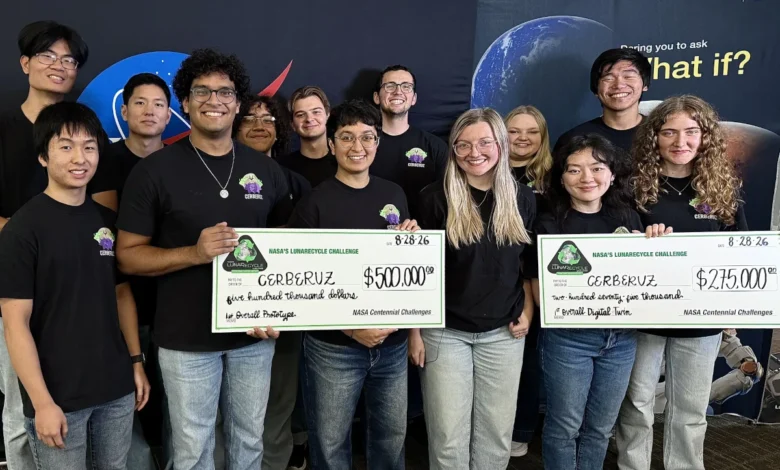
NASA named a team from the Massachusetts Institute of Technology (MIT) as the first prize winner for Phase 2 of the agency’s LunaRecycle Challenge, which focused on developing solutions for reducing waste during missions to the Moon or deep space by recycling common materials, like fabrics, plastics, foam, and metals. The Composites for Extraterrestrial Recycling By Engineering the Reuse and Upcycling of Zotek (CERBERUZ) team, comprised of undergraduate, graduate, and doctoral students at MIT, received a total of $775,000 in awards. The technology grinds mixed trash into a fine powder, repurposing materials such as Zotek foam as…
Read More » -
President Trump Signs Executive Order to Create US Space Academy
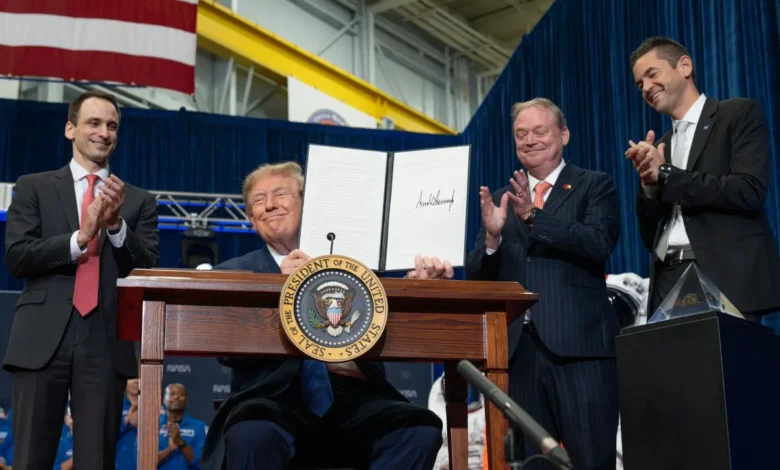
To strengthen the nation’s space workforce and develop the next generation of space leaders, President Donald J. Trump signed an Executive Order on Friday to establish the nation’s first U.S. Space Academy. The order highlights how space is a critical domain for American national security, economic growth, scientific discovery, and technological innovation. The proposed academy would focus technical education with…
Read More » -
President Honors NASA’s Artemis II Crew with Highest US Space Award
President Donald J. Trump awarded NASA astronauts Reid Wiseman, Victor Glover, and Christina Koch, and CSA (Canadian Space Agency) astronaut Jeremy Hansen with the Congressional Space Medal of Honor Friday for their service during the Artemis II mission. He presented the awards during a ceremony at NASA’s Johnson Space Center in Houston, honoring the first medal recipients since 2023. NASA’s…
Read More » -
Astronomy Picture of the Day
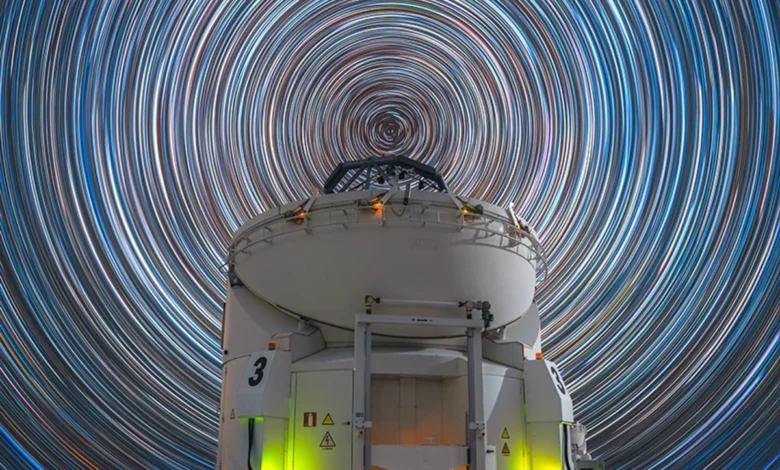
The Sky Turns Above Paranal Explanation: At the latitude of ESO’s Paranal Observatory in Chile, about 25 degrees south, Earth’s rotation moves the planet’s surface eastward at over 1,500 kilometers per hour. And while that’s faster than the speed of sound at sea level, the motion is imperceptible. Still, that motion can be revealed in the apparent rotation of the night sky by photographing star trails. This star trail image was composed…
Read More » -
The Forested Floodplains of Congaree National Park
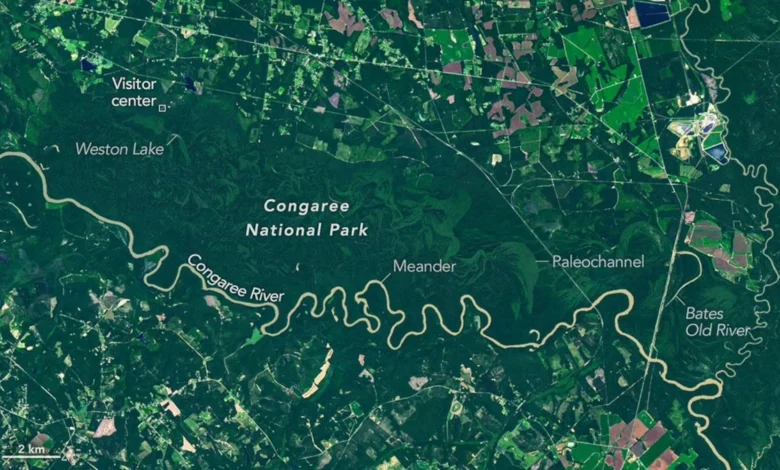
Among the 63 U.S. national parks, few are as defined by a single river’s floodplain as Congaree National Park in South Carolina. While the features are also prominent in other parks, a full 80 percent of Congaree National Park lies within the Congaree River floodplain. It’s a place home to one of the largest intact tracts of old-growth bottomland hardwood forests in the United States. In…
Read More » -
NASA Invites Media to Turkey Artemis Accords Signing Ceremony
Turkey will sign the Artemis Accords during a ceremony at 2:30 p.m. EDT Monday, Aug. 31, at NASA Headquarters in Washington, becoming the 71st country signatory. NASA Administrator Jared Isaacman will host Turkish Minister of Industry and Technology Mehmet Fatih Kacır for the ceremony, together with U.S. Department of State officials. This event is in person only. Media interested in attending must…
Read More » -
9 Things to Know About NASA’s Nancy Grace Roman Space Telescope
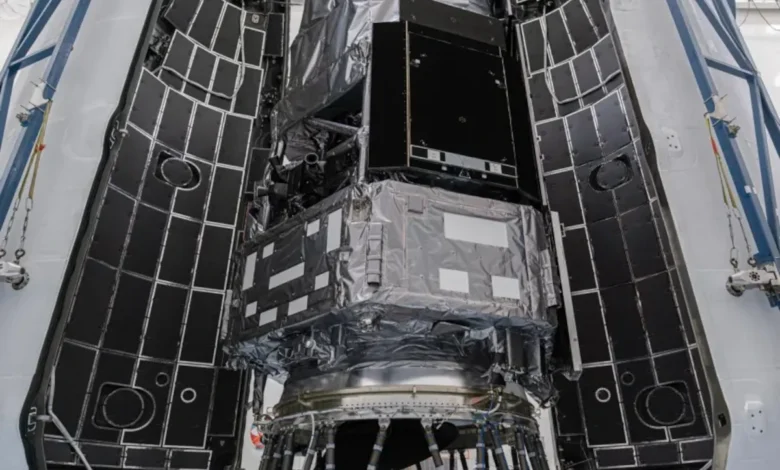
NASA’s Nancy Grace Roman Space Telescope is set to launch at 7:26 a.m. EDT on Sunday, Aug. 30. While you wait to watch the launch, brush up on some key facts about this wide-view mission. Teams inside the Payload Hazardous Servicing Facility at NASA’s Kennedy Space Center in Florida encapsulate the agency’s Nancy Grace Roman Space Telescope within the payload fairing…
Read More » -
Civil Servants Sworn in at NASA Ames
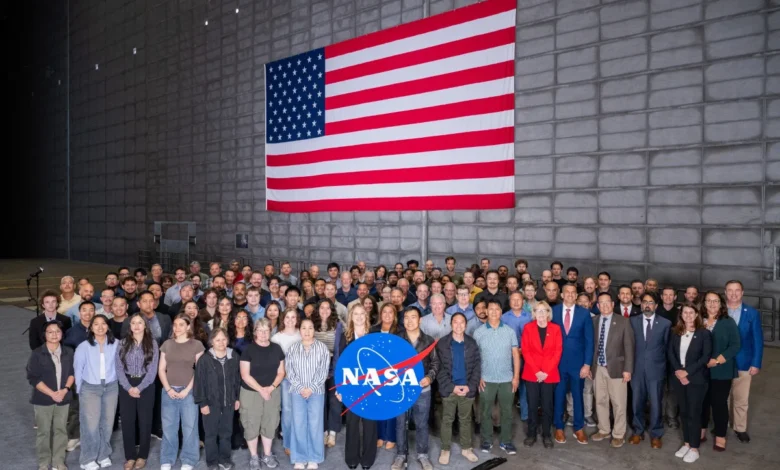
New civil servants and guests pose for a group photo with NASA and center leadership in the National Full-Scale Aerodynamics Complex (NFAC) 80-by-120-foot test section, N221 on Aug. 24, 2026. The civil servants were sworn-in the same day in the largest swearing-in ceremony ever hosted at NASA’s Ames Research Center in California’s Silicon Valley since its inception nearly 87 years ago.…
Read More » -
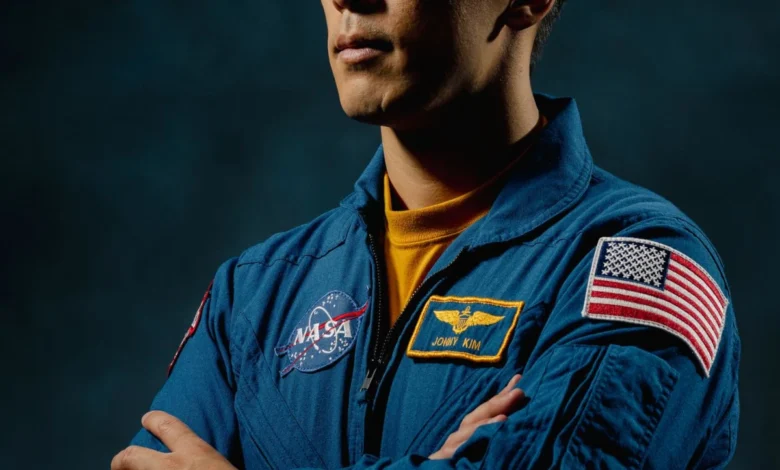
NASA Astronaut Jonny Kim Departs Agency to Continue Military Service
After nearly a decade of service to NASA, including an eight-month science expedition aboard the International Space Station, astronaut Jonny Kim’s last day at the agency is Thursday. He will continue serving as lieutenant commander in the U.S. Navy. Kim launched to the space station in April 2025 aboard the Soyuz MS‑27 spacecraft to conduct scientific research as a flight…
Read More »