
NASA
-
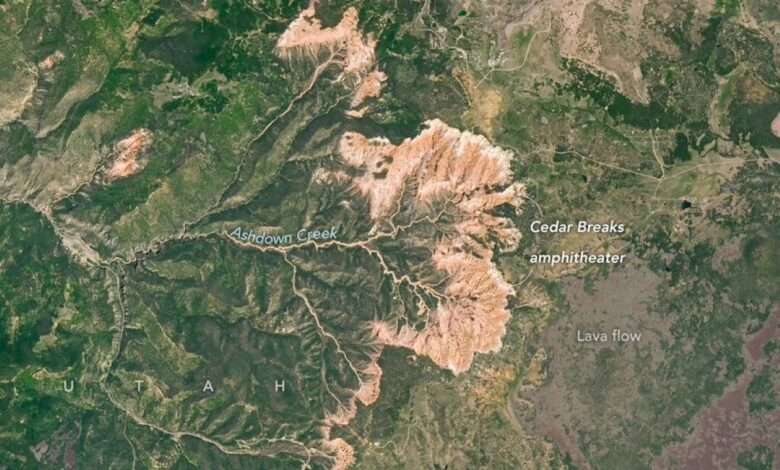
An Amphitheater of Rock at Cedar Breaks
When people stand at the rim of the amphitheater in Utah’s Cedar Breaks National Monument and look down on an otherworldly landscape of multicolored rock spires, pinnacles, and other geologic oddities, they’re looking across tens of millions of years of Earth’s history. The same can be said when viewing the bowl-shaped escarpment from space. The OLI-2 (Operational Land Imager-2) on Landsat 9 captured this view of the amphitheater’s…
Read More » -
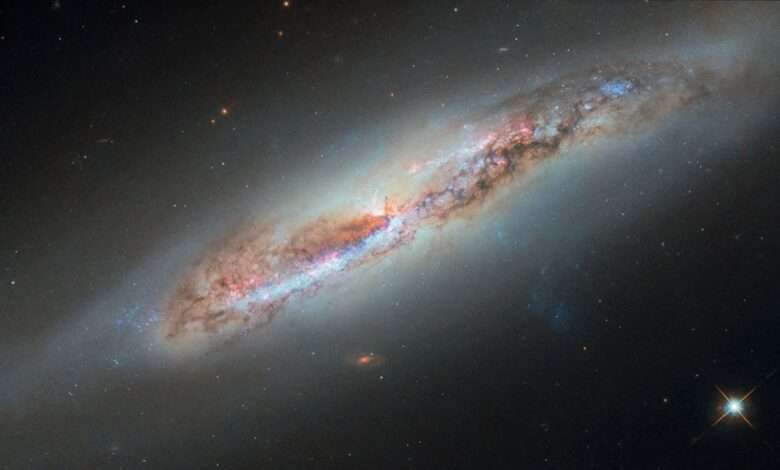
Hubble Glimpses Galactic Gas Making a Getaway
A sideways spiral galaxy shines in this NASA/ESA Hubble Space Telescope image. Located about 60 million light-years away in the constellation Virgo (the Maiden), NGC 4388 is a resident of the Virgo galaxy cluster. This enormous cluster of galaxies contains more than a thousand members and is the nearest large galaxy cluster to the Milky Way. NGC 4388 appears to tilt at…
Read More » -
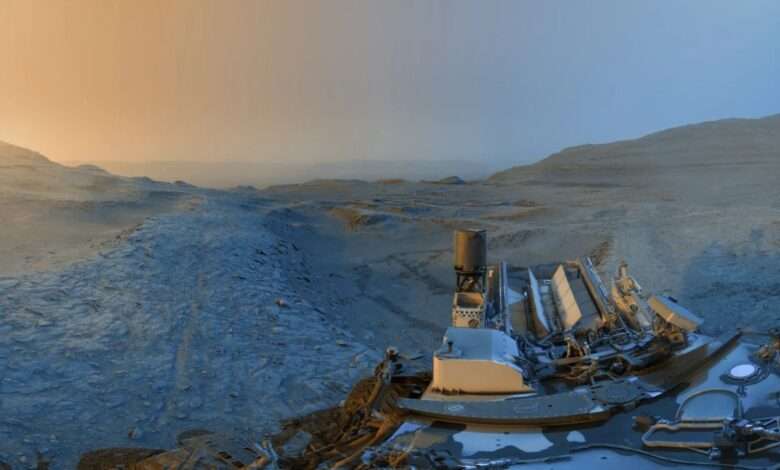
Curiosity Sends Holiday Postcard from Mars
Team members working with NASA’s Curiosity Mars rover created this “postcard” by commanding the rover to take images at two times of day on Nov. 18, 2025, spanning periods that occurred on both the 4,722nd and 4,723rd Martian days, or sols, of the mission. The panoramas were captured at 4:15 p.m. on Sol 4,722 and 8:20 a.m. on Sol 4,723…
Read More » -
Microbiology
Microorganisms and Spaceflight Spaceflight poses a risk of adverse health effects due to the interactions between microorganisms, their hosts, and their environment. The JSC Microbiology team addresses the benefits and risks related to microorganisms, including infectious disease, allergens, environmental and food contamination, and the impacts of changes in environmental and human microbial ecology aboard spacecraft. The team includes certified medical…
Read More » -
NASA’s Chandra Rings in New Year With Champagne Cluster
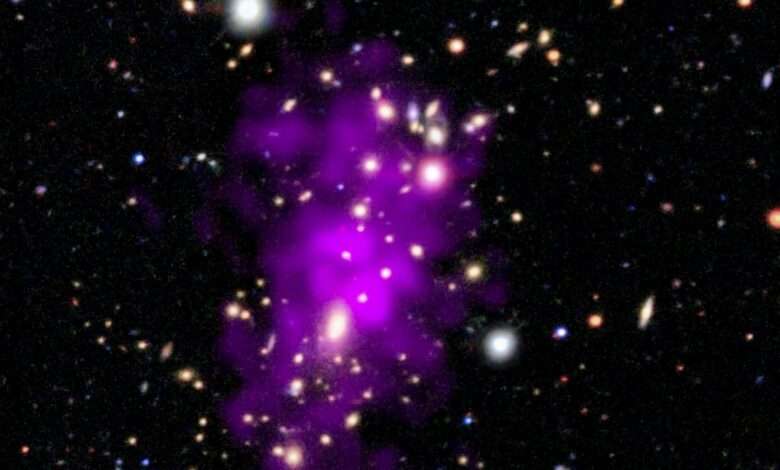
Celebrate the New Year with the “Champagne Cluster,” a galaxy cluster seen in this new image from NASA’s Chandra X-ray Observatory and optical telescopes. Astronomers discovered this galaxy cluster Dec. 31, 2020. The date, combined with the bubble-like appearance of the galaxies and the superheated gas seen with Chandra observations (represented in purple), inspired the scientists to nickname the galaxy…
Read More » -

The Earth Observer: Offering Perspectives from Space through Time
An Intertwined History: The Earth Observer and EOS The Earth Observer, a newsletter issued for more than 36 years, will release its last online content at the close of 2025. This newsletter evolved in parallel with NASA’s Earth Observing System (EOS). It is almost impossible to speak of this newsletter without mentioning EOS. As The Earth Observer prepares its final publication, NASA also plans…
Read More » -
Terra: The End of An Era
Introduction Launched into the night sky nearly 26 years ago, on Dec. 19, 1999, from Vandenberg Air Force Base (now Space Force Base), Terra was NASA’s first Earth Observing System (EOS) flagship mission to study Earth’s land surface from space via a coordinated series of polar-orbiting and low-inclination satellites that produce long-term global observations useful for understanding the interactions between…
Read More » -
The Final Earth Observer Editor’s Corner: October–December 2025
It is with a heavy heart that I announce that NASA Earth Science Communications has directed The Earth Observer to conduct an orderly shutdown of the publication. No new content will be published after Dec. 31, 2025. While the sunset of The Earth Observer is bittersweet for our team, the good news is that all of the rich historical and descriptive content preserved on The…
Read More » -
The State of CERES: Updates and Highlights
Introduction The Clouds and the Earth’s Radiant Energy System (CERES) was initially designed in the late-1980s and early-1990s as a facility instrument for NASA’s Earth Observing System (EOS). Since its inception, NASA’s Langley Research Center (LaRC) has led this effort. CERES has a long history with seven different instruments flying on five different missions since 1997. As of today, six CERES instruments…
Read More » -
2025 Space Station Science Snapshots
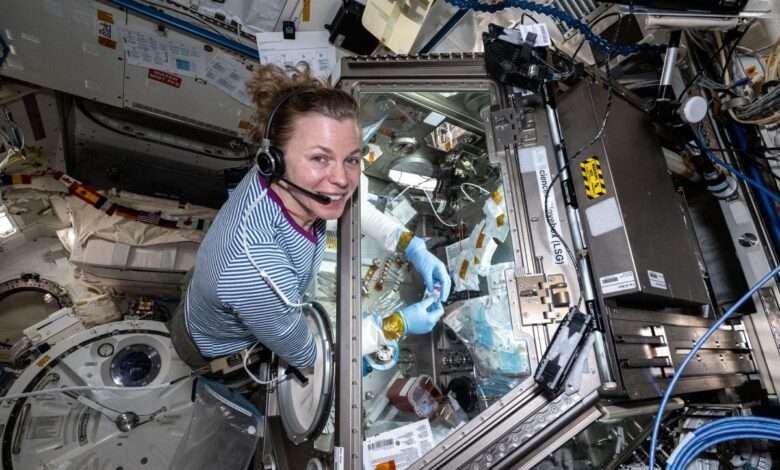
2025 marks another year pushing the boundaries of scientific research aboard the International Space Station. This past year, over 750 investigations were conducted aboard the space station, supported by crewed missions and resupply vehicles delivering essential cargo and experiments to the orbiting laboratory. This year’s research included testing DNA’s ability to store data, producing vital nutrients on demand, demonstrating technology…
Read More »