
NASA
-
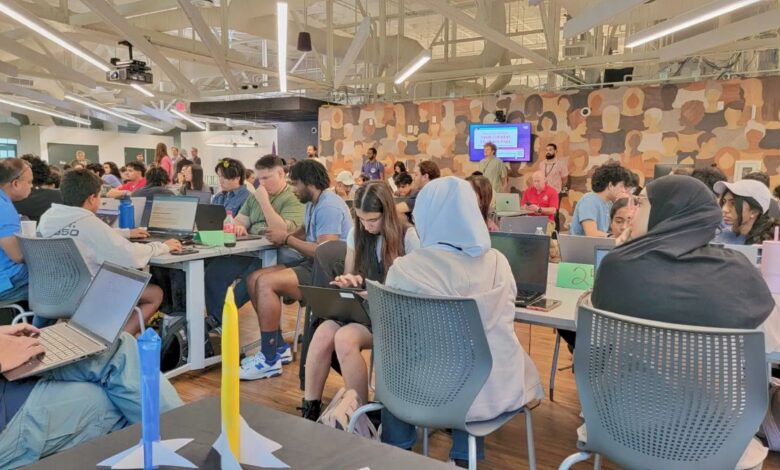
NASA Announces 2025 International Space Apps Challenge Global Winners
NASA Space Apps announced Thursday 10 winners of the 2025 NASA Space Apps Challenge. During this two-day hackathon, participants gathered at 551 local events across 167 countries and territories to showcase their STEM skills and proposed ways to transform NASA’s open data into actionable tools. Participants work on their projects at the NASA Space Apps Challenge in Austin, Texas, at…
Read More » -
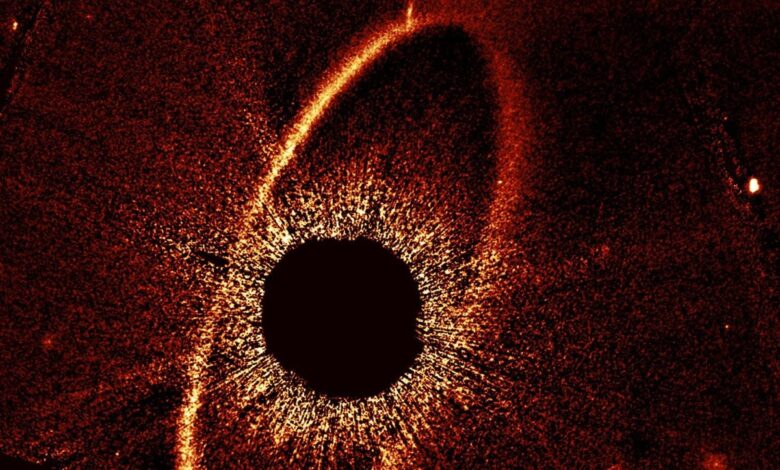
NASA’s Hubble Sees Asteroids Colliding at Nearby Star for First Time
Like a game of cosmic bumper cars, scientists think the early days of our solar system were a time of violent turmoil, with planetesimals, asteroids, and comets smashing together and pelting the Earth, Moon, and the other inner planets with debris. Now, in a historical milestone, NASA’s Hubble Space Telescope has directly imaged similar catastrophic collisions in a nearby planetary system around…
Read More » -
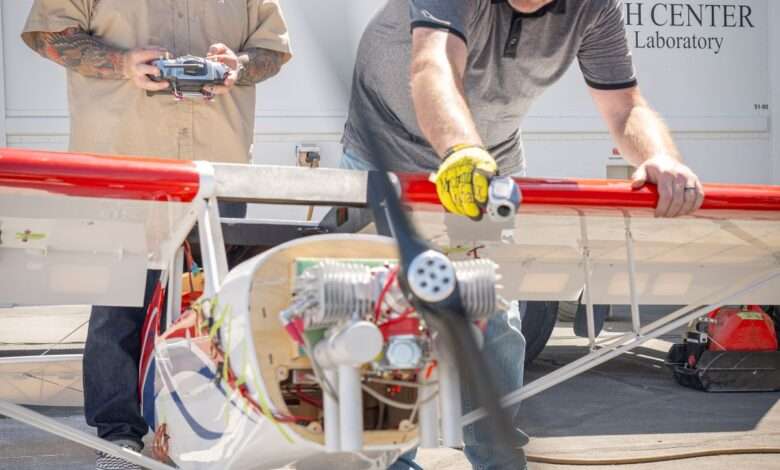
NASA Lab Completes Engine Checks on New Aircraft
Justin Hall, left, controls a subscale aircraft as Justin Link holds the aircraft in place during preliminary engine tests on Friday, Sept. 12, 2025, at NASA’s Armstong Flight Research Center in Edwards, California. Hall, chief pilot at the center’s Dale Reed Subscale Flight Research Laboratory, and Link, a pilot for small uncrewed aircraft systems, are building the large subscale aircraft to support…
Read More » -
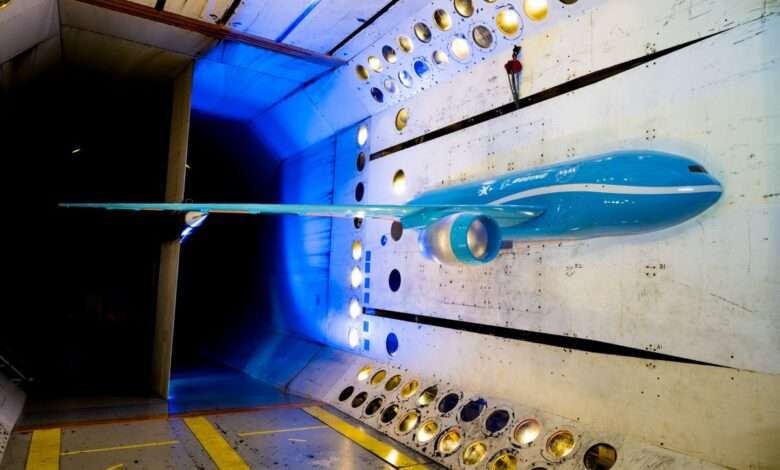
NASA, Boeing Test How to Improve Performance of Longer, Narrower Aircraft Wings
The airliner you board in the future could look a lot different from today’s, with longer, thinner wings that provide a smoother ride while saving fuel. Those wings would be a revolutionary design for commercial aircraft, but like any breakthrough technology, they come with their own development challenges – which experts from NASA and Boeing are now working to solve. …
Read More » -
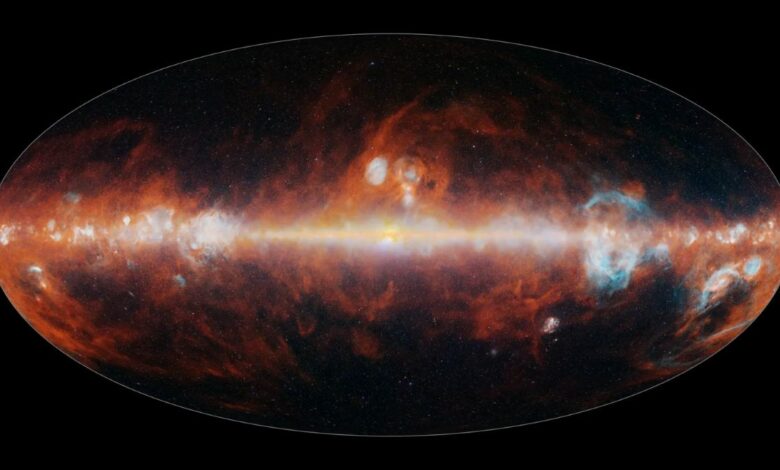
NASA’s SPHEREx Observatory Completes First Cosmic Map Like No Other
Launched in March, NASA’s SPHEREx space telescope has completed its first infrared map of the entire sky in 102 colors. While not visible to the human eye, these 102 infrared wavelengths of light are prevalent in the cosmos, and observing the entire sky this way enables scientists to answer big questions, including how a dramatic event that occurred in the…
Read More » -

NASA Welcomes 15th Administrator Jared Isaacman
Jared Isaacman was sworn in Thursday as NASA’s 15th administrator by District Judge Timothy J. Kelly. The oath was taken during a ceremony held at the Eisenhower Executive Office Building in Washington. As NASA administrator, Isaacman will lead the agency in bold pursuit of exploration, innovation, and scientific discovery. “I am deeply honored to be sworn in as NASA administrator,” said…
Read More » -
2025 Science Activation Opportunity
NASA Science encourages all people to actively participate in science through activities and resources developed by a collaborative network of project teams drawing on NASA SMD assets (science content, experts, data, etc.). Your team can apply to be part of this program. Opportunity NASA SMD seeks a portfolio of projects that together : Cover the full breadth of NASA science disciplines Operate across all 50…
Read More » -

2025 in Review: Highlights from NASA in Silicon Valley
Editor’s Note: This article was updated on Friday, Dec. 19, 2025, to clarify the research done by ATM-X and ACERO. NASA’s Ames Research Center in California’s Silicon Valley continued to make strides in research, technology, engineering, science, and innovation this past year. Join us as we take a look back at some of the highlights from 2025. From Supercomputers to…
Read More » -
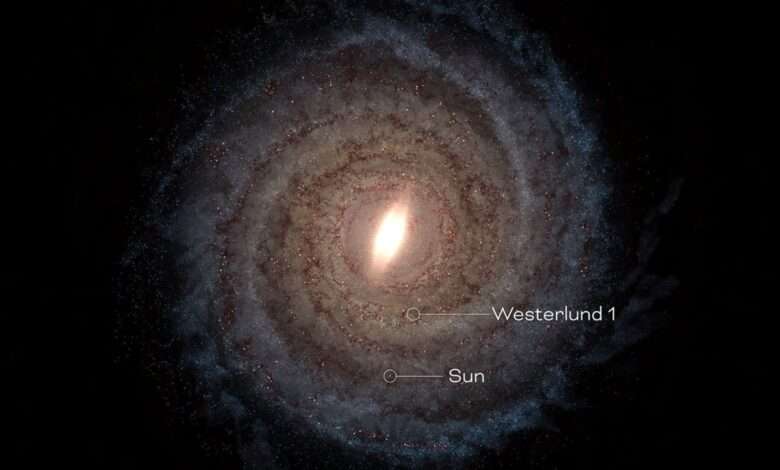
NASA’s Fermi Spots Young Star Cluster Blowing Gamma-Ray Bubbles
For the first time, astronomers using NASA’s Fermi Gamma-ray Space Telescope have traced a budding outflow of gas from a cluster of young stars in our galaxy — insights that help us understand how the universe has evolved as NASA explores the secrets of the cosmos for the benefit of all. The cluster, called Westerlund 1, is located about 12,000 light-years…
Read More » -

NASA’s DiskSat Technology Demo Launches to Low Earth Orbit
NASA’s DiskSat technology demonstration mission will test the performance of a new small spacecraft platform designed to expand the capabilities of current small spacecraft. By demonstrating the advantages of a flat, disk-shaped architecture over the conventional CubeSat design, DiskSat aims to enable lower-cost space missions, broaden scientific opportunities, and increase overall access to space. At 12:03 a.m. EST on Thursday,…
Read More »