
NASA
-

What’s Next for HLS
Harmonized Landsat and Sentinel-2 PI Christopher Neigh shares milestones and a vision for the future In 2025, the Harmonized Landsat and Sentinel-2 (HLS) program established itself as a cornerstone for global medium-resolution optical Earth observation and became one of NASA’s most downloaded products. The seamless, analysis-ready dataset is free for anyone to use and download on NASA Earthdata: HLSL30v2.0 and HLSS30v2.0. HLS version…
Read More » -

Maintaining the Gold Standard: The Future of Landsat Calibration and Validation
By Amit Angal, Senior Engineer at Goddard Space Flight Center The Landsat Calibration and Validation (Cal/Val) group helps uphold Landsat’s reputation as the gold standard of satellite imagery. They ensure that the Operational Land Imager (OLI) and the Thermal Infrared Sensor (TIRS) aboard Landsats 8 and 9 provide high-quality scientific measurements to users around the world. In 2025, the Cal/Val group contributed over 60 pages to the…
Read More » -
One of NASA’s Key Cameras Orbiting Mars Takes 100,000th Image
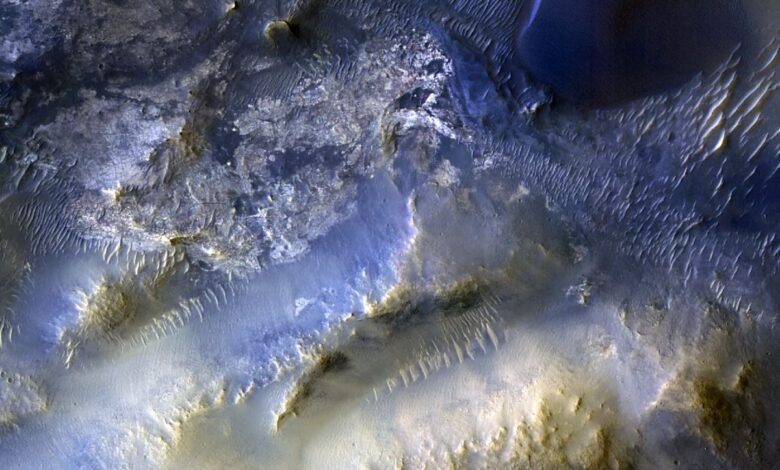
Mesas and dunes stand out in the view snapped by HiRISE, one of the imagers aboard the agency’s Mars Reconnaissance Orbiter. After nearly 20 years at the Red Planet, NASA’s Mars Reconnaissance Orbiter (MRO) has snapped its 100,000th image of the surface with its HiRISE camera. Short for High Resolution Imaging Science Experiment, HiRISE is the instrument the mission relies…
Read More » -
Microbiology
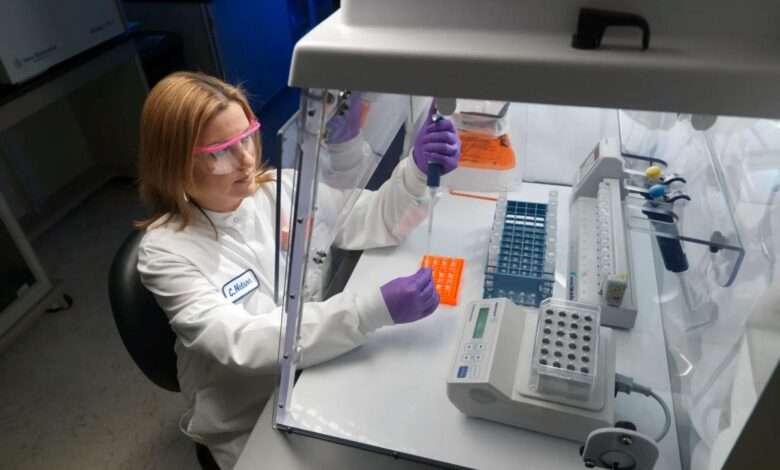
Microorganisms and Spaceflight Spaceflight poses a risk of adverse health effects due to the interactions between microorganisms, their hosts, and their environment. The JSC Microbiology team addresses the benefits and risks related to microorganisms, including infectious disease, allergens, environmental and food contamination, and the impacts of changes in environmental and human microbial ecology aboard spacecraft. The team includes certified medical…
Read More » -

Immunology and Virology
Does Spaceflight Alter the Human Immune System? Getting sick on Earth is nothing to sneeze at, but for astronauts on deep space exploration missions, the risk for contracting diseases may be elevated due to altered immunity. The Human Health and Performance Directorate’s Immunology/Virology Laboratory is ideally suited to study the effects of spaceflight on the immune system. When immune cells…
Read More » -
NASA’s Webb Observes Exoplanet Whose Composition Defies Explanation
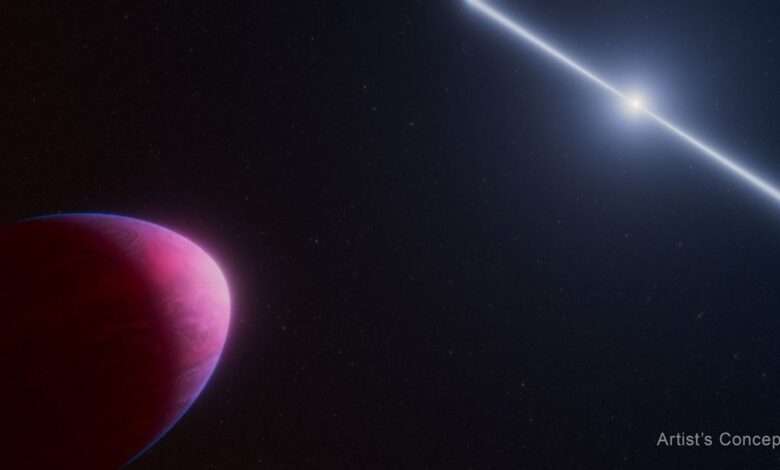
Scientists using NASA’s James Webb Space Telescope have observed a rare type of exoplanet, or planet outside our solar system, whose atmospheric composition challenges our understanding of how it formed. Officially named PSR J2322-2650b, this Jupiter-mass object appears to have an exotic helium-and-carbon-dominated atmosphere unlike any ever seen before. Soot clouds likely float through the air, and deep within the planet,…
Read More » -
NASA ORBIT Challenge 2026
The NASA ORBIT (Opportunities in Research, Business, Innovation, and Technology for the Workforce) Challenge is a multi-phase, student-focused challenge designed to inspire and empower the next generation of innovators, engineers, entrepreneurs, and researchers. Compete for cash prizes, receive mentorship from NASA experts, and present your work at an in-person showcase. Finalists gain access to an exclusive accelerator program designed to…
Read More » -
NASA’s IMAP Mission Captures ‘First Light,’ Looks Back at Earth
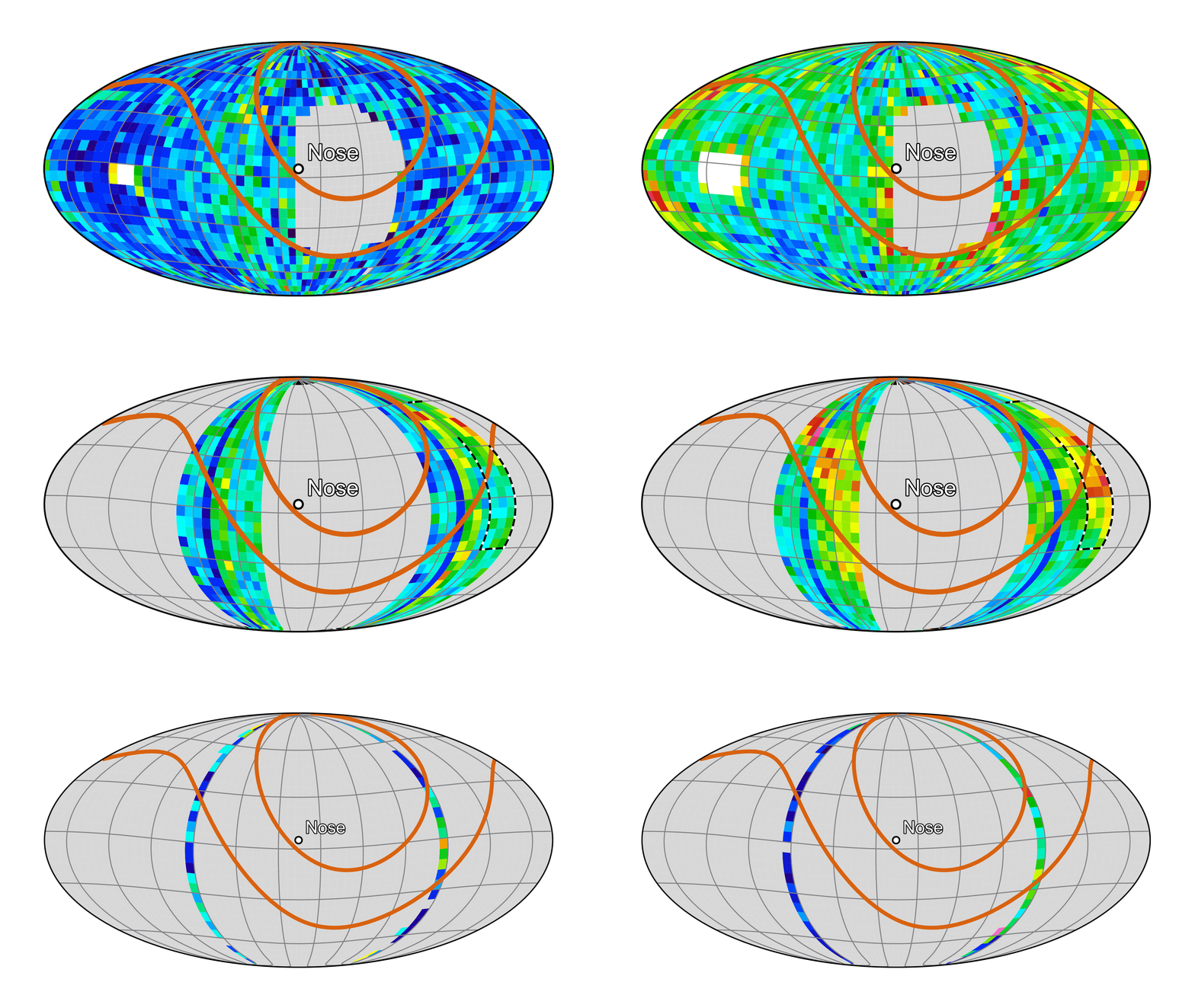
All 10 instruments aboard NASA’s newly launched IMAP (Interstellar Mapping and Acceleration Probe) mission have successfully recorded their first measurements in space. With these “first light” observations, the spacecraft is now collecting preliminary science data as it journeys to its observational post at Lagrange point 1 (L1), about 1 million miles from Earth toward the Sun. “We are extremely pleased…
Read More » -
NASA, Partners Share First Data From New US-European Sea Satellite
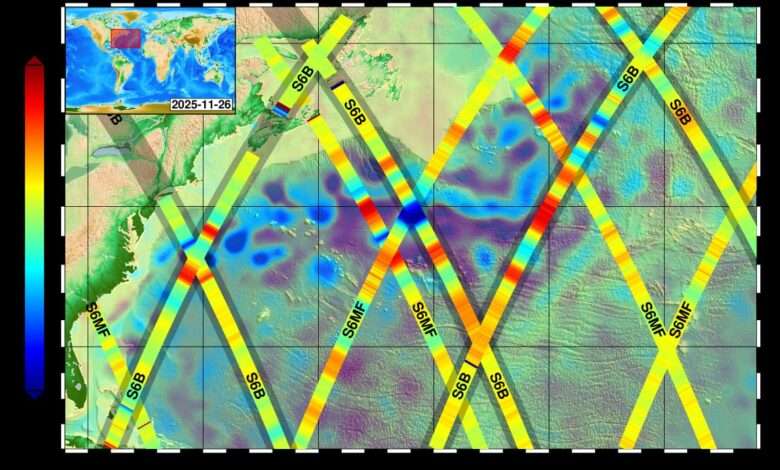
Launched in November, Sentinel-6B will track ocean height with ultraprecision to advance marine forecasting, national security, and more. Sentinel-6B, a joint mission by NASA and its U.S. and European partners to survey 90% of the world’s oceans for the benefit of communities and commerce, has started sending back its first measurements since launching in November. A newly published map of…
Read More » -
NASA’s Carruthers Geocorona Observatory Reveals ‘First Light’ Images
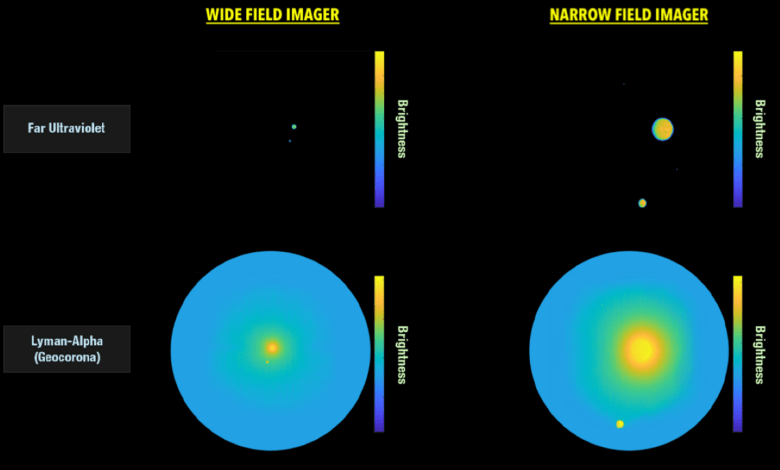
NASA’s Carruthers Geocorona Observatory has captured its first images from space, revealing rare views of Earth and the Moon in ultraviolet light. Taken on Nov. 17 — still months before the mission’s science phase begins — these “first light” images confirm the spacecraft is healthy while hinting at the incredible views to come. The initial images consist of two from…
Read More »