
NASA
-

NASA Astronaut Jonny Kim Returns to Earth
The Soyuz MS-27 spacecraft is seen as it lands in a remote area near the town of Zhezkazgan, Kazakhstan on Dec. 9, 2025, with Expedition 73 NASA astronaut Jonny Kim, and Roscosmos cosmonauts Sergey Ryzhikov and Alexey Zubritsky aboard. The trio returned to Earth after logging 245 days in space as members of Expeditions 72 and 73 aboard the International Space Station. While…
Read More » -
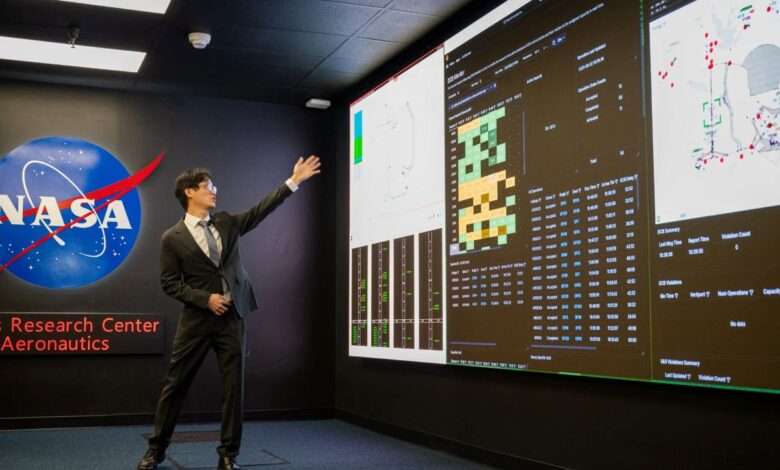
NASA Demonstrates Safer Skies for Future Urban Air Travel
NASA is helping shape the future of urban air travel with a new simulation that will manage how electric air taxis and drones can successfully operate within busy areas. The demonstration, held at NASA’s Ames Research Center in California’s Silicon Valley earlier this year, focused on a system called the Strategic Deconfliction Simulation, which helps coordinate flight plans before takeoff,…
Read More » -
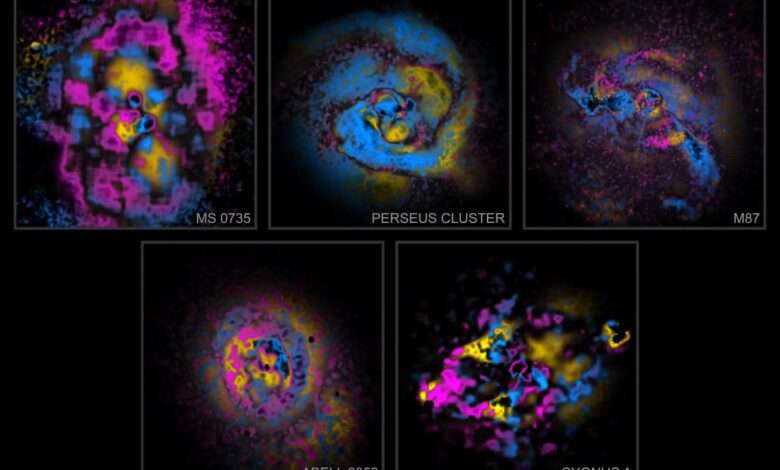
Painting Galaxy Clusters by Numbers (and Physics)
Galaxy clusters are the most massive objects in the universe held together by gravity, containing up to several thousand individual galaxies and huge reservoirs of superheated, X-ray-emitting gas. The mass of this hot gas is typically about five times higher than the total mass of all the galaxies in galaxy clusters. In addition to these visible components, 80% of the…
Read More » -
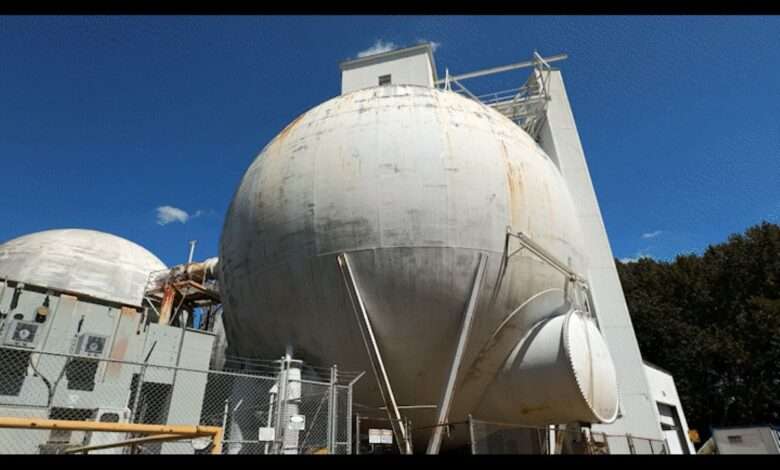
NASA Begins Moon Mission Plume-Surface Interaction Tests
In March, NASA researchers employed a new camera system to capture data imagery of the interaction between Firefly Aerospace Blue Ghost Mission-1 lander’s engine plumes and the lunar surface. Through NASA’s Artemis campaign, this data will help researchers understand the hazards that may occur when a lander’s engine plumes blast away at the lunar dust, soil, and rocks. The data…
Read More » -
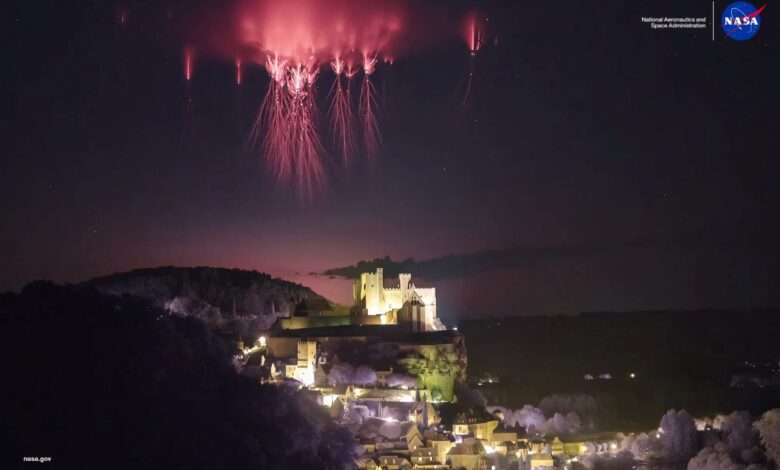
Sprites Over Château de Beynac
A flash of lightning, and then—something else. High above a storm, a crimson figure blinks in and out of existence. If you see it, you are a lucky witness of a sprite, one of the least-understood electrical phenomena in Earth’s upper atmosphere. Sprites occur at some 50 miles (80 kilometers) altitude, high above thunderstorms. They appear moments after a lightning…
Read More » -
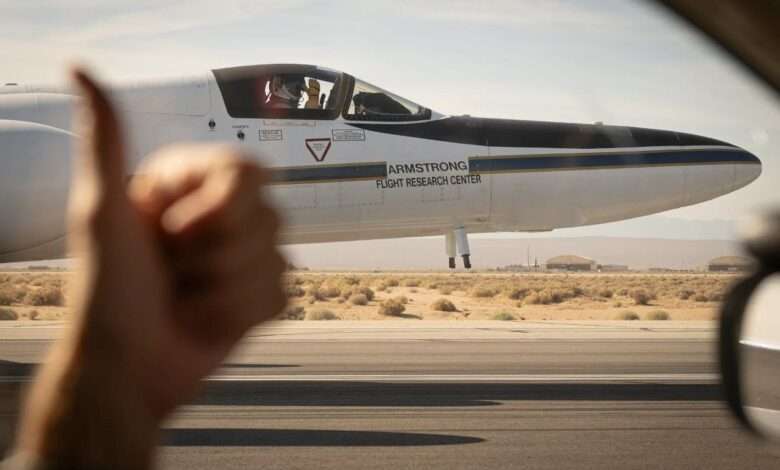
New NASA Sensor Goes Hunting for Critical Minerals
Called AVIRIS-5, it’s the latest in a long line of sensors pioneered by NASA JPL to survey Earth, the Moon, and other worlds. Cradled in the nose of a high-altitude research airplane, a new NASA sensor has taken to the skies to help geoscientists map rocks hosting lithium and other critical minerals on Earth’s surface some 60,000 feet below. In…
Read More » -
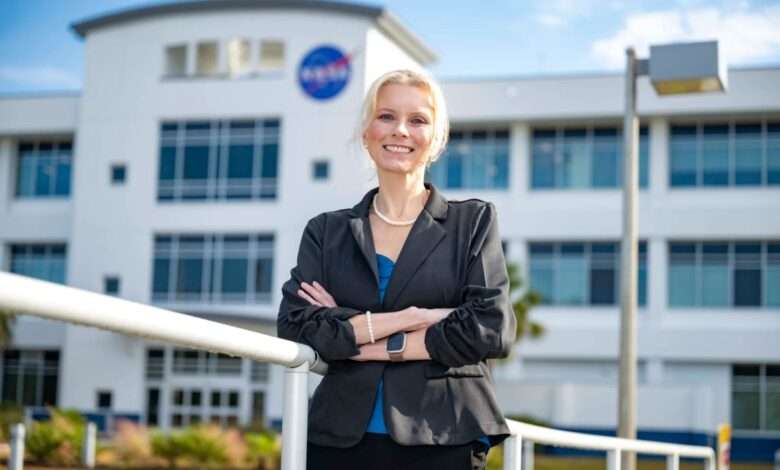
How Louisiana Native Turned Childhood Wonder into NASA Stennis Career
Michelle Hoehn vividly remembers the day a seed was planted for her future at NASA’s Stennis Space Center near Bay St. Louis, Mississippi. As a seventh grader, the Bogalusa, Louisiana, native joined her dad for Father/Daughter Day at NASA Stennis. Hoehn knew she wanted to be part of something bigger, something that sparked wonder and purpose, in the moment she…
Read More » -
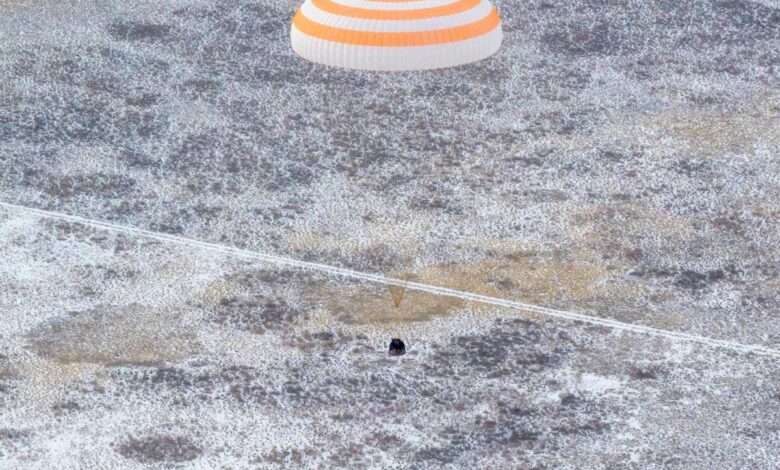
NASA Astronaut Jonny Kim, Crewmates Return from Space Station
NASA astronaut Jonny Kim returned to Earth on Tuesday alongside Roscosmos cosmonauts Sergey Ryzhikov and Alexey Zubritsky, wrapping up an eight-month science mission aboard the International Space Station to benefit life on Earth and future space exploration. They made a safe, parachute-assisted landing at 12:03 a.m. EST (10:03 a.m. local time), southeast of Dzhezkazgan, Kazakhstan, after departing the space station…
Read More » -
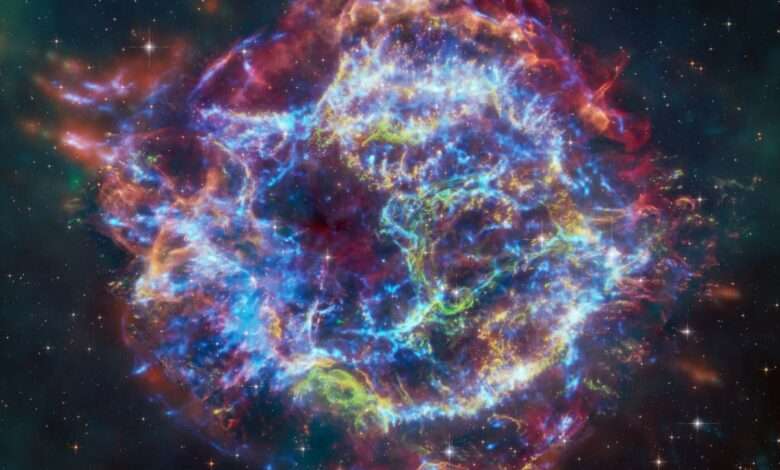
XRISM Finds Chlorine, Potassium in Cas A
The Cassiopeia A supernova remnant glows in X-ray, visible, and infrared light in this Jan. 8, 2024, image that combines data from NASA’s Chandra X-ray Observatory and Hubble, Webb, and Spitzer space telescopes. A study by the XRISM (X-ray Imaging and Spectroscopy Mission) spacecraft has made the first-ever X-ray detections of chlorine and potassium from the wreckage; a paper about…
Read More » -
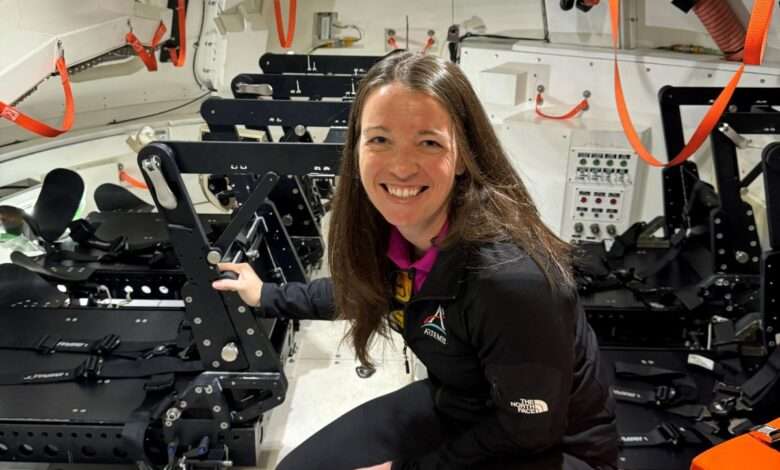
Artemis II Vehicle Manager Branelle Rodriguez Gets Orion Ready for “Go”
By the time the Artemis II Orion spacecraft launches to the Moon next year, its many components will already have traveled thousands of miles and moved across multiple facilities before coming together at NASA’s Kennedy Space Center. Branelle Rodriguez, Artemis II vehicle manager for the Orion Program, has overseen many parts of that journey. Her job is to ensure the…
Read More »