
NASA
-
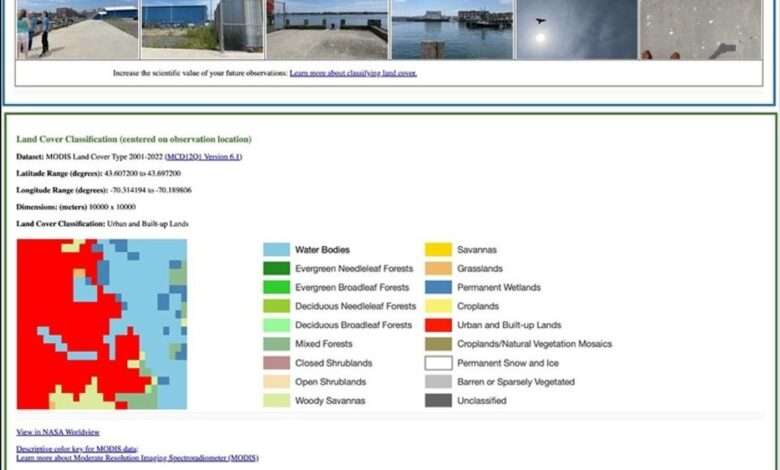
NASA & GLOBE Connect People, Land, and Space
A group of elementary-aged students gather outside of Oldham County Public Library in La Grange, Kentucky, United States to look at clouds in the sky. “If anyone asks what you are doing, tell them, ‘I am a citizen scientist and I am helping NASA,’” Children’s Programming Librarian, Cheri Grinnell, tells the kids. Grinnell supports an afterschool program called Leopard Spot…
Read More » -

NASA’s Roman Observatory Passes Spate of Key Tests
NASA’s nearly complete Nancy Grace Roman Space Telescope has made another set of critical strides toward launch. This fall, the outer portion passed two tests — a shake test and an intense sound blast — to ensure its successful launch. The inner portion of the observatory underwent a major 65-day thermal vacuum test, showing that it will function properly in…
Read More » -
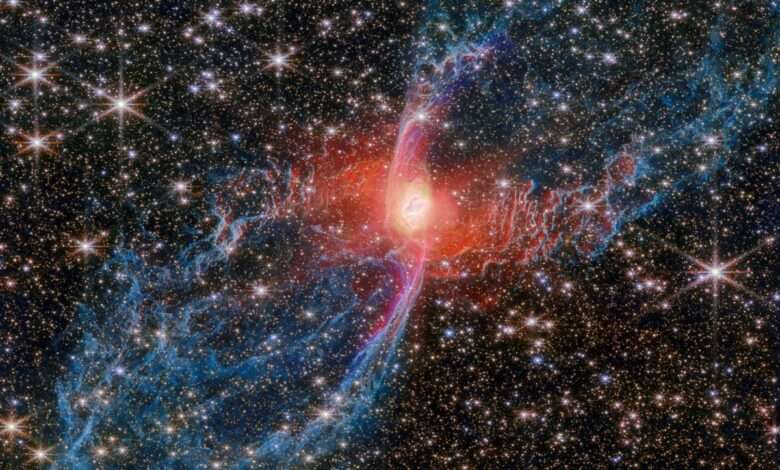
Red Spider Nebula
Using its Near-InfraRed Camera (NIRCam), NASA’s James Webb Space Telescope captured never-before-seen details of the Red Spider Nebula, a planetary nebula, in this image released on Oct. 26, 2025. NIRCam is Webb’s primary near-infrared imager, providing high-resolution imaging and spectroscopy for a wide variety of investigations. Webb’s new view of the Red Spider Nebula reveals for the first time the full extent of…
Read More » -
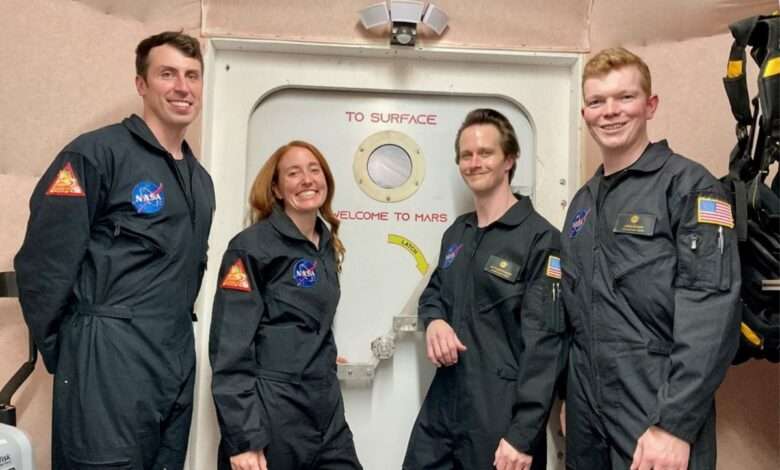
CHAPEA Crew Begins Stay Inside NASA’s Mars Habitat for Second Mission
A crew of four research volunteers stepped inside NASA’s CHAPEA (Crew Health and Performance Exploration Analog) habitat on Oct. 19, marking the start of the agency’s second 378-day simulated Mars mission. Ross Elder, Ellen Ellis, Matthew Montgomery, and James Spicer are living and working inside the roughly 1,700-square-foot 3D-printed habitat at the agency’s Johnson Space Center in Houston until Oct.…
Read More » -
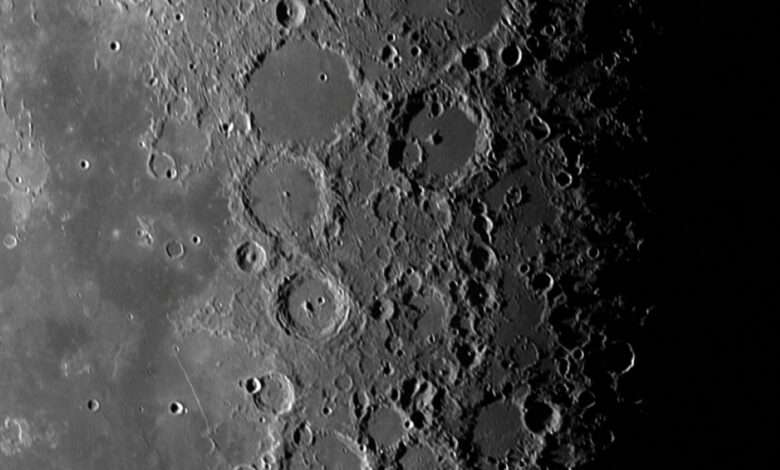
NASA Crater Detection Challenge
Crater rims are vital landmarks for planetary science and navigation. Yet detecting them in real imagery is tough, with shadows, lighting shifts, and broken edges obscuring their shape. This project invites you to develop methods that can reliably fit ellipses to crater rims, helping advance future space exploration. In the pursuit of next generation, terrain-based optical navigation, NASA is developing…
Read More » -
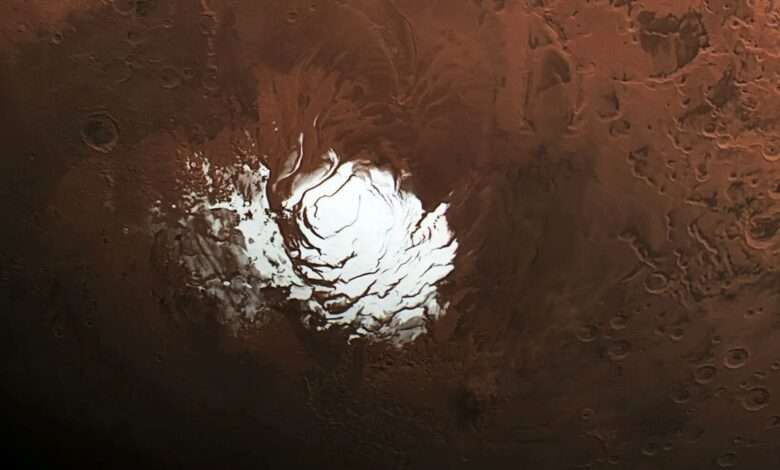
NASA Orbiter Shines New Light on Long-Running Martian Mystery
Results from an enhanced radar technique have demonstrated improvement to sub-surface observations of Mars. NASA’s Mars Reconnaissance Orbiter (MRO) has revisited and raised new questions about a mysterious feature buried beneath thousands of feet of ice at the Red Planet’s south pole. In a recent study, researchers conclude from data obtained using an innovative radar technique that an area on…
Read More » -
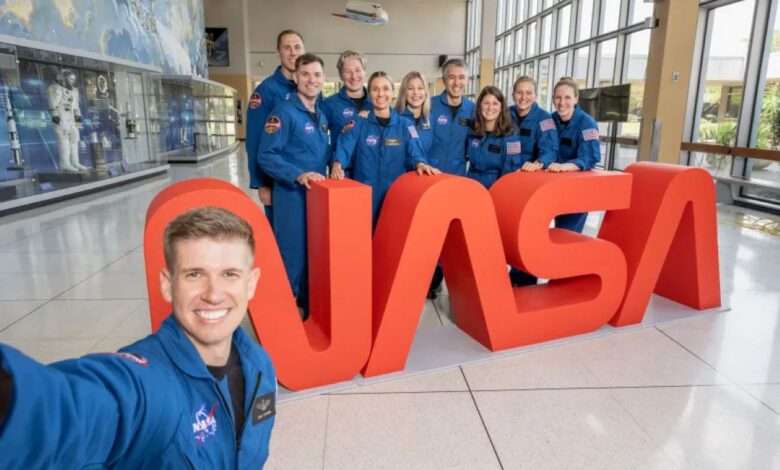
NASA’s 2025 Astronaut Candidates: Shaping Artemis Exploration
When NASA’s 2025 astronaut candidates arrived at the agency’s Johnson Space Center in Houston this fall, they stepped into history, sharing a common mission to master the skills and teamwork that define NASA’s next era of exploration. Selected from a pool of more than 8,000 applicants, the new class represents a range of backgrounds — military test pilots, engineers, a…
Read More » -
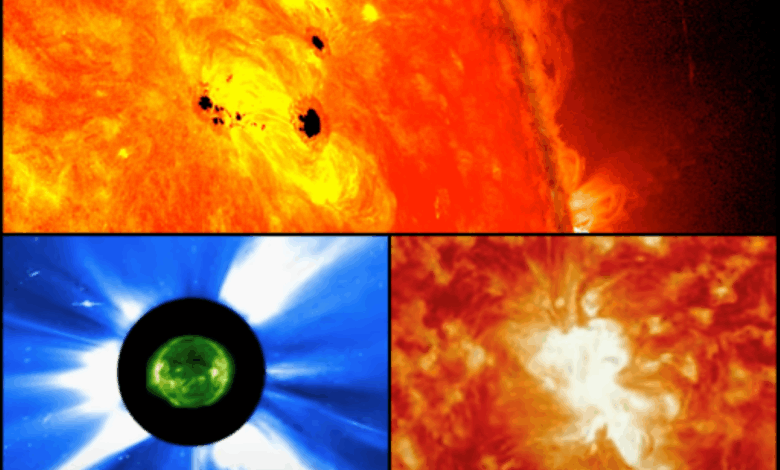
New NASA HEAT and My NASA Data Resources Bring Space Weather Science into Classrooms
As the Sun enters a period of heightened activity, students now have a new way to explore its powerful effects on Earth and space. NASA’s Heliophysics Education Activation Team (NASA HEAT), in collaboration with My NASA Data, has released a new set of classroom resources that invite students and educators to engage with real NASA mission data to study space…
Read More » -

NASA Citizen Science Toolkit for Librarians
Librarians: NASA Citizen Science has something for you! Our new Toolkit for Librarians can help you share NASA citizen science opportunities with your patrons and community members. Rural and urban libraries, informal educators, youth group leaders, and retirement community coordinators can all benefit from this resource. Together, we can open the door for more people to join the fun, learning, and thrill…
Read More » -

NASA, NOAA Rank 2025 Ozone Hole as 5th Smallest Since 1992
While continental in scale, the ozone hole over the Antarctic was small in 2025 compared to previous years and remains on track to recover later this century, NASA and the National Oceanic and Atmospheric Administration (NOAA) reported. The hole this year was the fifth smallest since 1992, the year a landmark international agreement to phase out ozone-depleting chemicals began to…
Read More »