
NASA
-
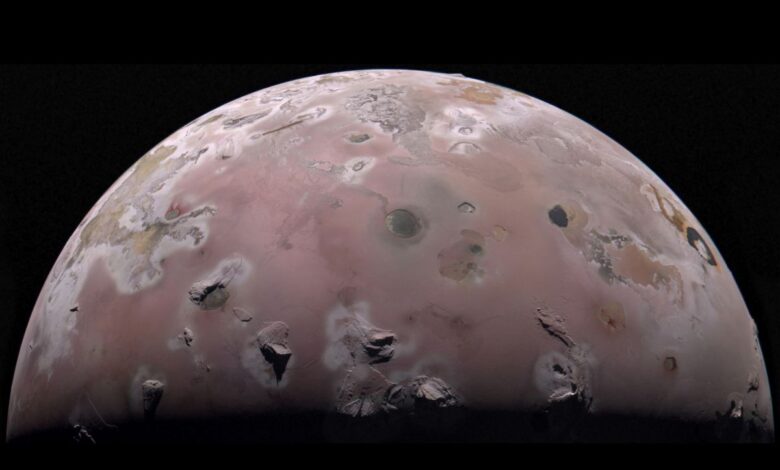
NASA Shares How to Save Camera 370-Million-Miles Away Near Jupiter
An experimental technique rescued a camera aboard the agency’s Juno spacecraft, offering lessons that will benefit other space systems that experience high radiation. The mission team of NASA’s Jupiter-orbiting Juno spacecraft executed a deep-space move in December 2023 to repair its JunoCam imager to capture photos of the Jovian moon Io. Results from the long-distance save were presented during a…
Read More » -

GLOBE-Trotting Science Lands in Chesapeake with NASA eClips
On June 16-17, 2025, 50 students at Camp Young in Chesapeake, Virginia traded their usual summer routines for microscopes. The NASA eClips team from the National Institute of Aerospace Center for Integrative STEM Education (NIA-CISE) taught two engaging lessons focused on macroinvertebrates and plankton, with a surprising star of the show – mosquitoes! Camp Young, a Title I camp program serving students…
Read More » -

NASA Goddard Center Director Makenzie Lystrup Set to Depart
On Monday, NASA announced Dr. Makenzie Lystrup, director of NASA’s Goddard Space Flight Center in Greenbelt, Maryland, is set to leave the agency on Friday, Aug. 1. As center director of Goddard, a role she has held since April 2023, Lystrup also was responsible for guiding the direction and management of multiple other NASA field installations including Wallops Flight Facility…
Read More » -
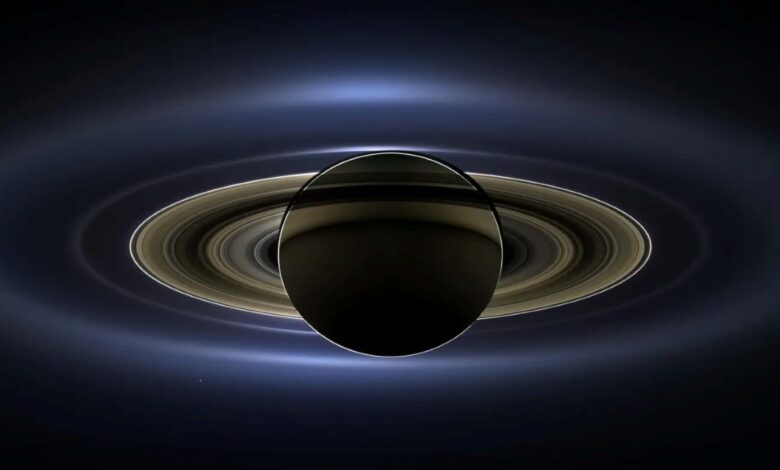
The Day Earth Smiled
On July 19, 2013, NASA’s Cassini spacecraft had a rare opportunity to image Saturn and, far in the background, Earth. This image spans about 404,880 miles (651,591 kilometers) across. With the Sun’s powerful and potentially damaging rays eclipsed by Saturn itself, Cassini’s onboard cameras were able to take advantage of this unique viewing geometry. They acquired a panoramic mosaic of the Saturn…
Read More » -
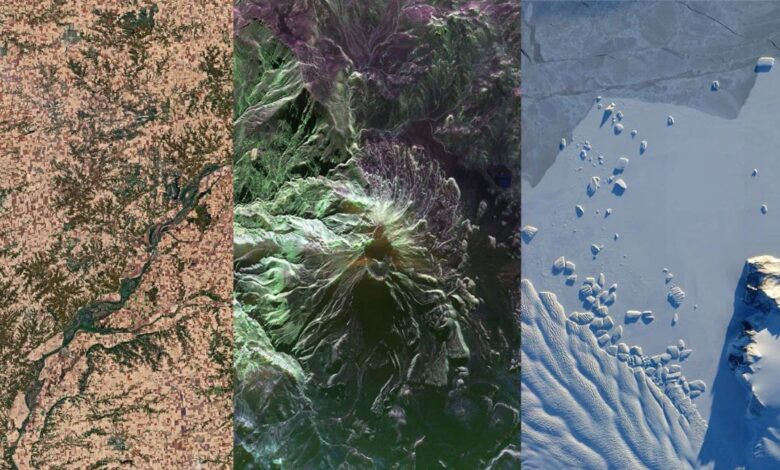
5 Things to Know About Powerful New U.S.-India Satellite, NISAR
Lee esta historia en español aquí. Data from NISAR will map changes to Earth’s surface, helping improve crop management, natural hazard monitoring, and tracking of sea ice and glaciers. A new U.S.-India satellite called NISAR (NASA-ISRO Synthetic Aperture Radar) will provide high-resolution data enabling scientists to comprehensively monitor the planet’s land and ice surfaces like never before, building a detailed record…
Read More » -

Catherine Staggs: Advancing Artemis Through Contracting Expertise
A lifelong baseball fan, Catherine Staggs set out with her family to visit all 30 Major League Baseball stadiums across the United States. That love of the game eventually led them to settle in Houston about eight years ago – a choice that helped lead Staggs to NASA’s Johnson Space Center, where she is a contracting officer for the agency’s…
Read More » -

Curiosity Blog, Sols 4602-4603: On Top of the Ridge
Written by Alex Innanen, Atmospheric Scientist at York University Earth planning date: Wednesday, July 16, 2025 As we hoped, we successfully climbed the 11-meter ramp (about 36 feet) and have arrived at the top of the ridge and the start of the main boxwork region. This means we’re moving into the next phase of the boxwork campaign, which is all about…
Read More » -
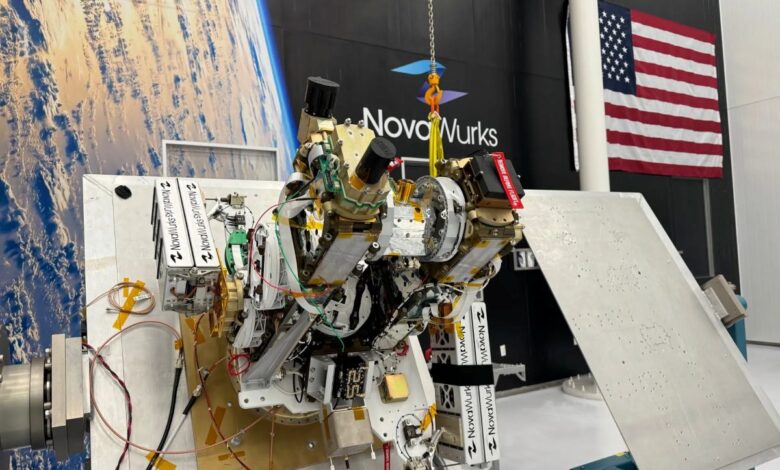
NASA Tests Scalable Satellite Tech to Launch Sensors Quicker
NASA’s Athena Economical Payload Integration Cost mission, or Athena EPIC, is a test launch for an innovative, scalable space vehicle design to support future missions. The small satellite platform is engineered to share resources among the payloads onboard by managing routine functions so the individual payloads don’t have to. This technology results in lower costs to taxpayers and a quicker…
Read More » -

Stay Cool: NASA Tests Innovative Technique for Super Cold Fuel Storage
In the vacuum of space, where temperatures can plunge to minus 455 degrees Fahrenheit, it might seem like keeping things cold would be easy. But the reality is more complex for preserving ultra-cold fluid propellants – or fuel – that can easily overheat from onboard systems, solar radiation, and spacecraft exhaust. The solution is a method called cryogenic fluid management, a…
Read More » -
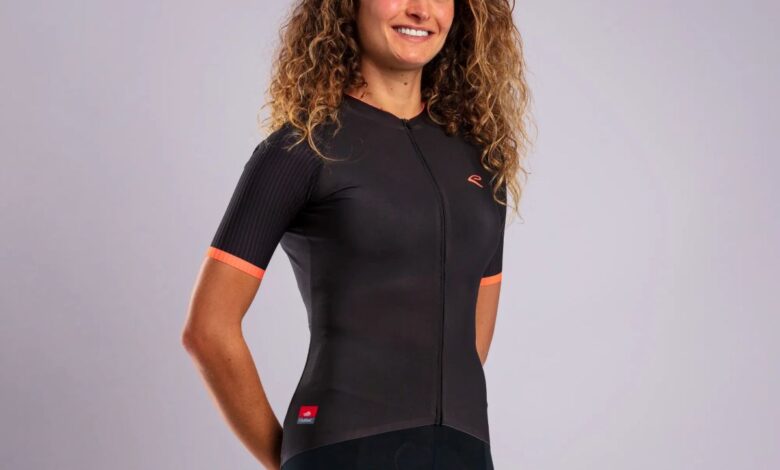
NASA-Derived Textiles are Touring France by Bike
During the Tour de France, athletes have to maintain a constant speed while bike riding for dozens of miles through cold rains and summer heat. These cyclists need gear that adapts to the different environments they encounter. One company is using a material with NASA origins to ensure these athletes stay comfortable while taking their grand tours. Phase-change materials use…
Read More »