
NASA
-
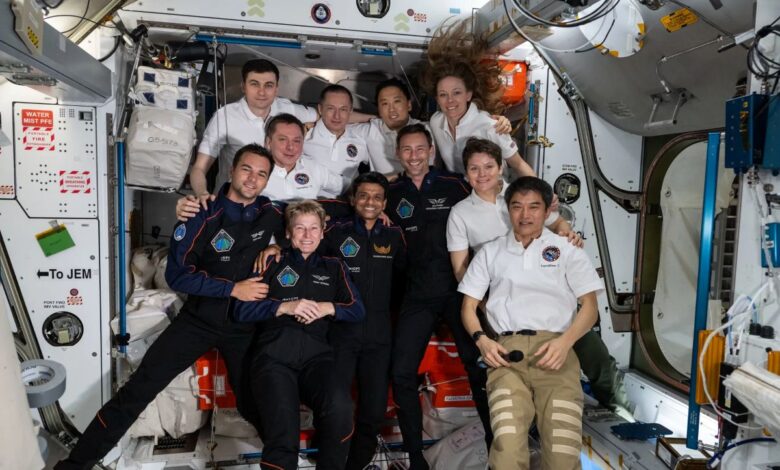
NASA to Provide Coverage of Axiom Mission 4 Departure from Station
NASA will provide live coverage of the undocking and departure of the Axiom Mission 4 private astronaut mission from the International Space Station. The four-member astronaut crew is scheduled to undock from the space-facing port of the station’s Harmony module aboard the SpaceX Dragon spacecraft at approximately 7:05 a.m. EDT Monday, July 14, pending weather, to begin their return to…
Read More » -

NASA’s SpaceX Crew-11 to Support Health Studies for Deep Space Travel
NASA’s SpaceX Crew-11 mission is set to launch a four-person crew to the International Space Station later this summer. Some of the crew have volunteered to participate in a series of experiments to address health challenges astronauts may face on deep space missions during NASA’s Artemis campaign and future human expeditions to Mars. The research during Crew-11 includes simulated lunar…
Read More » -

X-59 Model Tested in Japanese Supersonic Wind Tunnel
Researchers from NASA and the Japanese Aerospace Exploration Agency (JAXA) recently tested a scale model of the X-59 experimental aircraft in a supersonic wind tunnel located in Chofu, Japan, to assess the noise audible underneath the aircraft. The test was an important milestone for NASA’s one-of-a-kind X-59, which is designed to fly faster than the speed of sound without causing…
Read More » -

Hubble Snaps Galaxy Cluster’s Portrait
A massive, spacetime-warping cluster of galaxies is the setting of today’s NASA/ESA Hubble Space Telescope image. The galaxy cluster in question is Abell 209, located 2.8 billion light-years away in the constellation Cetus (the Whale). This Hubble image of Abell 209 shows more than a hundred galaxies, but there’s more to this cluster than even Hubble’s discerning eye can see. Abell 209’s…
Read More » -
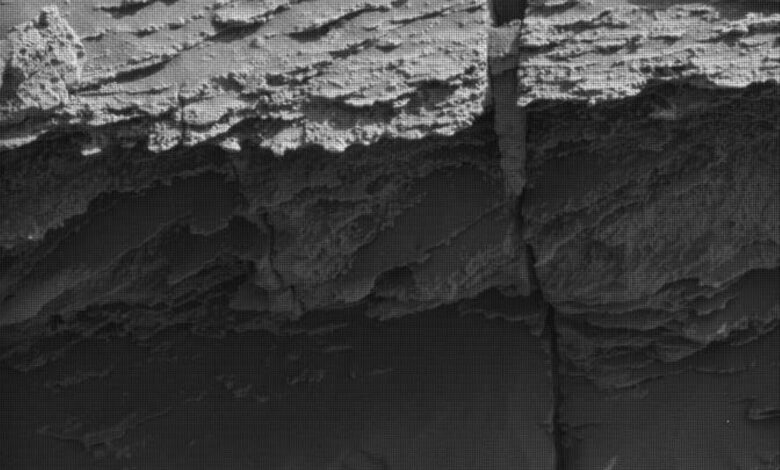
Curiosity Blog, Sols 4593-4594: Three Layers and a Lot of Structure at Volcán Peña Blanca
Written by Susanne P. Schwenzer, Professor of Planetary Mineralogy at The Open University, UK Earth planning date: Monday, July 7, 2025 A few planning sols ago, we spotted a small ridge in the landscape ahead of us. Ridges and structures that are prominently raised above the landscape are our main target along this part of Curiosity’s traverse. There are many…
Read More » -

NASA Selects Instruments for Artemis Lunar Terrain Vehicle
NASA has selected three instruments to travel to the Moon, with two planned for integration onto an LTV (Lunar Terrain Vehicle) and one for a future orbital opportunity. The LTV is part of NASA’s efforts to explore the lunar surface as part of the Artemis campaign and is the first crew-driven vehicle to operate on the Moon in more than…
Read More » -
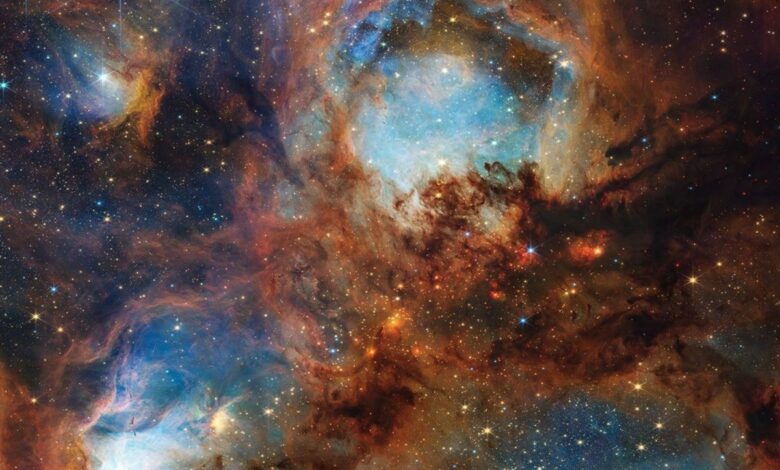
NASA’s James Webb Space Telescope Inspects Cat’s Paw
NASA’s James Webb Space Telescope team released this image of the Cat’s Paw Nebula on July 10, 2025, in honor of the telescope’s third anniversary. Webb’s NIRCam (Near-Infrared Camera) revealed never-before-seen structural details and features: Massive young stars carve away at nearby gas and dust, while their bright starlight produces a bright nebulous glow represented in blue. As a consequence of…
Read More » -
NASA’s Parker Solar Probe Snaps Closest-Ever Images to Sun
KEY POINTS NASA’s Parker Solar Probe has taken the closest ever images to the Sun, captured just 3.8 million miles from the solar surface. The new close-up images show features in the solar wind, the constant stream of electrically charged subatomic particles released by the Sun that rage across the solar system at speeds exceeding 1 million miles an hour.…
Read More » -
NASA to Brief Media on New Mission to Study Earth’s Magnetic Shield
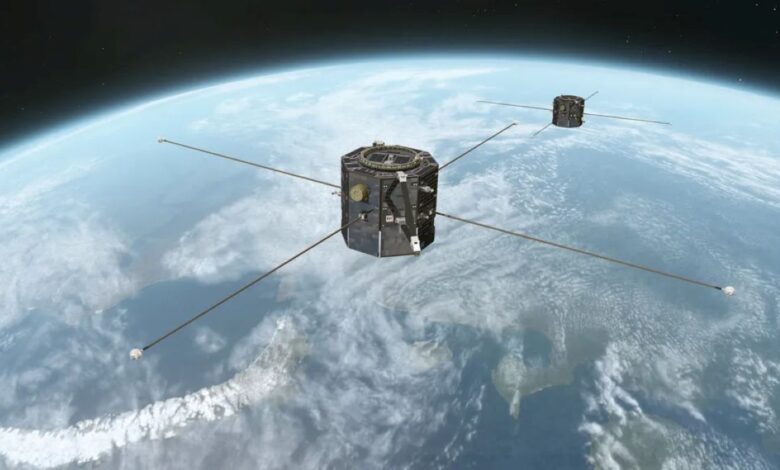
NASA will hold a media teleconference at 11 a.m. EDT on Thursday, July 17, to share information about the agency’s upcoming Tandem Reconnection and Cusp Electrodynamics Reconnaissance Satellites, or TRACERS, mission, which is targeted to launch no earlier than late July. The TRACERS mission is a pair of twin satellites that will study how Earth’s magnetic shield — the magnetosphere…
Read More » -
Meet Mineral Mappers Flying NASA Tech Out West
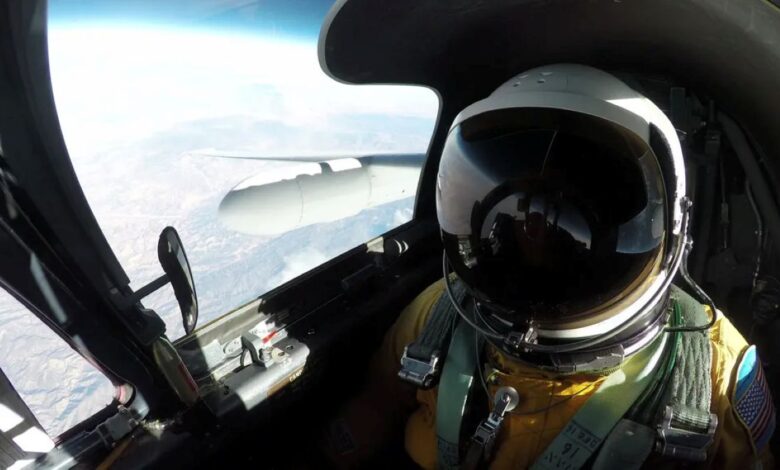
NASA and the U.S. Geological Survey have been mapping the planets since Apollo. One team is searching closer to home for minerals critical to national security and the economy. If not for the Joshua trees, the tan hills of Cuprite, Nevada, would resemble Mars. Scalded and chemically altered by water from deep underground, the rocks here are earthly analogs for…
Read More »