
NASA
-
Helio Highlights: May 2025
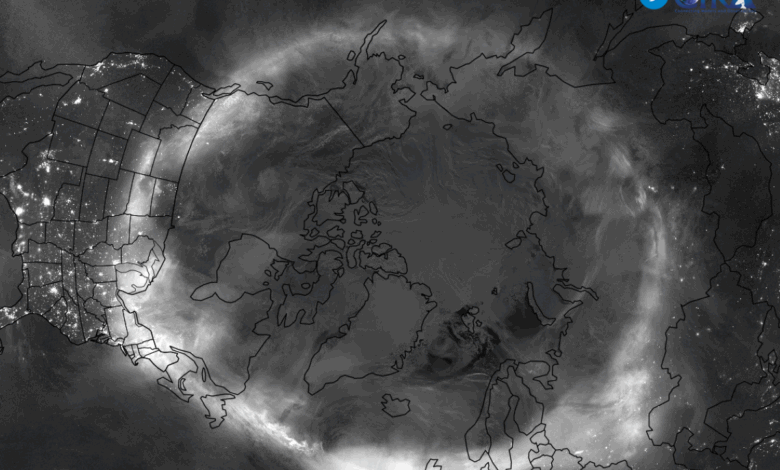
One year ago, solar storms lit up the night sky. Why? The Sun is 93 million miles away from Earth, on average. Even though it’s far away, we can still see and feel its effects here. One of the most beautiful effects are the auroras – colorful lights that dance across the sky near the North and South Poles. These…
Read More » -

Stellar Duo
NASA’s Hubble Space Telescope captured a bright variable star, V 372 Orionis, and its companion in this festive image in this image released on Jan. 27, 2023. The pair lie in the Orion Nebula, a colossal region of star formation roughly 1,450 light-years from Earth. V 372 Orionis is a particular type of variable star known as an Orion Variable.…
Read More » -
Curiosity Blog, Sols 4589 – 4592: Setting up to explore Volcán Peña Blanca
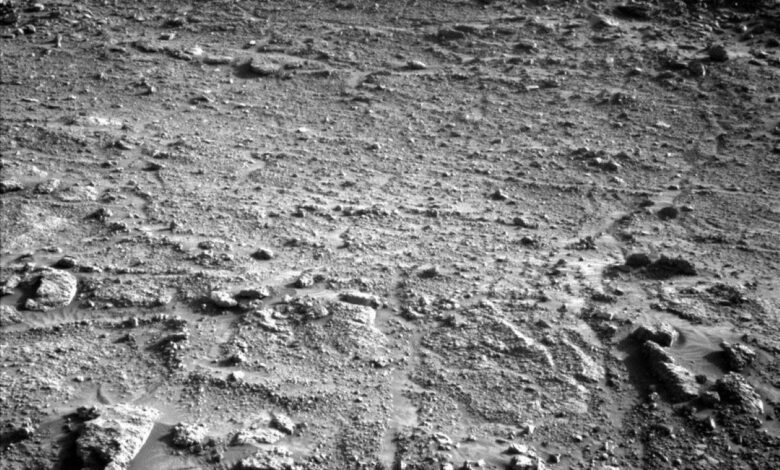
Written by Abigail Fraeman, Deputy Project Scientist at NASA’s Jet Propulsion Laboratory Earth planning date: Thursday, July 3, 2025 The team was delighted this morning to learn that Wednesday’s drive had completed flawlessly, placing us in a stable position facing a ~3 foot high ridge located ~35 feet away. This ridge is the eastern edge of a feature the team…
Read More » -
Curiosity Blog, Sol 4588: Ridges and troughs
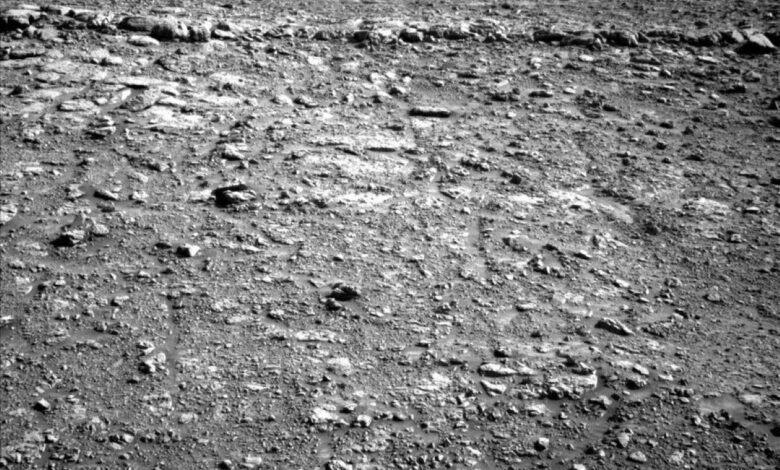
Written by Lucy Thompson, APXS Collaborator and Senior Research Scientist at the University of New Brunswick, CanadaEarth planning date: Wednesday, July 2, 2025As we traverse the boxwork terrain, we are encountering a series of more resistant ridges/bedrock patches, and areas that are more rubbly and tend to form lower relief polygonal or trough-like features. We came into planning this morning…
Read More » -
Working in Space
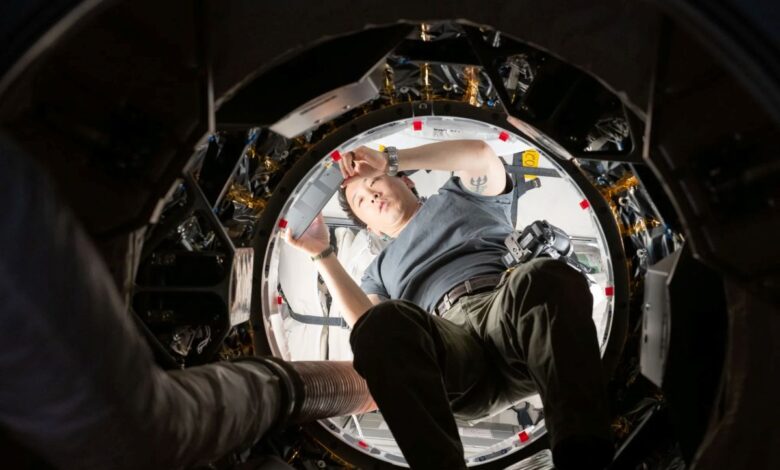
In this May 23, 2025, image, NASA astronaut Jonny Kim works inside the SpaceX Dragon cargo spacecraft completing cargo operations before it undocked from the International Space Station’s Harmony module several hours later. Kim launched to the International Space Station on April 8, 2025; this is his first mission. See what Kim and other space station crew do aboard the orbital lab.…
Read More » -

NASA’s Hubble and Webb Telescopes Reveal Two Faces of a Star Cluster Duo
Download this image A riotous expanse of gas, dust, and stars stake out the dazzling territory of a duo of star clusters in this combined image from NASA’s Hubble and Webb space telescopes. Open clusters NGC 460 and NGC 456 reside in the Small Magellanic Cloud, a dwarf galaxy orbiting the Milky Way. Open clusters consist of anywhere from a few dozen to a…
Read More » -

Aaisha Ali: From Marine Biology to the Artemis Control Room
As humanity prepares to return to the lunar surface, Aaisha Ali is behind the scenes ensuring mission readiness for astronauts set to orbit the Moon during Artemis II. Ali is the Artemis ground control flight lead at NASA’s Johnson Space Center in Houston. She makes sure her team has the resources needed for the next giant leap to the Moon…
Read More » -

NASA Remembers Former Johnson Director Jefferson Howell
July 3, 2025 Jefferson Davis Howell, Jr., former director of NASA’s Johnson Space Center in Houston, died July 2, in Bee Cave, Texas. He was 85 years old. Howell was a champion of the construction of the International Space Station, working on a deadline to complete the orbiting lab by 2004. He oversaw four space shuttle crews delivering equipment and…
Read More » -

NASA Mission Monitoring Air Quality from Space Extended
Since launching in 2023, NASA’s Tropospheric Emissions: Monitoring of Pollution mission, or TEMPO, has been measuring the quality of the air we breathe from 22,000 miles above the ground. June 19 marked the successful completion of TEMPO’s 20-month-long initial prime mission, and based on the quality of measurements to date, the mission has been extended through at least September 2026.…
Read More » -
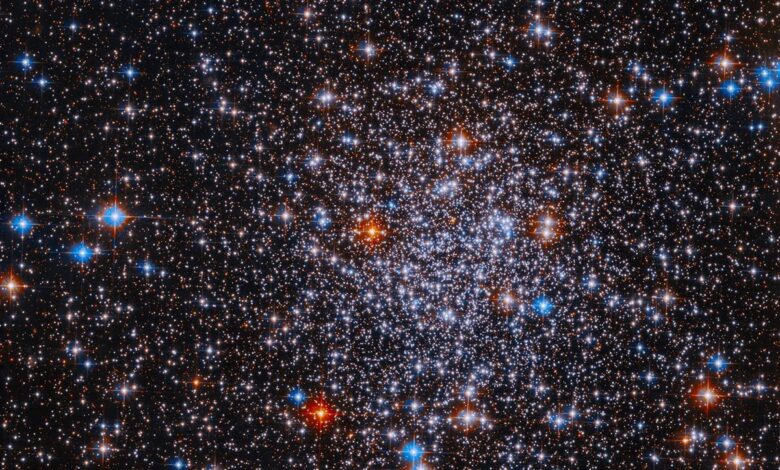
Hubble Observations Give “Missing” Globular Cluster Time to Shine
Download this image A previously unexplored globular cluster glitters with multicolored stars in this NASA Hubble Space Telescope image. Globular clusters like this one, called ESO 591-12 or Palomar 8, are spherical collections of tens of thousands to millions of stars tightly bound together by gravity. Globular clusters generally form early in the galaxies’ histories in regions rich in gas and dust.…
Read More »