
NASA
-
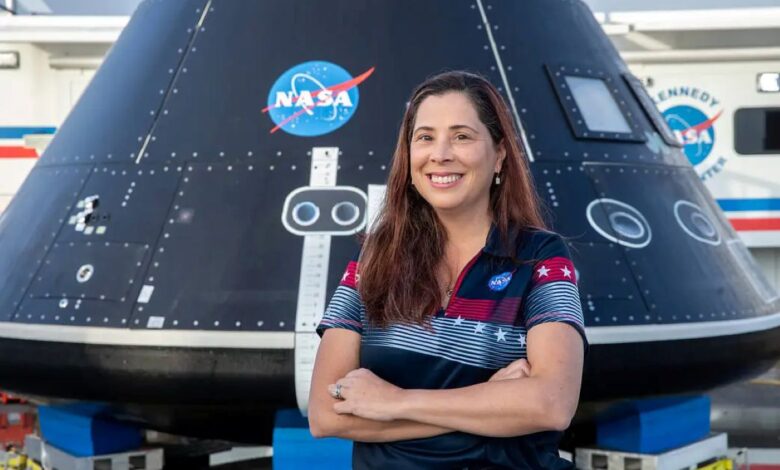
I Am Artemis: Lili Villarreal
Lili Villarreal fell in love with space exploration from an early age when she and her family visited the Kennedy Space Center Visitor Complex in Florida. So, it should come as no surprise that when the opportunity came for her to start working on NASA’s Artemis missions to explore the Moon and build the foundation for the first crewed mission…
Read More » -
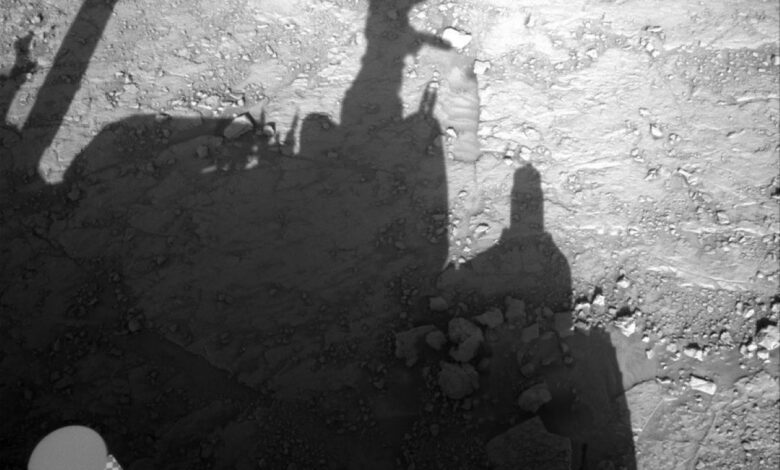
Sols 4556-4558: It’s All in a Day’s (box)Work
Written by Sharon Wilson Purdy, Planetary Geologist at the Smithsonian National Air and Space Museum Earth planning date: Friday, May 30, 2025 When you are scheduled to participate in Science Operations for the rover’s weekend plan, you know it’s going to be a busy morning! Assembling the activities for Friday through Sunday (Sols 4556 through 4558) was no exception. I…
Read More » -
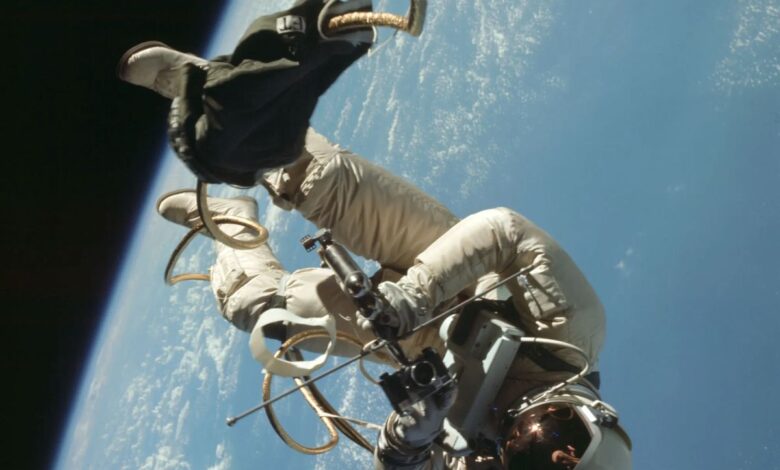
America’s First Spacewalk
NASA astronaut Ed White, pilot of the Gemini IV mission, floats in space on June 3, 1965, while performing the first spacewalk by an American. As White floated outside the spacecraft, he used a Hand-Held Maneuvering Unit, informally called a “zip gun.” The device, seen in White’s right hand in this image, expelled pressurized oxygen to provide thrust for controlling his movements outside the…
Read More » -
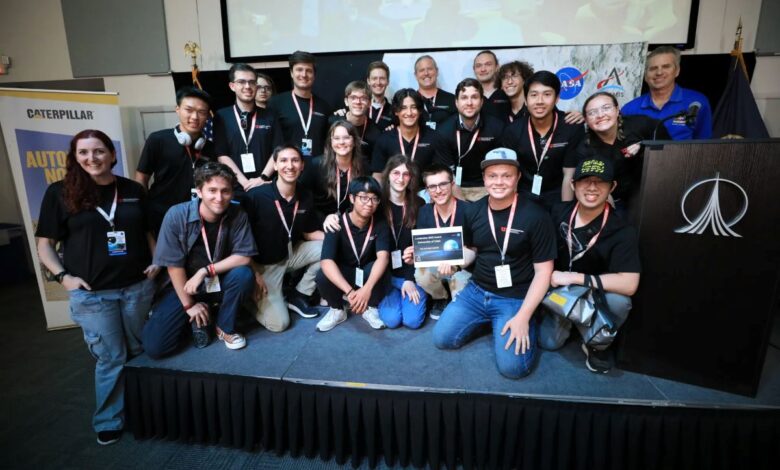
Future Engineers Shine at NASA’s 2025 Lunabotics Robotics Competition
And the winner is… the University of Utah in Salt Lake City. The Utah Student Robotics Club won the grand prize Artemis Award on May 22 for NASA’s 2025 Lunabotics Challenge held at The Astronauts Memorial Foundation’s Center for Space Education at the Kennedy Space Center Visitor Complex in Florida. “Win was our motto for the whole year,” said Brycen Chaney, University of…
Read More » -
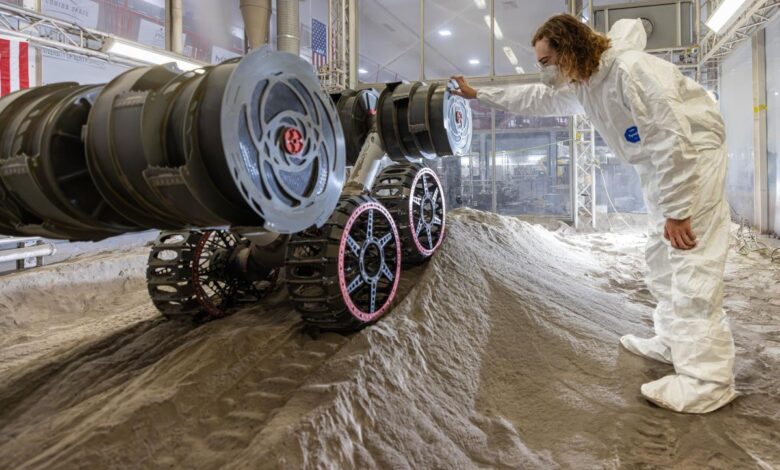
NASA Kennedy Digs Latest Robot Test
NASA’s RASSOR (Regolith Advanced Surface Systems Operations Robot) undergoes testing to extract simulated regolith, or the loose, fragmental material on the Moon’s surface, inside of the Granular Mechanics and Regolith Operations Lab at the agency’s Kennedy Space Center in Florida on May 27. Ben Burdess, mechanical engineer at NASA Kennedy, observes RASSOR’s counterrotating drums digging up the lunar dust and…
Read More » -
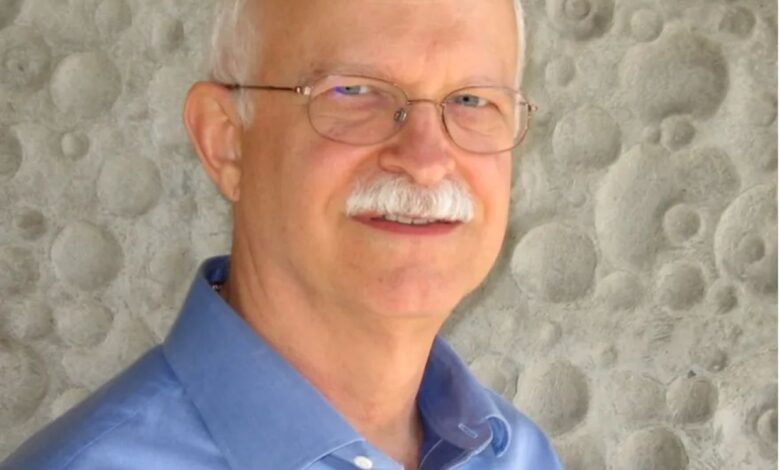
Interview with Dave Des Marais
Let’s start with your childhood, where you’re from, your family at the time, if you have siblings, your early years, and when it was that you became interested in what has developed into your career as an astrophysicist or research scientist? I was born in Richmond, Virginia in 1948, the youngest of four siblings – two brothers, a sister and…
Read More » -
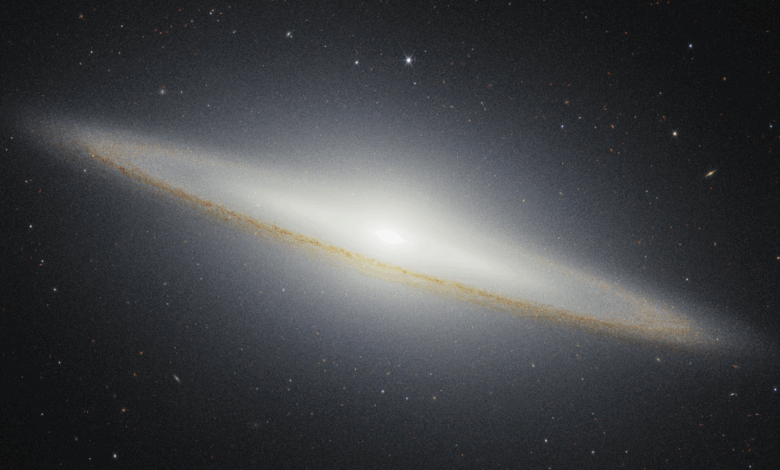
NASA’s Webb Rounds Out Picture of Sombrero Galaxy’s Disk
After capturing an image of the iconic Sombrero galaxy at mid-infrared wavelengths in late 2024, NASA’s James Webb Space Telescope has now followed up with an observation in the near-infrared. In the newest image, the Sombrero galaxy’s huge bulge, the tightly packed group of stars at the galaxy’s center, is illuminated, while the dust in the outer edges of the disk blocks…
Read More » -
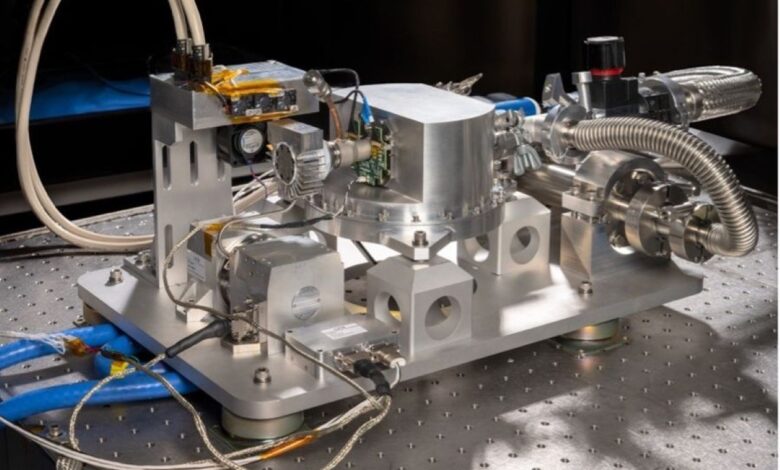
c-FIRST Team Sets Sights on Future Fire-observing Satellite Constellations
Two NASA-developed technologies are key components of a new high-resolution sensor for observing wildfires: High Operating Temperature Barrier Infrared Detector (HOT-BIRD), developed with support from NASA’s Earth Science Technology Office (ESTO), and a cutting-edge Digital Readout Integrated Circuit (DROIC), developed with funding from NASA’s Small Business Innovation Research (SBIR) program. NASA’s c-FIRST instrument could provide high resolution data from a…
Read More » -
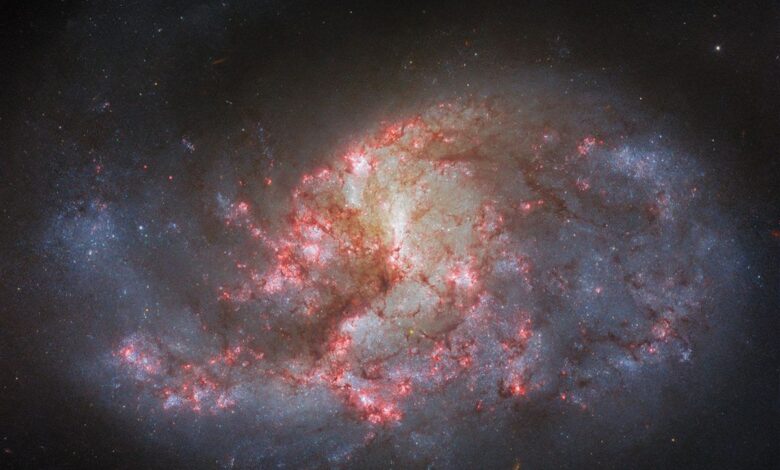
Hubble Filters a Barred Spiral
This NASA/ESA Hubble Space Telescope image features a luminous tangle of stars and dust called the barred spiral galaxy NGC 1385, located about 30 million light-years away. Hubble released an earlier image of NGC 1385, but the two images are notably different. This more recent image has far more pinkish-red and umber shades, whereas cool blues dominate the earlier image. This chromatic variation…
Read More » -
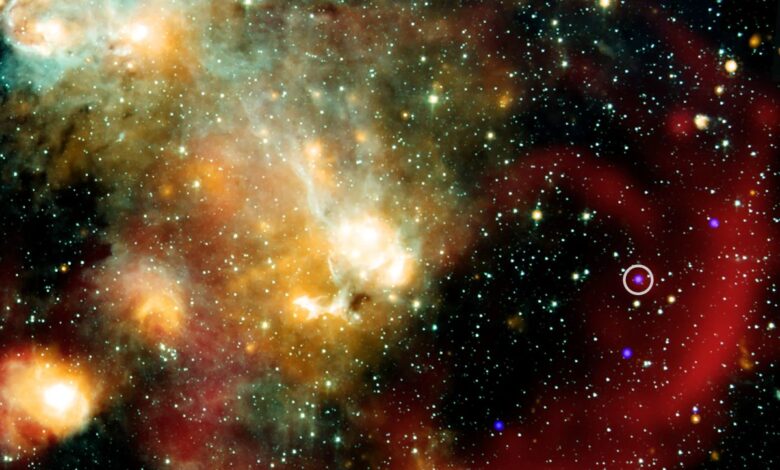
A Star Like No Other
An unusual star (circled in white at right) behaving like no other seen before and its surroundings are featured in this composite image released on May 28, 2025. A team of astronomers combined data from NASA’s Chandra X-ray Observatory and the Square Kilometer Array Pathfinder (ASKAP) radio telescope on Wajarri Country in Australia to study the discovered object, known as ASKAP J1832−0911 (ASKAP J1832 for short).…
Read More »