
NASA
-

How Big is Space? We Asked a NASA Expert: Episode: 61
How big is space? Space is really big. Thinking about our solar system, let’s imagine you could get in a car and drive to Pluto at highway speeds. It would take you about 6,000 years to get there. When we start to think about other stars outside of our solar system, we need to think about another unit of distance.…
Read More » -
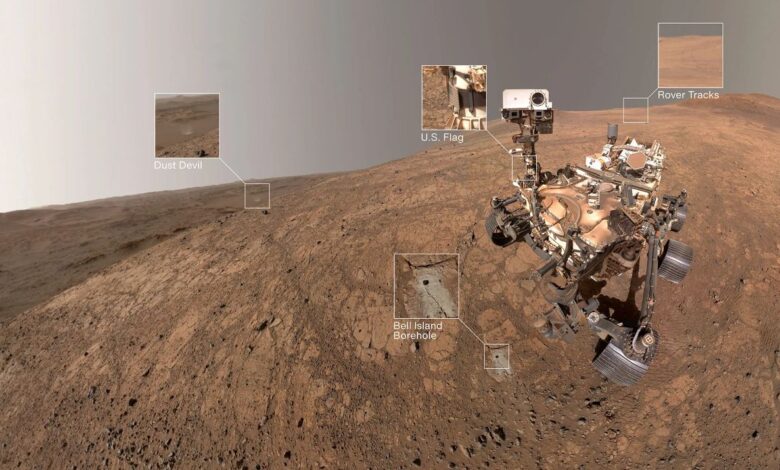
Devil’s in Details in Selfie Taken by NASA’s Mars Perseverance Rover
The rover took the image — its fifth since landing in February 2021 — between stops investigating the Martian surface. A Martian dust devil photobombed NASA’s Perseverance Mars rover as it took a selfie on May 10 to mark its 1,500th sol (Martian day) exploring the Red Planet. At the time, the six-wheeled rover was parked in an area nicknamed…
Read More » -

Station Nation: Meet Megan Harvey, Utilization Flight Lead and Capsule Communicator
Megan Harvey is a utilization flight lead and capsule communicator, or capcom, in the Research Integration Office at NASA’s Johnson Space Center in Houston. She integrates science payload constraints related to vehicles’ launch and landing schedules. She is also working to coordinate logistics for the return of SpaceX vehicles to West Coast landing sites. Read on to learn about Harvey’s…
Read More » -

Sols 4543-4545: Leaving the Ridge for the Ridges
Written by Susanne Schwenzer, Planetary Geologist at The Open University Earth planning date: Friday, May 16, 2025 As Curiosity progresses up Mount Sharp, it crosses different terrains, which the team has mapped from orbit. If you want to follow the path and see for yourself, you can have a look on the “Where is Curiosity?” map, an interactive tool that allows…
Read More » -
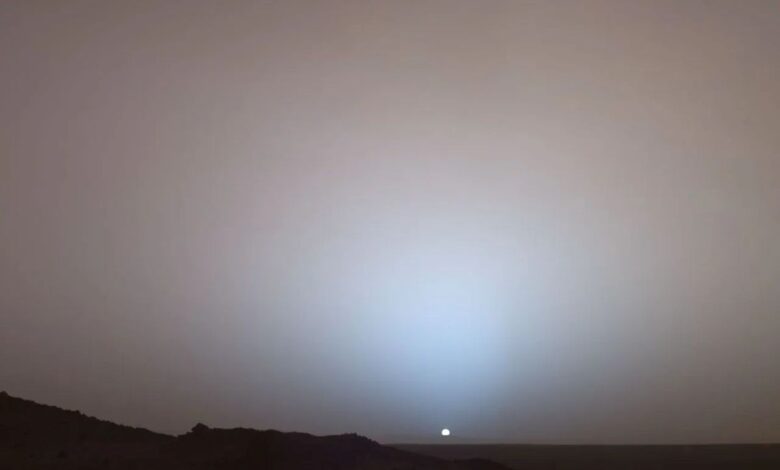
Sunset on Mars
NASA’s Mars Exploration Rover Spirit captured this stunning view as the Sun sank below the rim of Gusev crater on Mars 20 years ago. In this image, the bluish glow in the sky above the Sun would be visible to us if we were there, but an artifact of the panoramic camera’s infrared imaging capabilities is that with this filter combination, the…
Read More » -
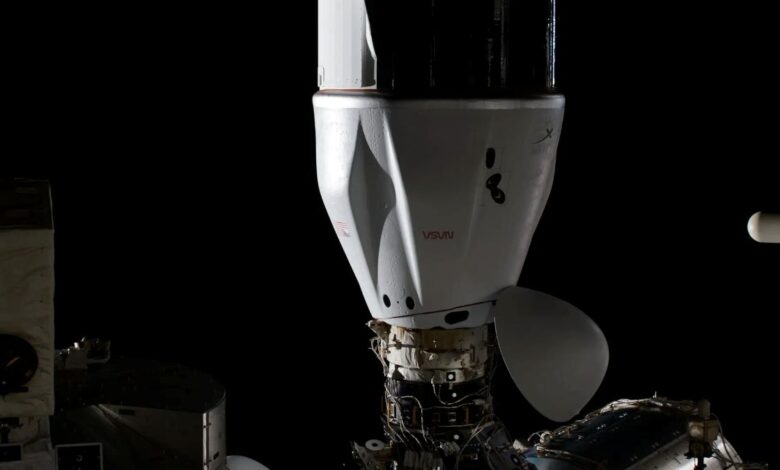
NASA Sets Coverage for 32nd SpaceX Resupply Mission Departure
NASA and its international partners will soon receive scientific research samples and hardware after a SpaceX Dragon spacecraft departs the International Space Station on Thursday, May 22, for its return to Earth. Live coverage of undocking and departure begins at 11:45 a.m. EDT on NASA+. Learn how to watch NASA content through a variety of platforms, including social media. The Dragon spacecraft will…
Read More » -
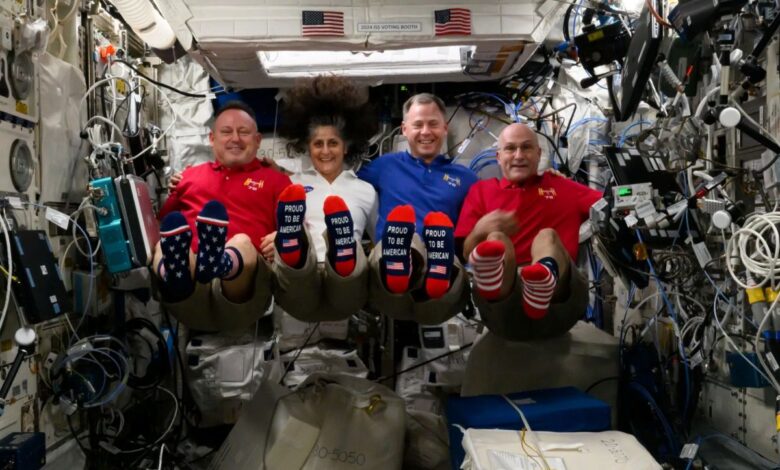
NASA to Welcome Expedition 72 Astronauts Home at Space Center Houston
Four NASA astronauts will participate in a welcome home ceremony at Space Center Houston after recently returning from missions aboard the International Space Station. NASA astronauts Nick Hague, Suni Williams, Butch Wilmore, and Don Pettit will share highlights from their missions at 6 p.m. CDT Thursday, May 22, during a free, public event at NASA Johnson Space Center’s visitor center.…
Read More » -
What Is the International Space Station? (Grades 5-8)
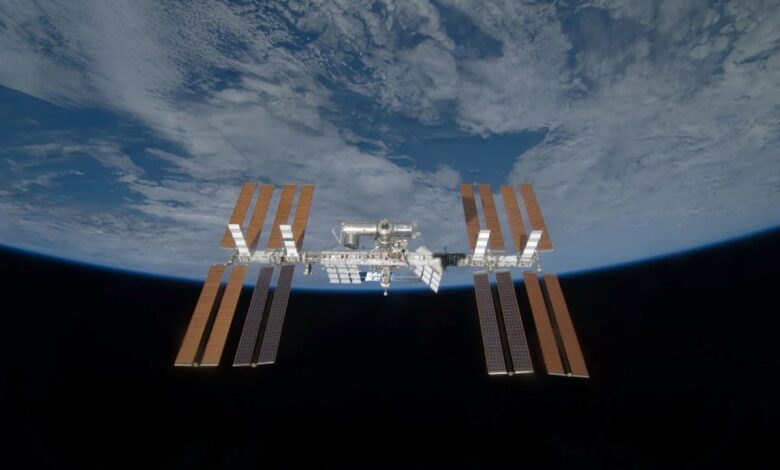
This article is for students grades 5-8. The International Space Station is a large spacecraft in orbit around Earth. It serves as a home where crews of astronauts and cosmonauts live. The space station is also a unique science laboratory. Several nations worked together to build and use the space station. The space station is made of parts that were assembled…
Read More » -
Unearthly Plumbing Required for Plant Watering in Space
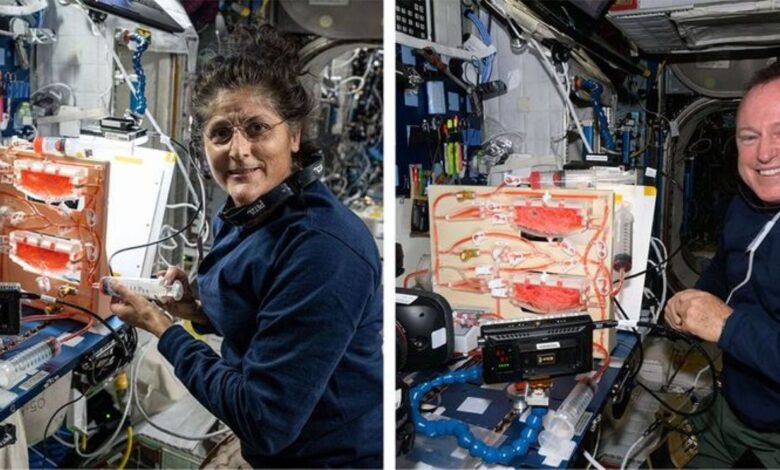
NASA is demonstrating new microgravity fluids technologies to enable advanced “no-moving-parts” plant-watering methods aboard spacecraft. Boeing Astronauts Sunita Williams and Butch Wilmore during operations of Plant Water Management-6 (PWM-6) aboard the International Space Station. Image: NASA Crop production in microgravity will be important to provide whole food nutrition, dietary variety, and psychological benefits to astronauts exploring deep space. Unfortunately, even…
Read More » -
Hubble Images Galaxies Near and Far
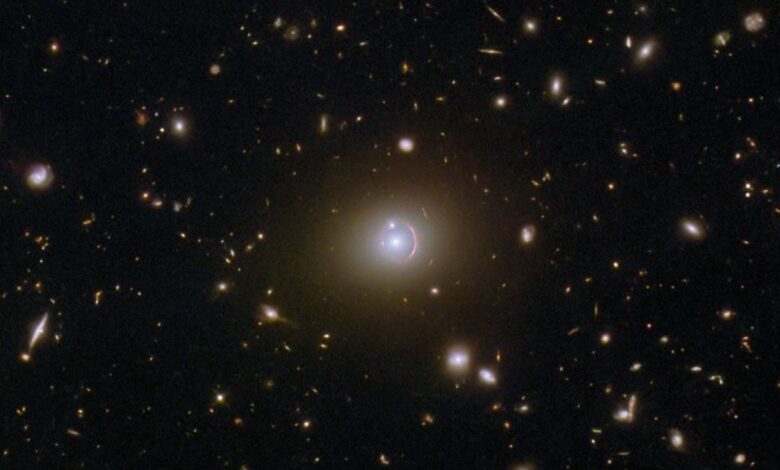
This NASA/ESA Hubble Space Telescope image offers us the chance to see a distant galaxy now some 19.5 billion light-years from Earth (but appearing as it did around 11 billion years ago, when the galaxy was 5.5 billion light-years away and began its trek to us through expanding space). Known as HerS 020941.1+001557, this remote galaxy appears as a red arc partially…
Read More »