
NASA
-
Will the Sun Ever Burn Out? We Asked a NASA Expert: Episode 60
Will the Sun ever burn out? Well, the Sun, just like the stars we see at night, is a star. It’s a giant ball of super hot hydrogen. Gravity squeezes it in and it creates energy, which is what makes the Sun shine. Eventually, it will use up all of that hydrogen. But in the process, it’s creating helium. So…
Read More » -
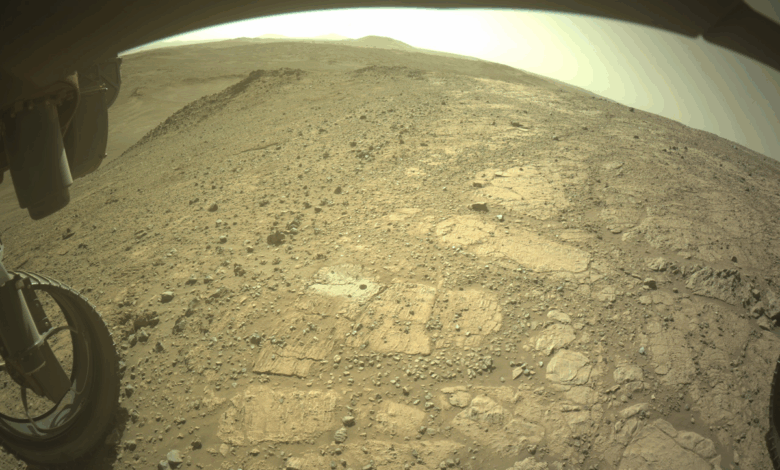
A Tough Drill at Witch Hazel Hill
Written by Alex Jones, Ph.D. candidate at Imperial College London After a busy few months exploring the outer slopes of the Jezero crater rim at an area named “Witch Hazel Hill,” the Perseverance Science Team was eyeing another sample of these truly ancient rocks, which likely predate Jezero crater itself. The target? A rock containing spherules, which could shed a light…
Read More » -

Eclipses, Auroras, and the Spark of Becoming: NASA Inspires Future Scientists
In the heart of Alaska’s winter, where the night sky stretches endlessly and the aurora dances across the sky in a display of ethereal beauty, nine undergraduate students from across the United States were about to embark on a transformative journey. These students had been active ‘NASA Partner Eclipse Ambassadors’ in their home communities, nine of more than 700 volunteers…
Read More » -

NASA Awards Launch Service Task Order for Aspera’s Galaxy Mission
NASA has selected Rocket Lab USA Inc. of Long Beach, California, to launch the agency’s Aspera mission, a SmallSat to study galaxy formation and evolution, providing new insights into how the universe works. The selection is part of NASA’s Venture-Class Acquisition of Dedicated and Rideshare (VADR) launch services contract. This contract allows the agency to make fixed-price indefinite-delivery/indefinite-quantity launch service task order…
Read More » -
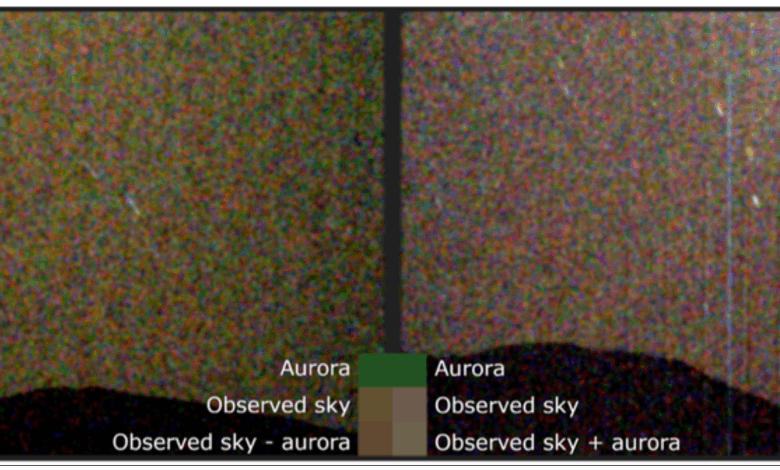
NASA Observes First Visible-light Auroras at Mars
On March 15, 2024, near the peak of the current solar cycle, the Sun produced a solar flare and an accompanying coronal mass ejection (CME), a massive explosion of gas and magnetic energy that carries with it large amounts of solar energetic particles. This solar activity led to stunning auroras across the solar system, including at Mars, where NASA’s Perseverance…
Read More » -
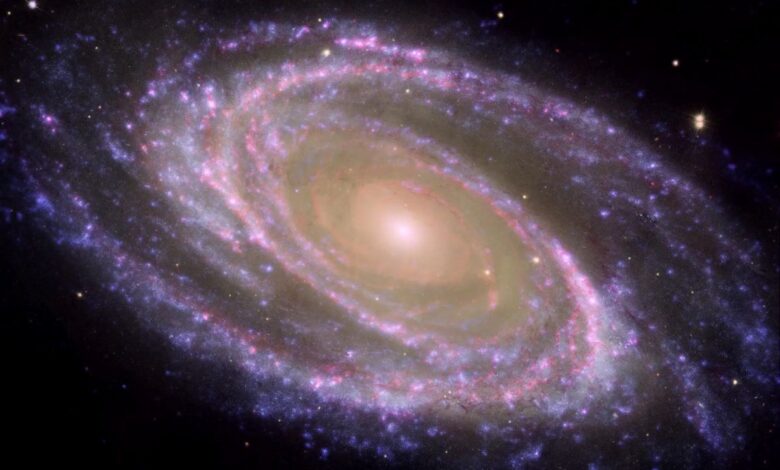
Pretty in Pink
The spiral galaxy known as Messier 81 (M81) has a rosy tint in this June 1, 2007, composite image that incorporates data from NASA’s Spitzer and Hubble Space Telescopes, and NASA’s Galaxy Evolution Explorer. Discovered by the German astronomer Johann Elert Bode in 1774, M81 is one of the brightest galaxies in the night sky. It is located 11.6 million light-years from Earth in the…
Read More » -
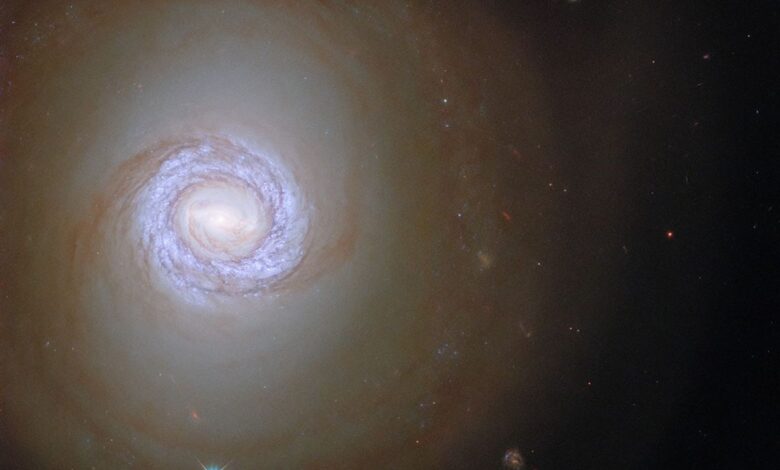
Hubble Pinpoints Young Stars in Spiral Galaxy
In this image, the NASA/ESA Hubble Space Telescope peers into the spiral galaxy NGC 1317 in the constellation Fornax, located more than 50 million light-years from Earth. Visible in this galaxy image is a bright blue ring that hosts hot, young stars. NGC 1317 is one of a pair, but its rowdy larger neighbor, NGC 1316, lies outside Hubble’s field of view.…
Read More » -
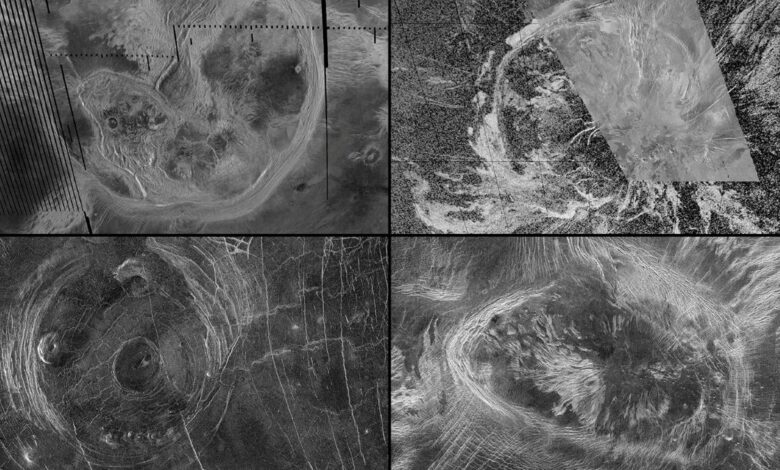
NASA’s Magellan Mission Reveals Possible Tectonic Activity on Venus
Using archival data from the mission, launched in 1989, researchers have uncovered new evidence that tectonic activity may be deforming the planet’s surface. Vast, quasi-circular features on Venus’ surface may reveal that the planet has ongoing tectonics, according to new research based on data gathered more than 30 years ago by NASA’s Magellan mission. On Earth, the planet’s surface is…
Read More » -
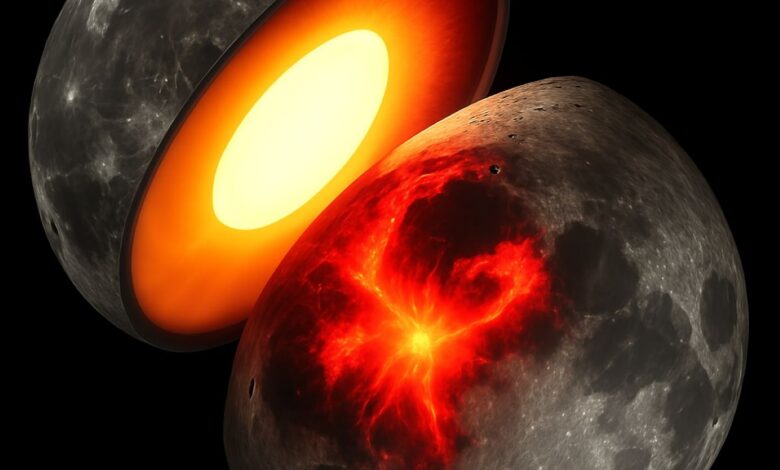
NASA Studies Reveal Hidden Secrets About Interiors of Moon, Vesta
Analyzing gravity data collected by spacecraft orbiting other worlds reveals groundbreaking insights about planetary structures without having to land on the surface. Although the Moon and the asteroid Vesta are very different, two NASA studies use the same technique to reveal new details about the interiors of both. In the lunar study, published May 14 in the journal Nature, researchers developed a…
Read More » -
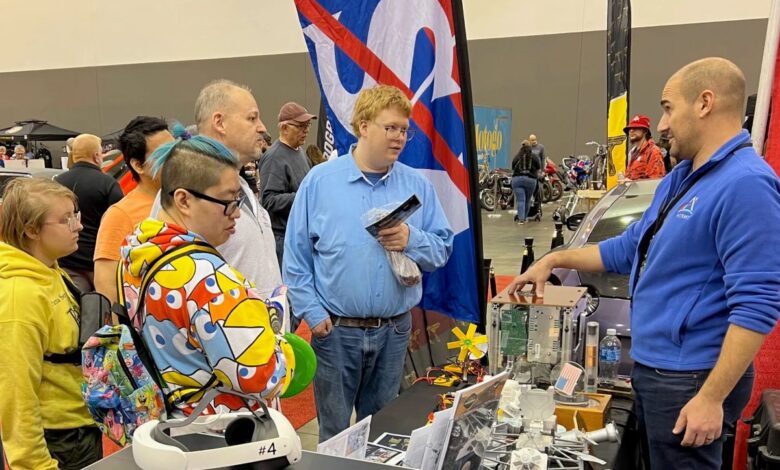
NASA Glenn Showcases Stirling Engine Technology at Piston Powered Auto-Rama
NASA Glenn Research Center’s work in power and propulsion was on full display at the Piston Powered Auto-Rama at the I-X Center in Cleveland, March 28-30. The event is the largest indoor showcase of cars, trucks, motorcycles, tractors, and other engine-powered vehicles. Center staff introduced guests to NASA’s Stirling engine technology, a free-piston Stirling power convertor that set records for…
Read More »