
NASA
-
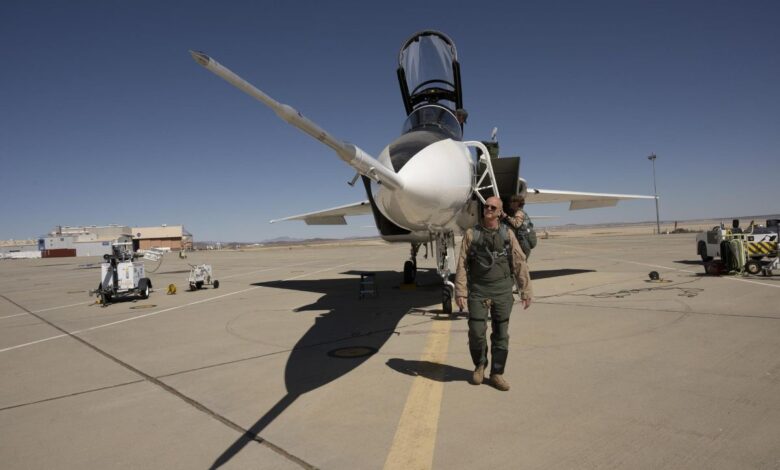
NASA Calibrates Second Shock-Sensing Probe for X-59 Testing
When you’re testing a cutting-edge NASA aircraft, you need specialized tools to conduct tests and capture data –but if those tools need maintenance, you need to wait until they’re fixed. Unless you have a backup. That’s why NASA recently calibrated a new shock-sensing probe to capture shock wave data when the agency’s X-59 quiet supersonic research aircraft begins its test…
Read More » -

NASA Glenn to Test Air Quality Monitors Aboard Space Station
As NASA prepares to return to the Moon, studying astronaut health and safety is a top priority. Scientists monitor and analyze every part of the International Space Station crew’s daily life—down to the air they breathe. These studies are helping NASA prepare for long-term human exploration of the Moon and, eventually, Mars. As part of this effort, NASA’s Glenn Research…
Read More » -
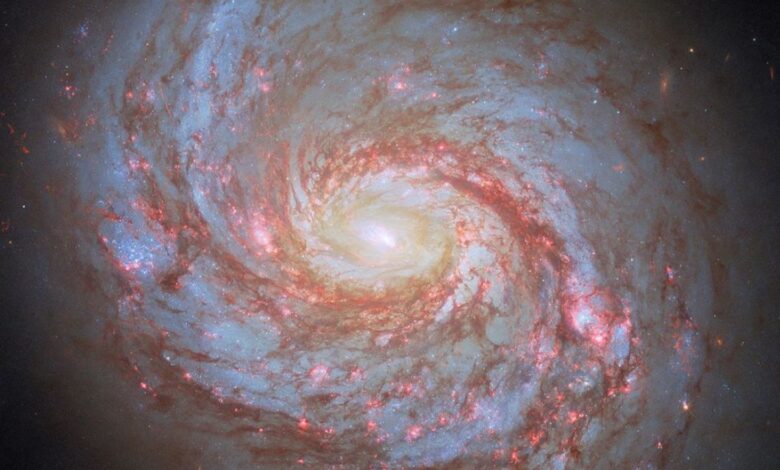
Hubble Spots a Squid in the Whale
Today’s rather aquatic-themed NASA/ESA Hubble Space Telescope image features the spiral galaxy Messier 77, also known as the Squid Galaxy, which sits 45 million light-years away in the constellation Cetus (The Whale). The designation Messier 77 comes from the galaxy’s place in the famous catalog compiled by the French astronomer Charles Messier. Another French astronomer, Pierre Méchain, discovered the galaxy in 1780. Both Messier…
Read More » -
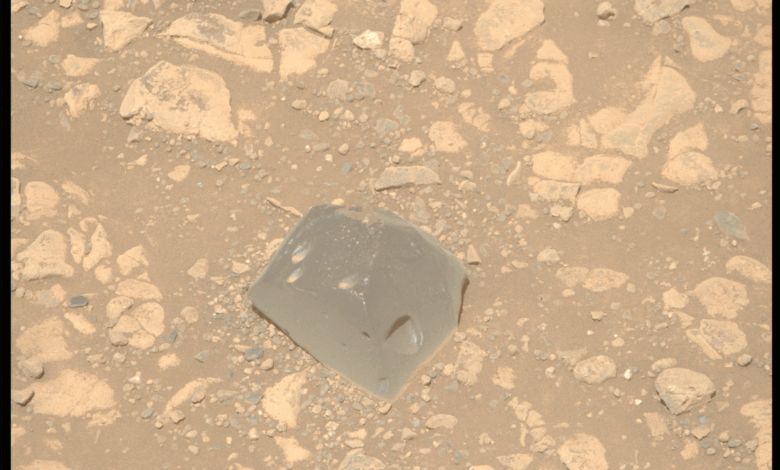
Origins Uncertain: ‘Skull Hill’ Rock
Written by Margaret Deahn, Ph.D. Student at Purdue University Last week, NASA’s Mars 2020 rover continued its journey down lower ‘Witch Hazel Hill’ on the Jezero crater rim. The rover stopped along a boundary visible from orbit dividing light and dark rock outcrop (also known as a contact) at a site the team has called ‘Port Anson’. In addition to…
Read More » -
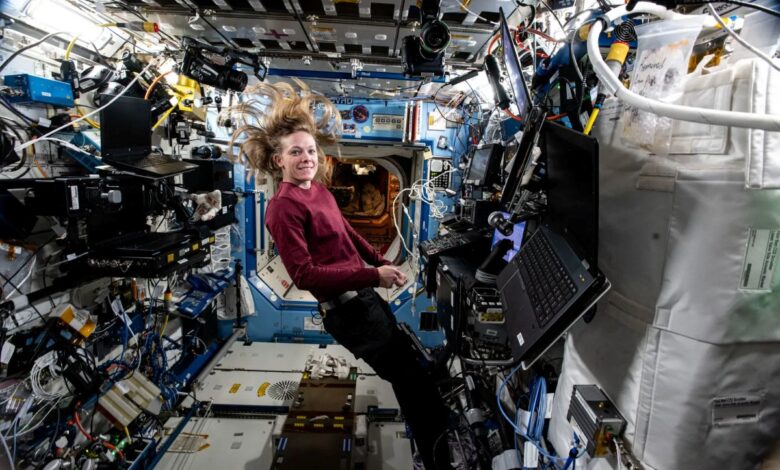
NASA Astronaut to Answer Questions from Colorado Students
Students from Woodland Park, Colorado, will connect with NASA astronaut Nichole Ayers as she answers prerecorded science, technology, engineering, and mathematics-related questions from aboard the International Space Station. Watch the 20-minute space-to-Earth call at 11:55 a.m. EDT on Monday, April 21, on the NASA STEM YouTube Channel. The event, hosted by Woodland Park High School, also is open to students from Woodland…
Read More » -
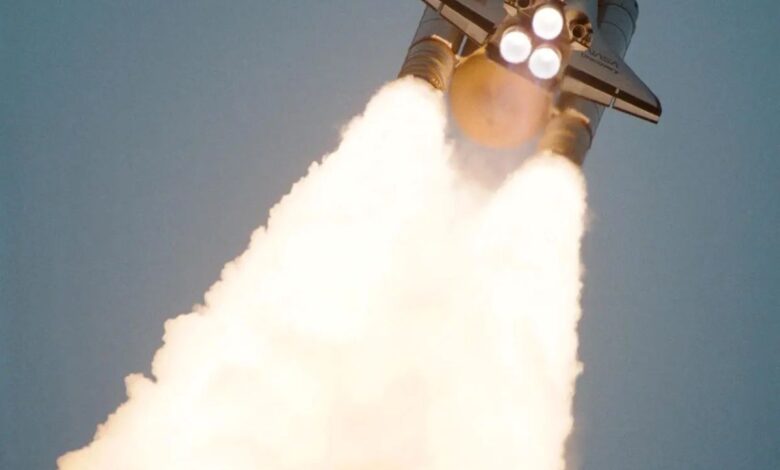
Space Shuttle Discovery Lifts Off
The launch of space shuttle Discovery is captured in this April 12, 1985, photo. This mission, STS-51D, was the 16th flight of NASA’s Space Shuttle program, and Discovery’s fourth flight. Discovery carried out 39 missions, more than any other space shuttle. Its missions included deploying and repairing the Hubble Space Telescope and 13 flights to the International Space Station – including the very first docking in 1999.…
Read More » -
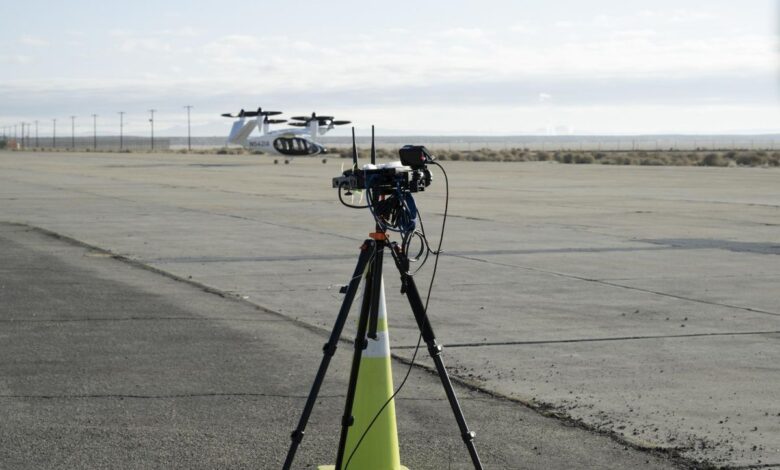
NASA Studies Wind Effects and Aircraft Tracking with Joby Aircraft
NASA engineers began using a network of ground sensors in March to collect data from an experimental air taxi to evaluate how to safely integrate such vehicles into airspace above cities – in all kinds of weather. Researchers will use the campaign to help improve tools to assist with collision avoidance and landing operations and ensure safe and efficient air…
Read More » -

Building for a Better World: Norfolk Students Bring STEM to Life with NASA Partnership
At Norfolk Technical Center in Norfolk, Virginia, carpentry students in Jordan Crawford’s first-year class aren’t just learning how to measure and cut wood—they’re discovering how their skills can serve a greater purpose. When the NASA Science Activation program’s NASA eClips project—led by the National Institute of Aerospace’s Center for Integrative Science, Technology, Engineering, and Mathematics (STEM) Education (NIA-CISE)—needed help building weather…
Read More » -
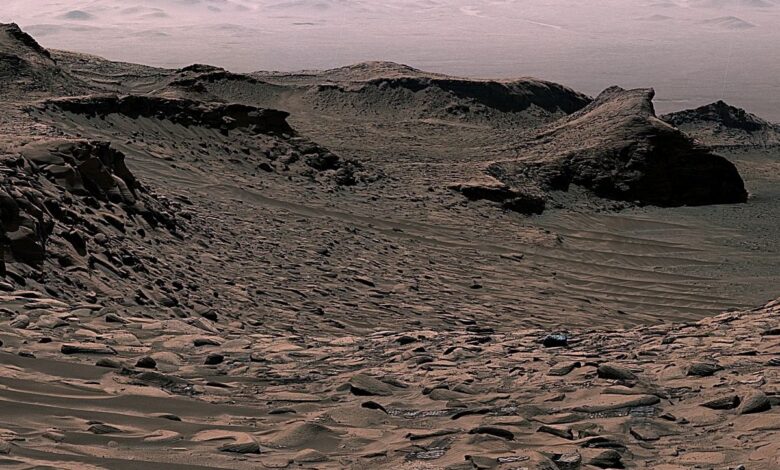
NASA’s Curiosity Rover May Have Solved Mars’ Missing Carbonate Mystery
New findings from NASA’s Curiosity Mars rover could provide an answer to the mystery of what happened to the planet’s ancient atmosphere and how Mars has evolved over time. Researchers have long believed that Mars once had a thick, carbon dioxide-rich atmosphere and liquid water on the planet’s surface. That carbon dioxide and water should have reacted with Martian rocks…
Read More » -

NASA Supports Next Generation of Innovators
When young minds come together to test their knowledge and creativity in technology and innovation, the results are truly inspiring. In its sixth year, Aerospace Valley Regional FIRST Robotics Competition at East High School in Lancaster, California, proved to be another success. During three action-packed days, hundreds of students from around the world showcased their skills in building and programming…
Read More »