
NASA
-
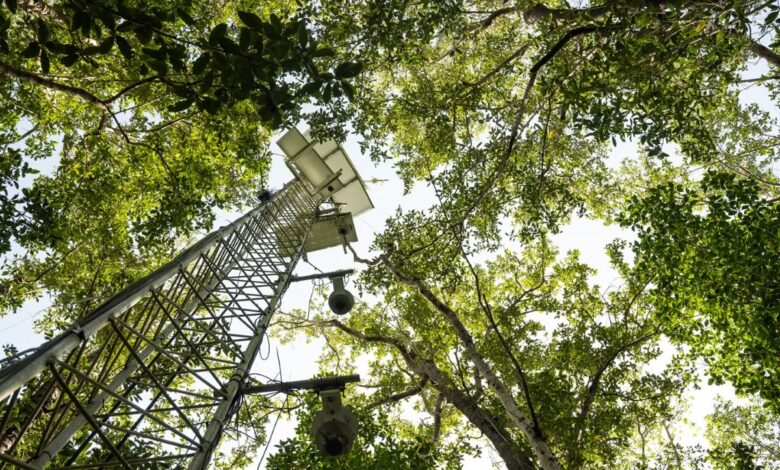
NASA Data Supports Everglades Restoration
This story is the second installment of a series on NASA’s mission to measure greenhouse gases in Florida’s mangrove ecosystem. Read the first part here. Along the southernmost rim of the Florida Peninsula, the arching prop roots of red mangroves line the coast. Where they dip below the water’s surface, fish lay their eggs, using the protection from predators that the…
Read More » -
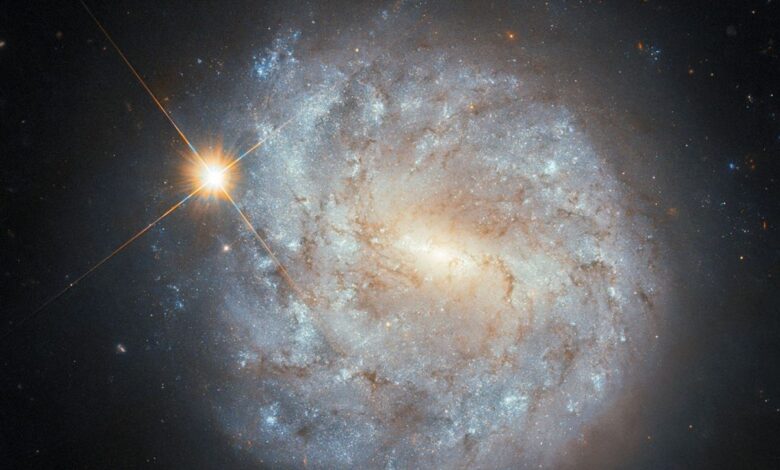
Hubble Sees a Spiral and a Star
Download this image This NASA/ESA Hubble Space Telescope image features a sparkling spiral galaxy paired with a prominent star, both in the constellation Virgo. While the galaxy and the star appear to be close to one another, even overlapping, they’re actually a great distance apart. The star, marked with four long diffraction spikes, is in our own galaxy. It’s just 7,109 light-years…
Read More » -
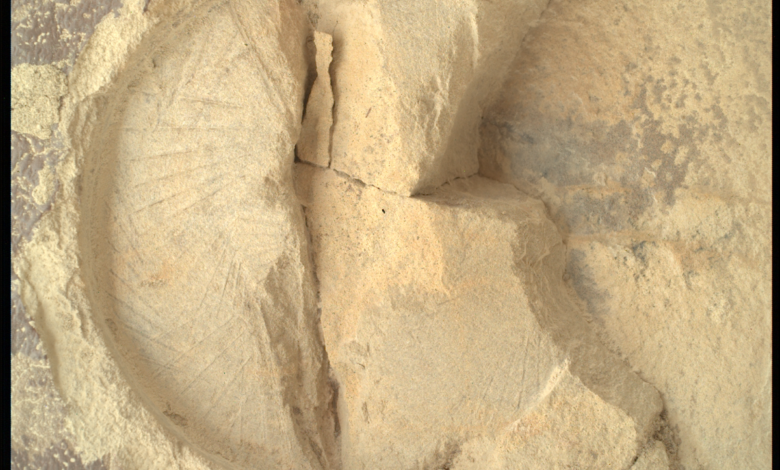
Navigating a Slanted River
Written by Denise Buckner, Postdoctoral Fellow at NASA’s Goddard Space Flight Center Perseverance is hard at work on Mars, overcoming obstacles for scientific exploration! Just a few sols after successfully sealing the challenging Green Gardens core, Perseverance roved on to the Broom Point workspace to collect another sample called Main River. Broom Point is situated a few hundred meters down-slope from…
Read More » -
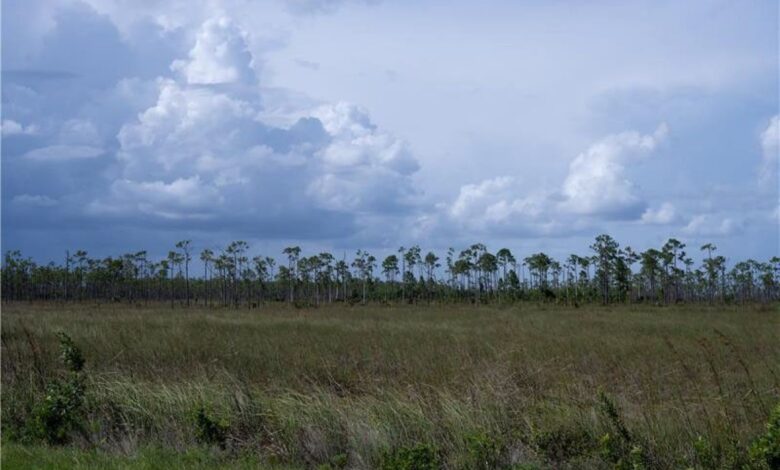
NASA Researchers Study Coastal Wetlands, Champions of Carbon Capture
Across the street from the Flamingo Visitor’s Center at the foot of Florida’s Everglades National Park, there was once a thriving mangrove population — part of the largest stand of mangroves in the Western Hemisphere. Now, the skeletal remains of the trees form one of the Everglades’ largest ghost forests. When Hurricane Irma made landfall in September 2017 as a…
Read More » -

NASA Analysis Shows Unexpected Amount of Sea Level Rise in 2024
Last year’s increase was due to an unusual amount of ocean warming, combined with meltwater from land-based ice such as glaciers. Global sea level rose faster than expected in 2024, mostly because of ocean water expanding as it warms, or thermal expansion. According to a NASA-led analysis, last year’s rate of rise was 0.23 inches (0.59 centimeters) per year, compared…
Read More » -
NASA Cameras on Blue Ghost Capture First-of-its-Kind Moon Landing Footage
A team at NASA’s Langley Research Center in Hampton, Virginia, supported by Marshall Space Flight Center in Huntsville, Alabama, has captured first-of-its-kind imagery of a lunar lander’s engine plumes interacting with the Moon’s surface, a key piece of data as trips to the Moon increase in the coming years under the agency’s Artemis campaign. The Stereo Cameras for Lunar-Plume Surface…
Read More » -
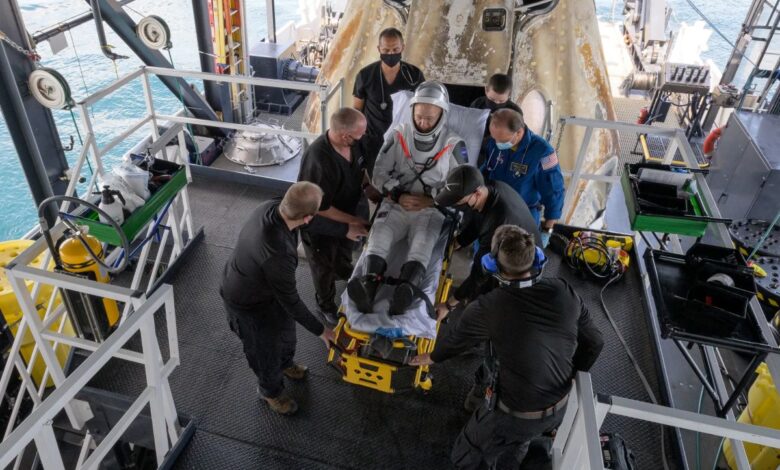
Risk to Vehicle Crew Egress Capability and Task Performance as Applied to Earth and Extraterrestrial Landings
New spacecraft that will transport crews to the Lunar and Martian surfaces and return them to Earth may have diverse landing modalities which will function in different landing environments. Additionally, the crew may be deconditioned on landing, impacting their ability to independently egress the vehicles, perform post-landing tasks in a timely manner, and perform surface EVAs post-landing -including those required…
Read More » -
NASA’s Record-Shattering, Theory-Breaking MMS Mission Turns 10
Since its launch on March 12, 2015, NASA’s MMS, or Magnetospheric Multiscale, mission has been rewriting our understanding of a key physical process that is important across the universe, from black holes to the Sun to Earth’s protective magnetic field. This process, called magnetic reconnection, occurs when magnetic field lines tangle and explosively realign, flinging away nearby particles. Around Earth,…
Read More » -
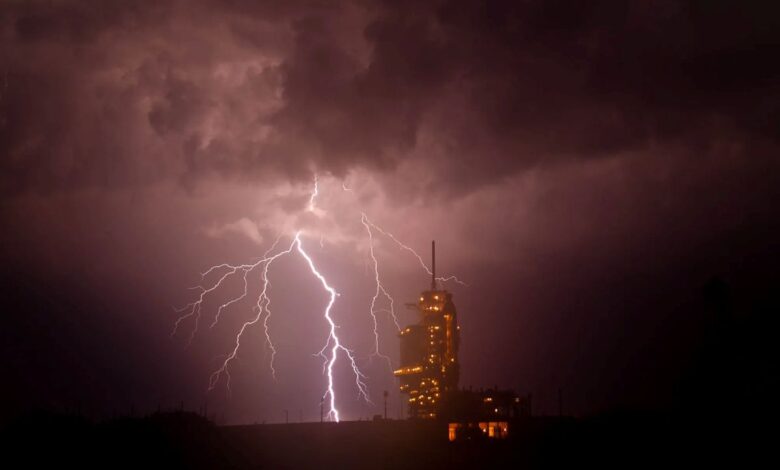
Risk to Crew Health Due to Electrical Shock (Electrical Shock Risk)
It is important to protect humans from unintended electrical current flow during spaceflight. The thresholds for contact electrical shock are well established, and standards and requirements exist that minimize the probability of contact electrical shock. Current thresholds were chosen (vs. voltage thresholds) because body impedance varies depending on conditions such as wet/dry, AC/DC, voltage level, large/small contact area, but current…
Read More » -
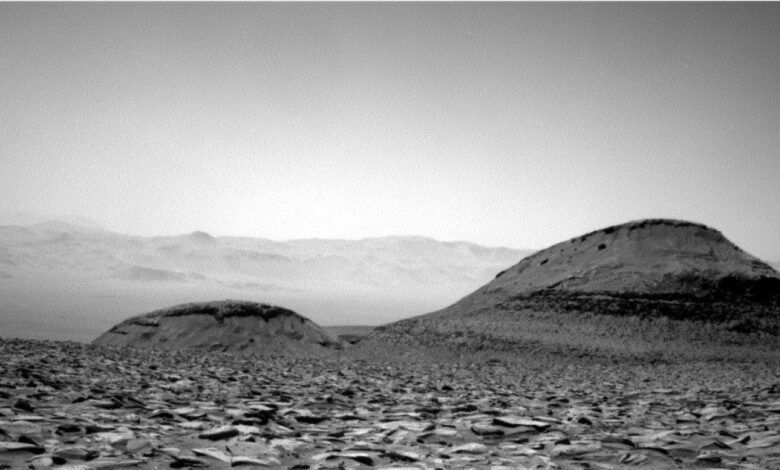
Sols 4477-4478: Bumping Back to Business
Written by Sharon Wilson Purdy, Planetary Geologist at the Smithsonian National Air and Space Museum Earth planning date: Monday, March 10, 2025 The Curiosity rover is winding between the spectacular Gould mesa and Texoli butte through beautifully layered terrain. The end-of-drive target from last week’s plan was a rock with a knobby/bumpy texture that appears quite different from the typical…
Read More »