
NASA
-

NASA Glenn Accepts Aviation Award for “NEAT” Facility
Each year, Aviation Week (AW) Network recognizes a limited number of innovators who achieve extraordinary accomplishments in the global aerospace arena with AW’s prestigious Laureate Award. These innovators represent the values and vision of the global aerospace community and change the way people work and move through the world. On March 6, NASA’s Glenn Research Center accepted an AW Laureate…
Read More » -
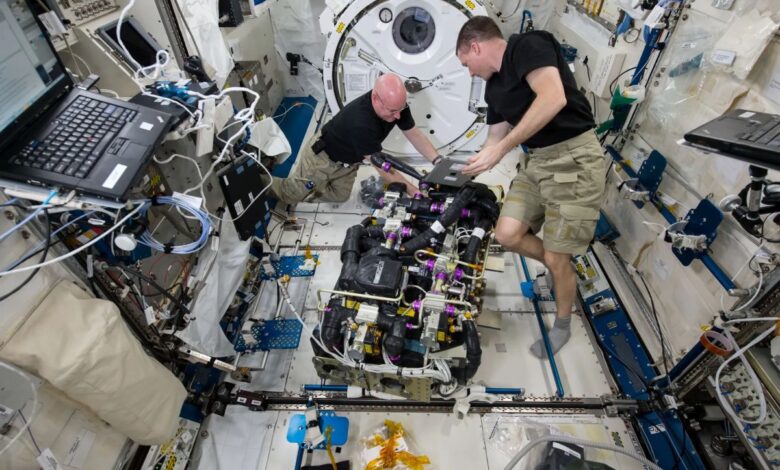
Risk of Acute and Chronic Carbon Dioxide Exposure
Hostile, enclosed spaceflight environments (including space vehicles and suits) do not have the benefit of natural carbon dioxide (CO2) removal. In these environments, equipment (e.g., the Carbon Dioxide Removal Assembly, lithium hydroxide, and amine systems) control CO2 levels and mitigate consequences of elevated CO2 exposure. Expedition 39 flight engineer Rick Mastracchio looks for a loose connection as he conducts troubleshooting…
Read More » -

NASA Astronaut Jonny Kim to Discuss Upcoming Launch, Mission
NASA will provide interview opportunities with astronaut Jonny Kim beginning at 9 a.m. EDT, Wednesday, March 19, to highlight his upcoming mission to the International Space Station in April. The virtual interviews from Star City, Russia, will stream live on NASA+. Learn how to watch NASA content through a variety of platforms, including social media. Media interested in participating must contact the newsroom…
Read More » -
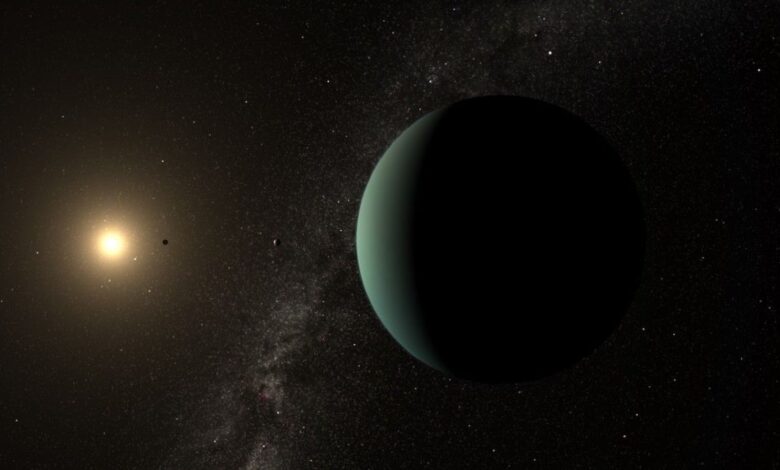
Discovery Alert: ‘Super-Earth’ Swings from Super-Heated to Super-Chill
The Discovery A possible “super-Earth” orbits a relatively close, Sun-like star, and could be a habitable world – but one of extreme temperature swings, from scorching heat to deep freeze. Key Facts The newly confirmed planet is the outermost of three detected so far around a star called HD 20794, just 20 light-years from Earth. Its 647-day orbit is comparable…
Read More » -
How Do We Know the Earth Isn’t Flat? We Asked a NASA Expert: Episode 53
This was a magical revelation for the Greeks and the Egyptians, who were able to see from the motions of the stars and the way the Sun moved. They saw the way the Sun’s shadow worked in different places. And they figured, well, that’s only possible if the Earth is round. And they took that information and it extended into…
Read More » -

NASA’s Chevron Technology Quiets the Skies
Shortly after dawn on March 27, 2001, NASA pilot Bill Rieke took off from an airfield just outside of Phoenix in NASA’s blue-and-white Learjet 25 and flew low over a series of microphones for the first flight test of a groundbreaking NASA technology. On one of the plane’s engines was an experimental jagged-edged nozzle that researchers at Glenn Research Center…
Read More » -
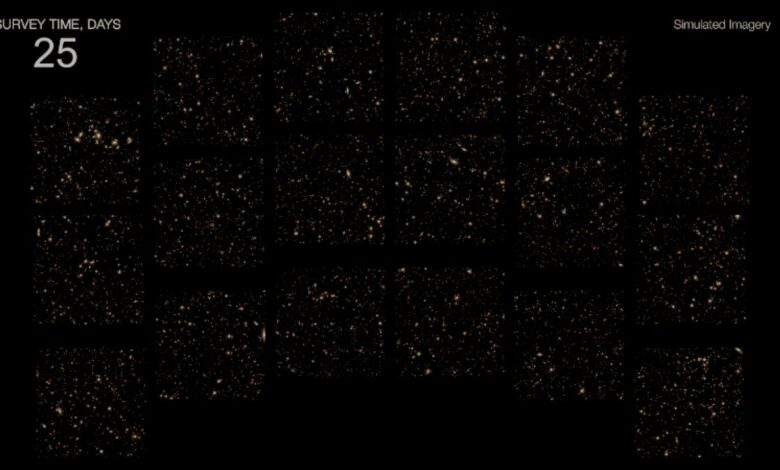
Team Preps to Study Dark Energy via Exploding Stars With NASA’s Roman
The universe is ballooning outward at an ever-faster clip under the power of an unknown force dubbed dark energy. One of the major goals for NASA’s upcoming Nancy Grace Roman Space Telescope is to help astronomers gather clues to the mystery. One team is setting the stage now to help astronomers prepare for this exciting science. “Roman will scan the…
Read More » -

NASA Selects Three University Teams to Participate in Flight Research
NASA has selected three university teams to help solve 21st century aviation challenges that could transform the skies above our communities. As part of NASA’s University Leadership Initiative (ULI), both graduate and undergraduate students on faculty-led university teams will contribute directly to real-world flight research while gaining hands-on experience working with partners from other universities and industry. By combining faculty expertise, student…
Read More » -
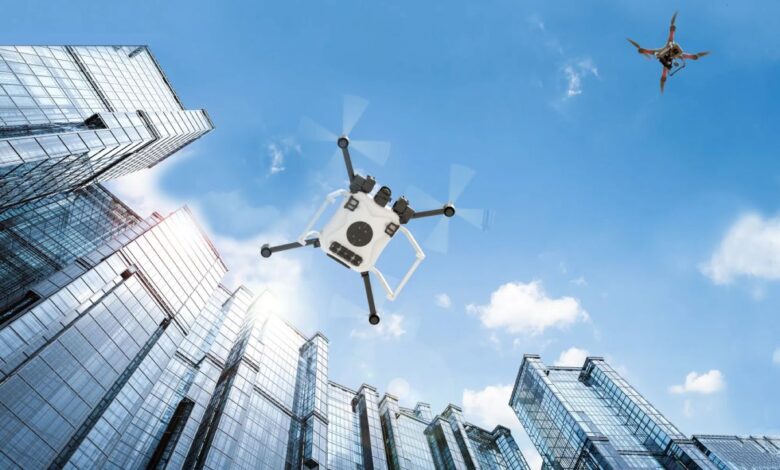
About Pathfinding for Airspace with Autonomous Vehicles
Remotely piloted aircraft could transform the way we transport people and goods and provide our communities with better access to vital services, like medical supply deliveries and efficient transportation. NASA’s Pathfinding for Airspace with Autonomous Vehicles (PAAV) subproject is working with partners to safely integrate remote air cargo and air taxi aircraft into our national airspace alongside traditional crewed aircraft.…
Read More » -

40 Years Ago: Space Shuttle Atlantis Makes its Public Debut
On March 6, 1985, NASA’s newest space shuttle, Atlantis, made its public debut during a rollout ceremony at the Rockwell International manufacturing plant in Palmdale, California. Under construction for three years, Atlantis joined NASA’s other three space-worthy orbiters, Columbia, Challenger, and Discovery, and atmospheric test vehicle Enterprise. Officials from NASA, Rockwell, and other organizations attended the rollout ceremony. By the time NASA retired Atlantis…
Read More »