
NASA
-
NASA’s Ethics Program
NASA’s Ethics Program provides training and counsel to NASA employees and is responsible for the day-to-day management of the agency-wide ethics program. Headquarters and Center Chief Counsels ethics officials support the ethics program in their respective localities. A list of ethics officials at each NASA location can be found here: Headquarters and Center Ethics Officials. Associate General Counsel, General Law Practice…
Read More » -
NASA Stennis Flashback: Learning About Rocket Engine Smoke for Safe Space Travel
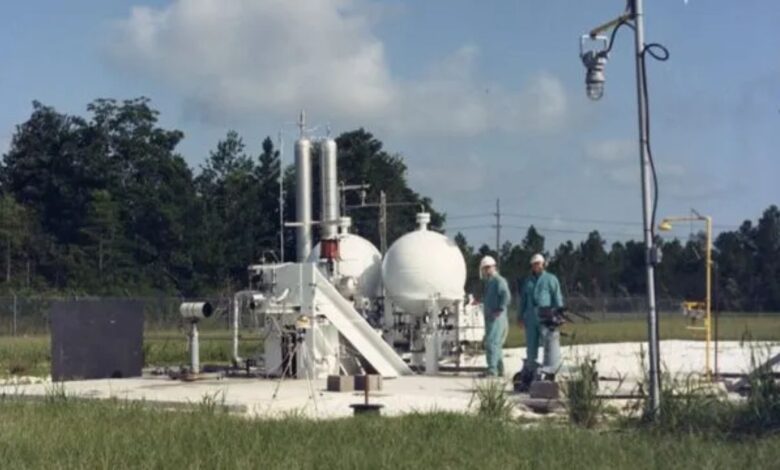
NASA’s Stennis Space Center near Bay St. Louis, Mississippi, is widely known as the nation’s largest rocket propulsion test site. More than 35 years ago, it also served as a hands-on classroom for NASA engineers seeking to improve the efficiency of space shuttle main engines. From 1988 to the mid-1990’s, NASA Stennis engineers operated a Diagnostic Test Facility to conduct…
Read More » -
Liftoff! NASA Tech, Science En Route to Moon with Intuitive Machines
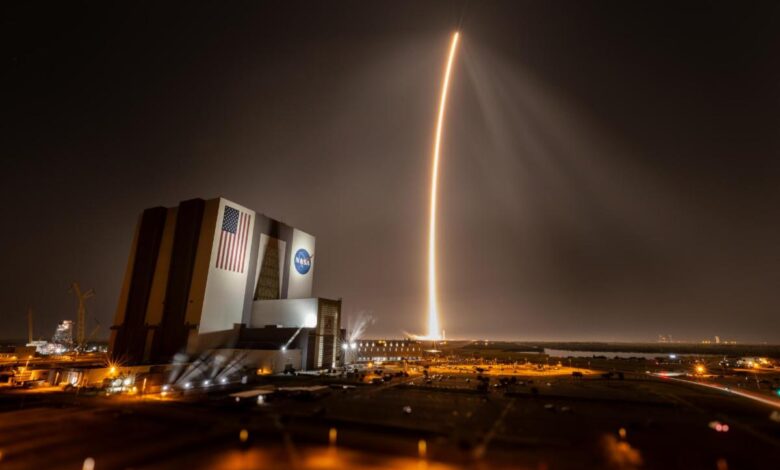
The next set of NASA science and technology demonstrations is on its way to the lunar surface, where they will gather data about Earth’s nearest neighbor and help pave the way for American astronauts to explore the Moon and beyond, for the benefit of all.Carrying NASA instruments as part of the agency’s CLPS (Commercial Lunar Payload Services) initiative and Artemis…
Read More » -

Sols 4461-4463: Salty Salton Sea?
Earth planning date: Friday, Feb. 21, 2025 Since first encountering the sulfate-bearing unit around Sol 3540, we have detected minerals and elemental concentrations consistent with the presence of various salts and a general drying out of Mars climate (read ”NASA’s Curiosity Mars Rover Reaches Long-Awaited Salty Region”). Salton Sea in California is a saline lake, meaning it has high concentrations…
Read More » -
NASA’s X-59 Completes Electromagnetic Testing
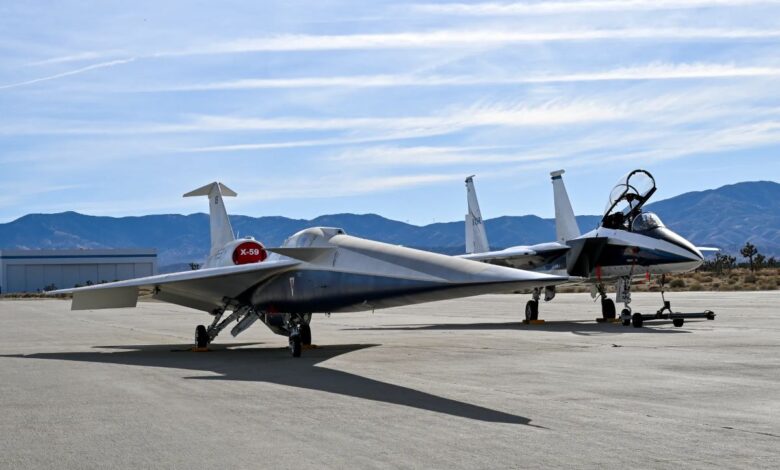
NASA’s quiet supersonic X-59 research aircraft has cleared electromagnetic testing, confirming its systems will work together safely, without interference across a range of scenarios. “Reaching this phase shows that the aircraft integration is advancing,” said Yohan Lin, NASA’s X-59 avionics lead. “It’s exciting to see the progress, knowing we’ve cleared a major hurdle that moves us closer to X-59’s first…
Read More » -

NASA Names Stephen Koerner as Acting Director of Johnson Space Center
NASA has selected Stephen Koerner as acting director of Johnson Space Center. Koerner previously served as Johnson’s deputy director. “It is an honor to accept my new role as acting director for Johnson,” Koerner said. “Our employees are key to our nation’s human spaceflight goals. I am continually impressed with what our workforce accomplishes and am proud to be named the…
Read More » -

NASA’s EZIE Launching to Study Magnetic Fingerprints of Earth’s Aurora
High above Earth’s poles, intense electrical currents called electrojets flow through the upper atmosphere when auroras glow in the sky. These auroral electrojets push about a million amps of electrical charge around the poles every second. They can create some of the largest magnetic disturbances on the ground, and rapid changes in the currents can lead to effects such as…
Read More » -
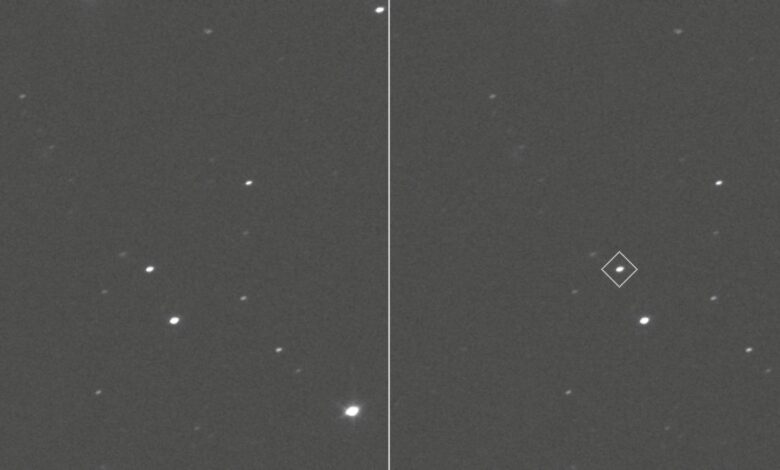
NASA’s Lucy Spacecraft Takes Its 1st Images of Asteroid Donaldjohanson
NASA’s Lucy spacecraft has its next flyby target, the small main belt asteroid Donaldjohanson, in its sights. By blinking between images captured by Lucy on Feb. 20 and 22, this animation shows the perceived motion of Donaldjohanson relative to the background stars as the spacecraft rapidly approaches the asteroid. NASA’s Lucy spacecraft’s first views of the asteroid Donaldjohanson. The asteroid…
Read More » -
AGU 2024: NASA Science on Display in the Nation’s Capital
Introduction The American Geophysical Union (AGU) returned to the nation’s capital in 2024, hosting its annual meeting at the Walter E. Washington Convention Center in Washington, DC from December 9–14, 2024. NASA Science upheld its long-standing tradition as an AGU partner and exhibitor, leveraging the meeting as an opportunity to share NASA’s cutting-edge research, data, and technology with the largest…
Read More » -

Sharing PLANETS Curriculum with Out-of-School Time Educators
Out of school time (OST) educators work with youth in afterschool, community, and camp programs. Science, Technology, Engineering, and Mathematics (STEM) learning in OST can be challenging for multiple reasons, including lack of materials and support for educators. The NASA Science Activation program’s PLANETS project – Planetary Learning that Advances the Nexus of Engineering, Technology, and Science – led by Northern Arizona…
Read More »