
NASA
-

What is an Engineer? (Grades K-4)
This article is for students grades K-4. Engineers solve problems. They use science and math to create new things or make things work better. There are different kinds of engineers. They work on different kinds of projects. Some engineers design buildings or machines. Others find ways to move heat, power, or water from one place to another. Some create new…
Read More » -

Cookies, Cream, and Crumbling Cores
Perseverance’s drives over the last few weeks have doubled back several times. Why such an unconventional route? Team scientists have been delighted to find new kinds of rocks that could be the oldest ever found on Mars and are eager to collect samples. Perseverance embarked on the Crater Rim Campaign in search of ancient uplifted rock, to better understand the geologic processes occurring early…
Read More » -

Sols 4454-4457: Getting Ready to Fill the Long Weekend with Science
Earth planning date: Friday, Feb. 14, 2025 Curiosity is continuing to make progress along the strategic route, traversing laterally across the sulfate (salt) bearing unit toward the boxwork structures. The team celebrated the completion of another successful drive when we received the downlink this morning, and then we immediately got to work thinking about what’s next. There is a holiday…
Read More » -

NASA Inspires High School Engineering Club
A group of enthusiastic high school students recently visited NASA to learn about facilities and capabilities that enable the agency’s researchers to explore, innovate, and inspire for the benefit of humanity. Engineering club students from Palmdale High School in California were able to connect classroom lessons to real-world applications, sparking curiosity and ambition while at NASA’s Armstrong Flight Research Center…
Read More » -
2024 State-of-the-Art Small Spacecraft Technology Report is Released
NASA’s Small Spacecraft Systems Virtual Institute (S3VI) is pleased to announce the official release of the highly anticipated 2024 State-of-the-Art Small Spacecraft Technology report. This significant accomplishment was made possible by the contributions of numerous dedicated people across NASA who graciously supported the preparation of the document as authors and reviewers. We also want to extend our gratitude to all the…
Read More » -
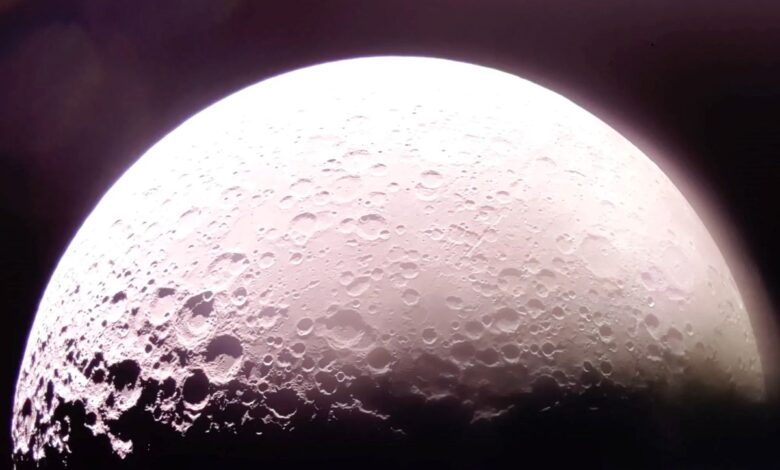
NASA Sets Coverage of Firefly’s First Robotic Commercial Moon Landing
With a suite of NASA science and technology on board, Firefly Aerospace is targeting no earlier than 3:45 a.m. EST on Sunday, March 2, to land the Blue Ghost lunar lander on the Moon. Blue Ghost is slated to touch down near Mare Crisium, a plain in the northeast quadrant on the near side of the Moon, as part of…
Read More » -
An Afternoon of Family Science and Rocket Exploration in Alaska
On Tuesday, January 28th, Fairbanks BEST Homeschool joined the Geophysical Institute for an afternoon of rocket exploration, hands-on activities, and stargazing inside a planetarium. This event was free and open to the public. Despite their frigid winter weather, 200 attendees were curious about the scientific endeavors of Alaska-based researchers alongside cutting-edge investigations conducted by NASA rocket scientists. Families and friends in attendance…
Read More » -
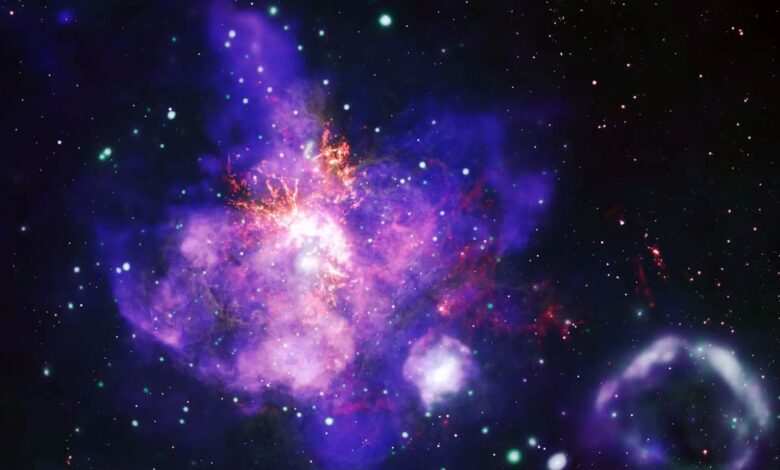
A Stellar Bouquet
This image, released on Feb. 12, 2025, is the deepest X-ray image ever made of the spectacular star forming region called 30 Doradus. By combining X-ray data from NASA’s Chandra X-ray Observatory (blue and green) with optical data from NASA’s Hubble Space Telescope (yellow) and radio data from the Atacama Large Millimeter/submillimeter Array (orange), this stellar arrangement comes alive. Otherwise known as the Tarantula Nebula, 30…
Read More » -
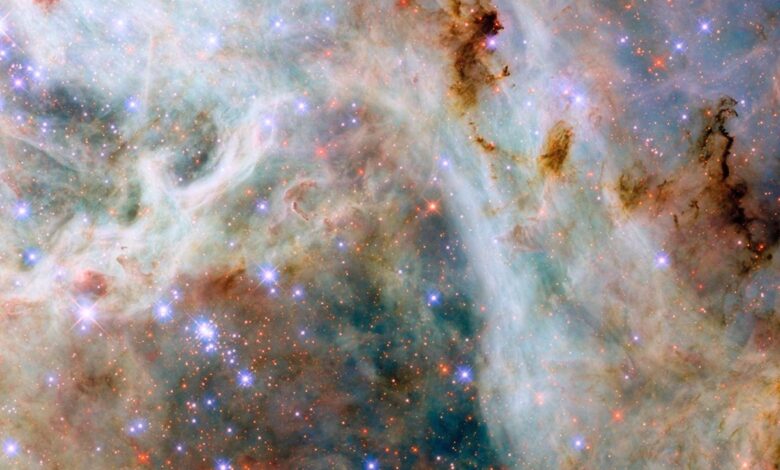
Hubble Captures a Cosmic Cloudscape
Download this image The universe is a dusty place, as this NASA/ESA Hubble Space Telescope image featuring swirling clouds of gas and dust near the Tarantula Nebula reveals. Located in the Large Magellanic Cloud about 160,000 light-years away in the constellations Dorado and Mensa, the Tarantula Nebula is the most productive star-forming region in the nearby universe, home to the most massive…
Read More » -

Sols 4452-4453: Keeping Warm and Keeping Busy
Earth planning date: Wednesday, Feb. 12, 2025 I woke up this morning to my weather app telling me it felt like minus 15° C (5°F) outside. On days like this, it can take me a little longer to get myself up and out into the world. Curiosity has a similar problem — as we head toward winter and it gets…
Read More »