
NASA
-

More Than 400 Lives Saved with NASA’s Search and Rescue Tech in 2024
NASA’s Search and Rescue technologies enabled hundreds of lives saved in 2024. NASA/Dave Ryan Did you know that the same search and rescue technologies developed by NASA for astronaut missions to space help locate and rescue people across the United States and around the world? NASA’s collaboration with the international satellite-aided search and rescue effort known as Cospas-Sarsat has enabled the development…
Read More » -

Sols 4443-4444: Four Fours for February
Earth planning date: Monday, Feb. 3, 2025 Another successful weekend plan left us about 23 meters (about 75 feet) farther down our Mount Sharp Ascent Route (MSAR), with all our science data downlinked to Earth and the planet clocks aligned once more. We only have until 18:26 Pacific time to get this Monday’s plan uplinked (due to the Soliday over…
Read More » -
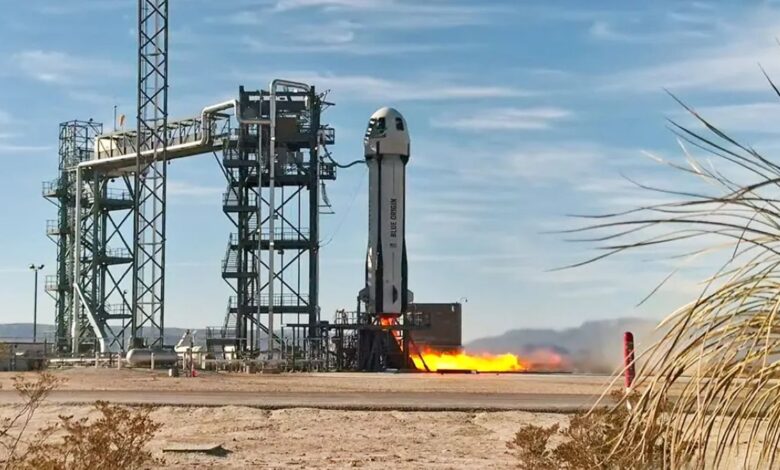
NASA Tests in Simulated Lunar Gravity to Prep Payloads for Moon
The old saying — “Practice makes perfect!” — applies to the Moon too. On Tuesday, NASA gave 17 technologies, instruments, and experiments the chance to practice being on the Moon… without actually going there. Instead, it was a flight test aboard a vehicle adapted to simulate lunar gravity for approximately two minutes. The test began on February 4, 2025, with the 10:00 a.m. CST…
Read More » -
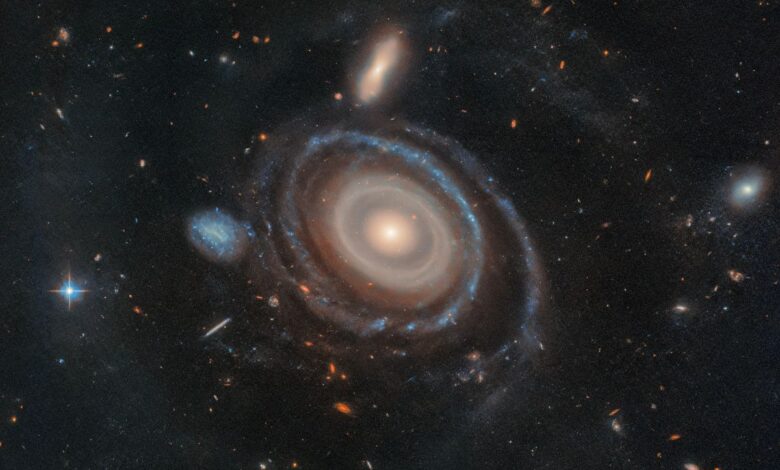
Bullseye!
This image from NASA’s Hubble Space Telescope, released on Feb. 4, 2025, shows the gargantuan galaxy LEDA 1313424, aptly nicknamed the Bullseye. A far smaller blue dwarf galaxy went through the Bullseye’s center, leaving nine star-filled rings. Astronomers using Hubble identified eight visible rings, more than previously detected by any telescope in any galaxy, and confirmed a ninth using data from…
Read More » -
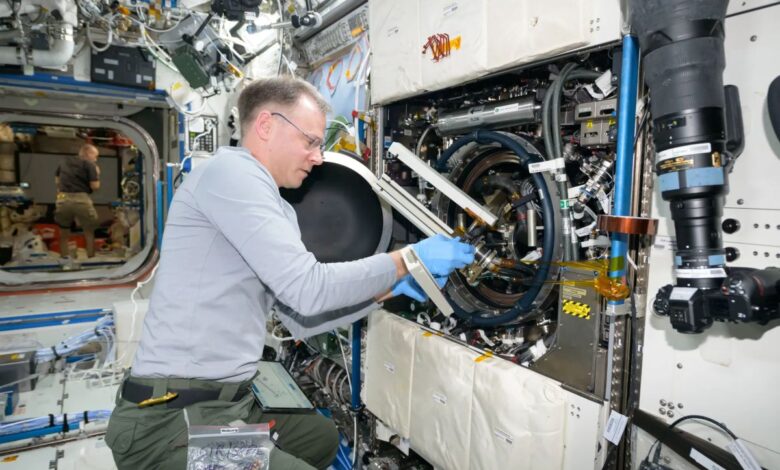
NASA Brings Space to New Jersey Classroom with Astronaut Q&A
Students from the Thomas Edison EnergySmart Charter School in Somerset, New Jersey, will have the chance to connect with NASA astronaut Nick Hague as he answers prerecorded science, technology, engineering, and mathematics (STEM) related questions from aboard the International Space Station. Watch the 20-minute space-to-Earth call at 11:10 a.m. EST on Tuesday, Feb. 11, on NASA+ and learn how to watch NASA content on various…
Read More » -

Wind Over Its Wing: NASA’s X-66 Model Tests Airflow
NASA’s Sustainable Flight Demonstrator (SFD) project recently concluded wind tunnel tests of its X-66 semi-span model in partnership with Boeing. The model, designed to represent half the aircraft, allows the research team to generate high-quality data about the aerodynamic forces that would affect the actual X-66. Test results will help researchers identify areas where they can refine the X-66 design…
Read More » -

NASA Demonstrates Software ‘Brains’ Shared Across Satellite Swarms
Talk amongst yourselves, get on the same page, and work together to get the job done! This “pep talk” roughly describes how new NASA technology works within satellite swarms. This technology, called Distributed Spacecraft Autonomy (DSA), allows individual spacecraft to make independent decisions while collaborating with each other to achieve common goals – all without human input. NASA researchers have…
Read More » -
NASA Invites Media to Learn about Spacecraft Autonomous Tech Firsts
NASA’s Ames Research Center in Silicon Valley invites media to learn more about Distributed Spacecraft Autonomy (DSA), a technology that allows individual spacecraft to make independent decisions while collaborating with each other to achieve common goals – without human input. The DSA team achieved multiple firsts during tests of such swarm technology as part of the agency’s project. DSA develops software tools…
Read More » -
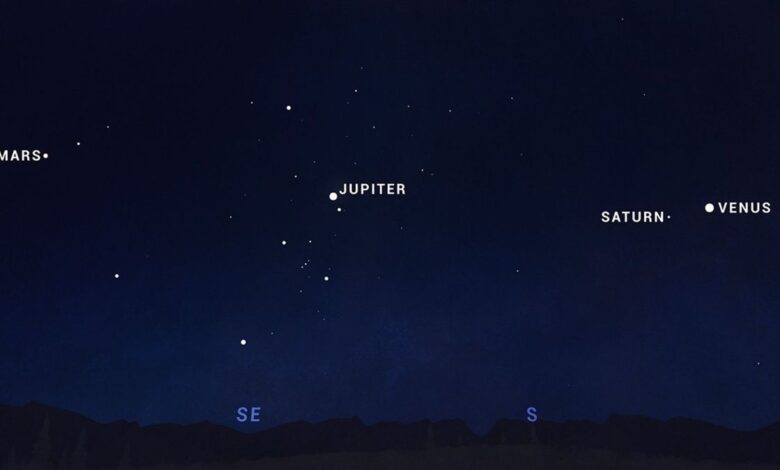
Planetary Alignments and Planet Parades
On most nights, weather permitting, you can spot at least one bright planet in the night sky. While two or three planets are commonly visible in the hours around sunset, occasionally four or five bright planets can be seen simultaneously with the naked eye. These events, often called “planet parades” or “planetary alignments,” can generate significant public interest. Though not…
Read More » -
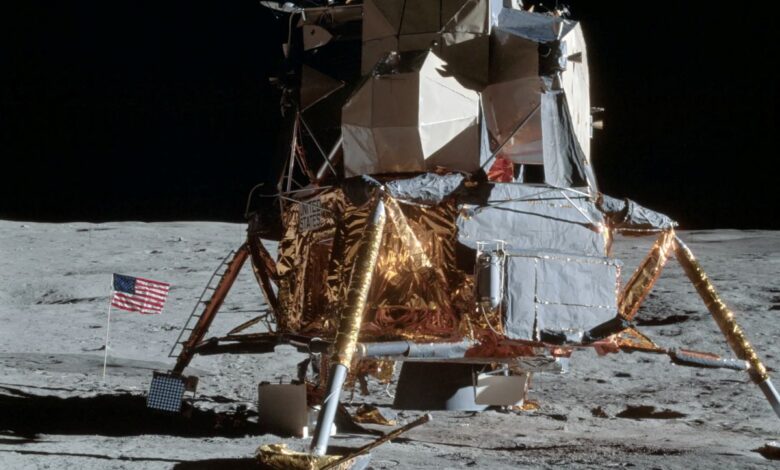
Apollo 14 Moon Landing
This Feb. 5, 1971, photo gives an excellent view of the Apollo 14 lunar module on the Moon’s surface after landing. At left, we can see that the astronauts – Alan Shepard and Edgar Mitchell – deployed the U.S. flag before taking this photo of the lunar module. Shepard and Mitchell touched down in the Fra Mauro highlands region and conducted two moonwalks lasting more than…
Read More »