
NASA
-
How Does the Sun Behave? (Grades K-4)
This article is for students grades K-4. The Sun is a star. It is the biggest object in our solar system. The Sun is about 93 million miles away from Earth and about 4.5 billion years old. The Sun affects Earth’s weather, seasons, climate, and more. Let’s learn about how the Sun behaves. Why is the Sun warm and bright?…
Read More » -
NASA Ames Stars of the Month: February 2025
The NASA Ames Science Directorate recognizes the outstanding contributions of (pictured left to right) Michael Flynn, Ross Beyer, and Matt Johnson. Their commitment to the NASA mission represents the entrepreneurial spirit, technical expertise, and collaborative disposition needed to explore this world and beyond. Space Biosciences Star: Michael Flynn Michael Flynn, a senior scientist and engineer in the Bioengineering Branch, has over…
Read More » -
NASA’s InSight Finds Marsquakes From Meteoroids Go Deeper Than Expected
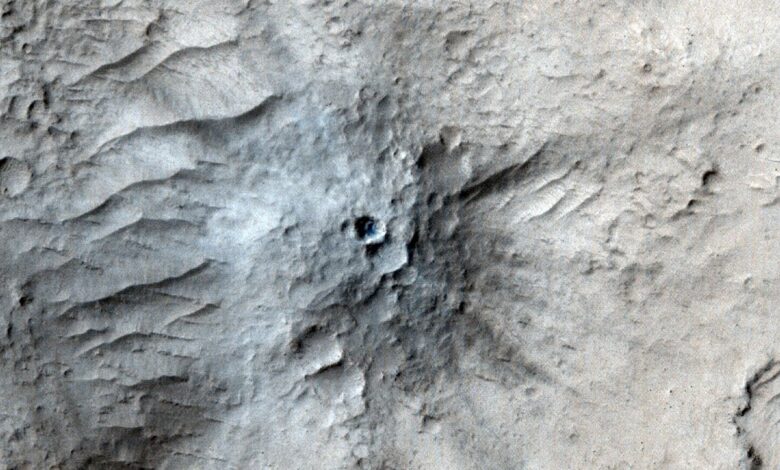
With help from AI, scientists discovered a fresh crater made by an impact that shook material as deep as the Red Planet’s mantle. Meteoroids striking Mars produce seismic signals that can reach deeper into the planet than previously known. That’s the finding of a pair of new papers comparing marsquake data collected by NASA’s InSight lander with impact craters spotted…
Read More » -

30 Years Ago: STS-63, First Shuttle and Mir Rendezvous Mission
The first shuttle mission of 1995, STS-63 included several historic firsts. As part of Phase 1 of the International Space Station program, space shuttle Discovery’s 20th flight conducted the first shuttle rendezvous with the Mir space station, in preparation for future dockings. The six-person crew included Commander James Wetherbee, Pilot Eileen Collins – the first woman to pilot a space shuttle mission – Payload…
Read More » -
The Drive for Better Fuels NASA Employee
Tim Stiglets’ work at NASA’s Stennis Space Center gives him a front-row seat to the growth and opportunity potential of NASA Stennis. His work ranges from managing data for how a test stand is configured to tracking the configuration of NASA Stennis buildings and utilities systems that make up the infrastructure for America’s largest rocket propulsion test site. NASA/Danny Nowlin…
Read More » -
NASA Attends FAN EXPO New Orleans
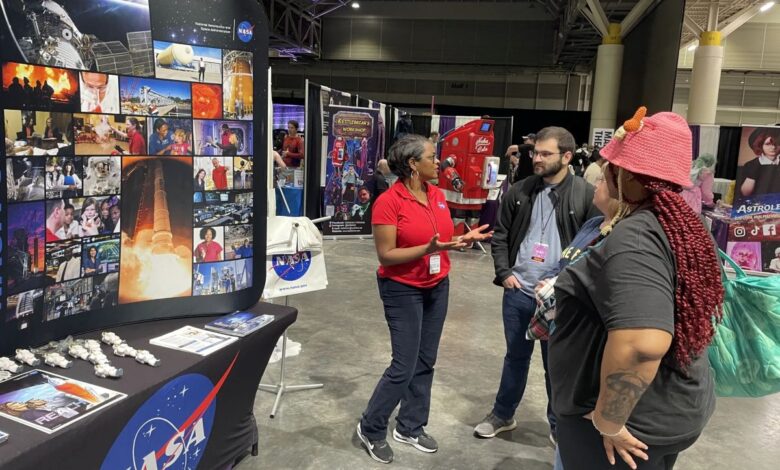
NASA reached out to inspire members of the Artemis Generation on Jan. 10-12, joining one of the largest comic con producers in the world to host an outreach booth at the 2025 FAN EXPO in New Orleans. Thousands of fans celebrating the best in pop culture such as movies, comics, and video gaming learned about NASA’s Stennis Space Center near…
Read More » -

Lagniappe for February 2025
Explore Lagniappe for February 2025 featuring: NASA Stennis Becomes Winter Wonderland Gator Speaks Gator Speaks NASA/Stennis Welcome to February, folks! The shortest month of the year is here, but do not let its number of days fool you. The month is full of energy and is welcomed with great enthusiasm. We have dusted ourselves off from a historic snowfall in January.…
Read More » -
Station Nation: Meet Tandra Gill Spain, Computer Resources Senior Project Manager in the Avionics and Software Office
For astronauts aboard the International Space Station, staying connected to loved ones and maintaining a sense of normalcy is critical. That is where Tandra Gill Spain, a computer resources senior project manager in NASA’s Avionics and Software Office, comes in. Spain leads the integration of applications on Apple devices and the hardware integration on the Joint Station Local Area Network,…
Read More » -

NASA to Talk Science, Tech Aboard Next Intuitive Machines Moon Flight
NASA will host a media teleconference at 1 p.m. EST Friday, Feb. 7, to discuss the agency’s science and technology flying aboard Intuitive Machines’ second flight to the Moon. The mission is part of NASA’s CLPS (Commercial Lunar Payload Services) initiative and Artemis campaign to establish a long-term lunar presence. Audio of the call will stream on the agency’s website…
Read More » -

What’s Up: February 2025 Skywatching Tips from NASA
Download the Video A Month of Bright Planets Venus blazes at its brightest for the year after sunset, then Mars and Jupiter to rule the night amid the menagerie of bright winter stars. Skywatching Highlights All Month – Planet Visibility: Mercury: Pops up just above the horizon in late February, looking relatively bright as sunset fades Venus: Looking brilliant in the west…
Read More »