
NASA
-
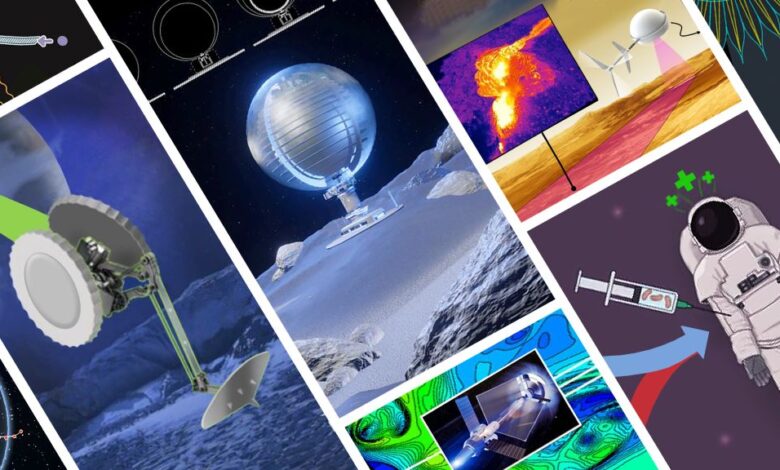
NIAC 2025 Selections
Phase I Phillip AnsellHydrogen Hybrid Power for Aviation Sustainable Systems (Hy2PASS)University of IllinoisUrbana, IL 61801-29572025 Phase I Ryan BensonConstruction Assembly DestinationThinkOrbital Inc.Boulder, CO 80303-00012025 Phase I Martin BermudezLunar Glass Structure (LUNGS): Enabling Construction of Monolithic Habitats in Low-Gravity EnvironmentSkyeports LLCSacramento, CA 95811-00012025 Phase I Christine GreggDynamically Stable Large Space Structures via Architected MetamaterialsNASA Ames Research CenterMoffett Field, CA 940352025 Phase I…
Read More » -
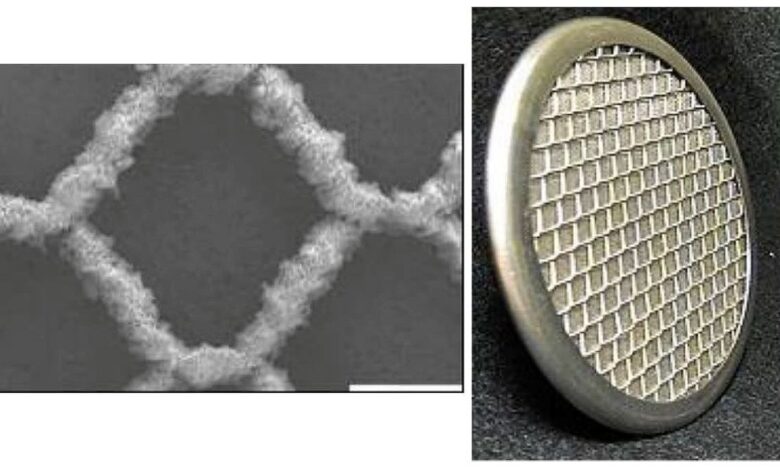
Thermo-Photo-Catalysis of Water for Crewed Mars Transit Spacecraft Oxygen Supply
Saurabh VilekarPrecision Combustion Precision Combustion, Inc. (PCI) proposes to develop a uniquely compact, lightweight, low-power, and durable Microlith® Thermo-Photo-Catalytic (TPC) Reactor for crewed Mars transit spacecraft O2 supply. As crewed space exploration mission destinations move from low Earth orbit to sustained lunar surface habitation toward Mars exploration, the need becomes more intense to supplant heritage physico-chemical unit operations employed for…
Read More » -
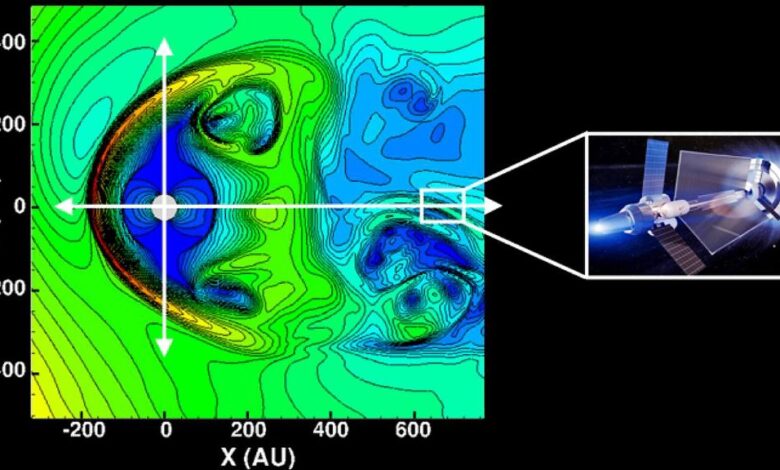
Fusion-Enabled Comprehensive Exploration of the Heliosphere
Ryan WeedHelicity Space LLC This proposal aims to revolutionize space exploration by developing a constellation of spacecraft powered by the Helicity Drive, a compact and scalable fusion propulsion system. This innovative technology will enable rapid, multi-directional exploration of the heliosphere and beyond, providing unprecedented insights into the Sun’s vast influence on our solar system and its interaction with interstellar space.…
Read More » -
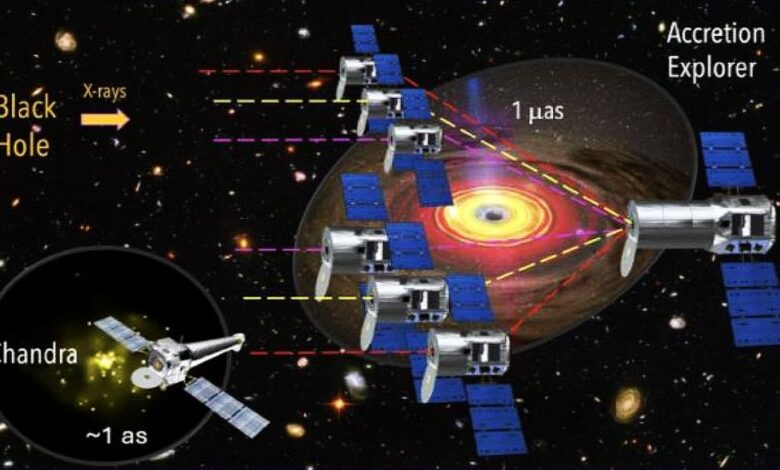
Beholding Black Hole Power with the Accretion Explorer Interferometer
Kimberly WeaverNASA Goddard Space Flight Center Some of the most enigmatic objects in the Universe are giant supermassive black holes (SMBH). Yet after 30 years of study, we don’t know precisely how these objects produce their power. This requires observations at X-ray wavelengths. The state-of-the-art for X-ray images is Chandra (~0.5-1 arcsecond resolution) but this is insufficient to image regions…
Read More » -
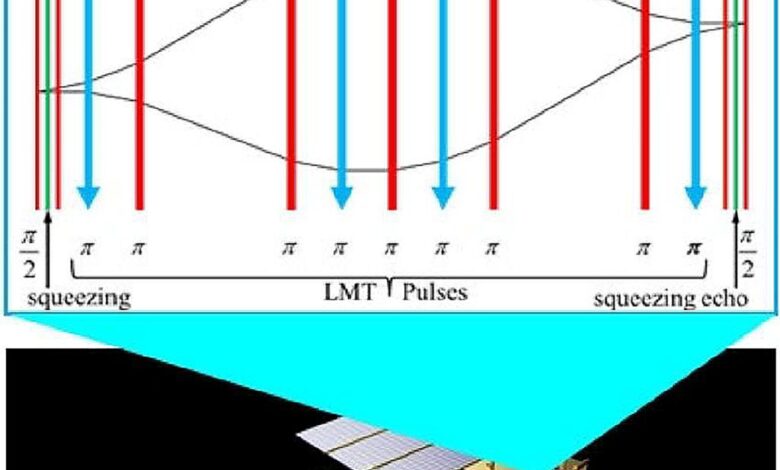
SUPREME-QG: Space-borne Ultra-Precise Measurement of the Equivalence Principle Signature of Quantum Gravity
Selim ShahriarNorthwestern University, Evanston Progress in physics has largely been driven by the development and verification of new theories that unify different fundamental forces of nature. For example, Maxwell revolutionized physics with his unified theory of electricity and magnetism, and the Standard Model of particle physics provides a consistent description of all fundamental forces (electromagnetic, strong, and weak) except for…
Read More » -
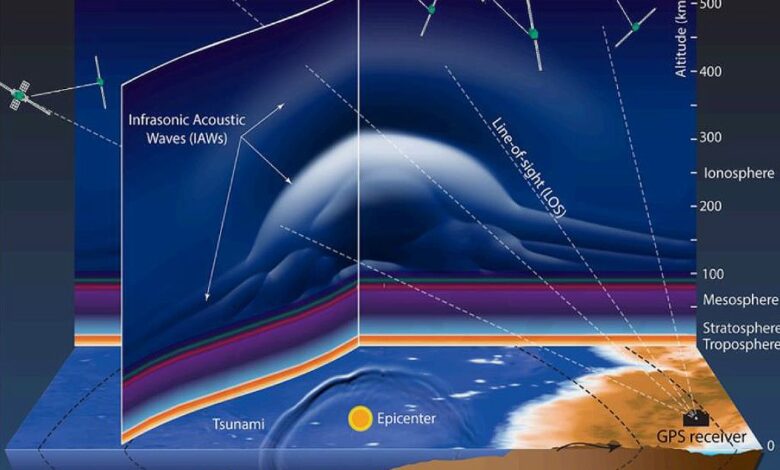
PULSAR: Planetary pULSe-tAkeR
Marco QuadrelliNASA Jet Propulsion Laboratory There is a strong coupling mechanism between the lithosphere, ionosphere, magnetosphere, atmosphere, and the plasmasphere of many planetary bodies. For example, the ionosphere has been shown to respond to space weather events induced by Solar activity, as well as to atmospheric events, and events in the surface and interior of a planet. PULSAR (Planetary pULSe-tAkeR)…
Read More » -
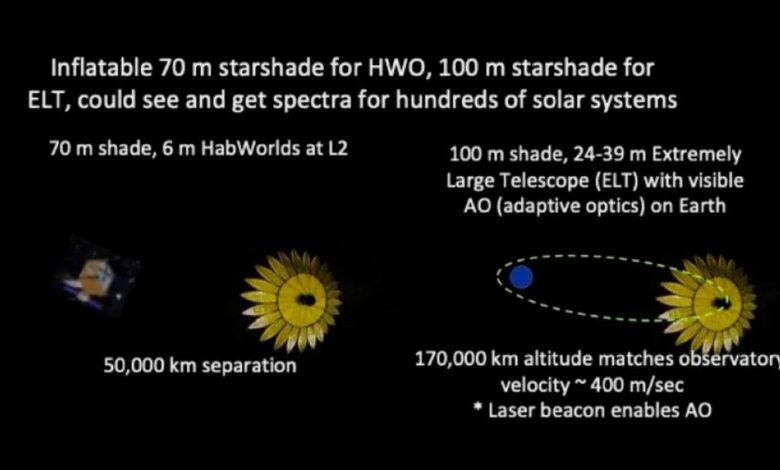
Inflatable Starshade for Earthlike Exoplanets
John MatherNASA Goddard Space Flight Center We will design the first family of ISEE’s (Inflatable Starshade for Earthlike Exoplanets) with sizes from 35 to 100 m diameter. A starshade would enable any telescope to observe exoplanets, a top priority for astronomy worldwide. Compared with other starshade concepts, we aim for a lower mass, cost and complexity, while still providing high…
Read More » -
Rocket Lab Selected by NASA to Provide Neutron Launch Services Under VADR Launch Contract
Rocket Lab USA, Inc. (Nasdaq: RKLB) (“Rocket Lab” or “the Company”), a global leader in launch services and space systems, today announced a mutual agreement with NASA has been reached to include Neutron launch services to the agency through Rocket Lab’s existing VADR (Venture-Class Acquisition of Dedicated and Rideshare) contract. Rocket Lab’s new medium-lift reusable rocket Neutron allows the opportunity…
Read More » -
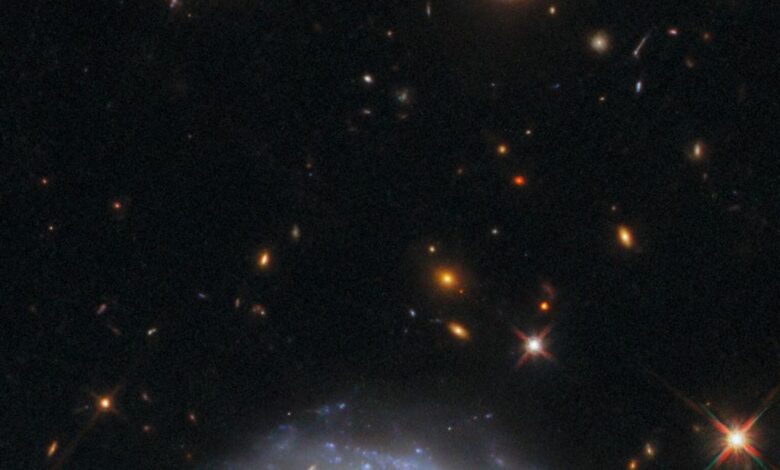
Hubble Rings In the New Year
This NASA/ESA Hubble Space Telescope image reveals a tiny patch of sky in the constellation Hydra. The stars and galaxies depicted here span a mind-bending range of distances. The objects in this image that are nearest to us are stars within our own Milky Way galaxy. You can easily spot these stars by their diffraction spikes, lines that radiate from bright light…
Read More » -
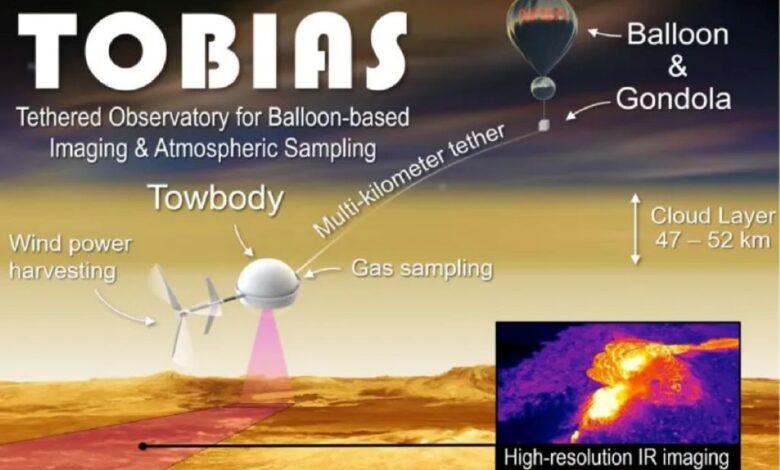
TOBIAS: Tethered Observatory for Balloon-based Imaging and Atmospheric Sampling
Ben HockmanNASA Jet Propulsion Laboratory A basketball-sized towbody containing a camera, atmospheric sampling instruments, and support hardware is suspended on a multi-kilometer tether from a high-altitude balloon in the Venusian atmosphere, allowing it to peer beneath the dense cloud layer and image the surface at high resolution. The towbody harvests energy from the differential wind shear via an onboard wind…
Read More »