
NASA
-

Atmospheric Probe Takes Flight
On Oct. 22, 2024, the latest iteration of an atmospheric probe developed by researchers at NASA’s Armstrong Flight Research Center in Edwards, California, successfully completed a test flight. Building on NASA 1960s research on lifting body aircraft, which use the aircraft’s shape for lift instead of wings, the concept could offer future scientists a potentially better and more economical way to…
Read More » -

NASA Technologies Aim to Solve Housekeeping’s Biggest Issue – Dust
If you thought the dust bunnies under your sofa were an issue, imagine trying to combat dust on the Moon. Dust is a significant challenge for astronauts living and working on the lunar surface. So, NASA is developing technologies that mitigate dust buildup enabling a safer, sustainable presence on the Moon. A flight test aboard a suborbital rocket system that…
Read More » -
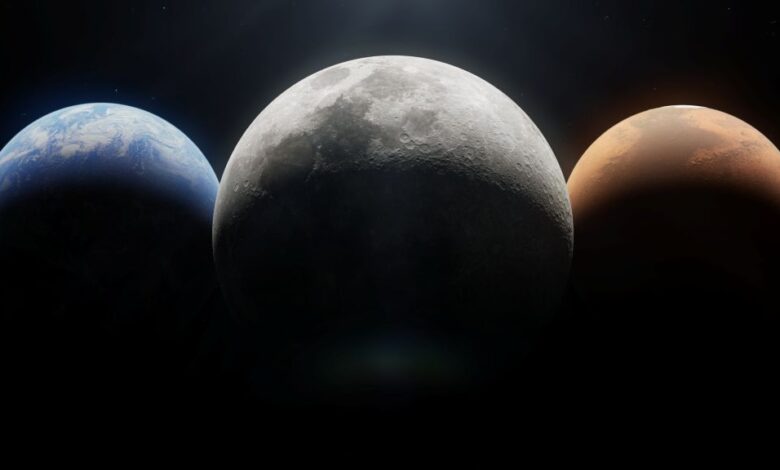
NASA Outlines Latest Moon to Mars Plans in 2024 Architecture Update
As NASA develops a blueprint for space exploration throughout the solar system for the benefit of humanity, the agency released several new documents Friday updating its Moon to Mars architecture. The roadmap sets NASA on course for long-term lunar exploration under the Artemis campaign in preparation for future crewed missions to Mars. Following an Architecture Concept Review, the 2024 updates include a…
Read More » -
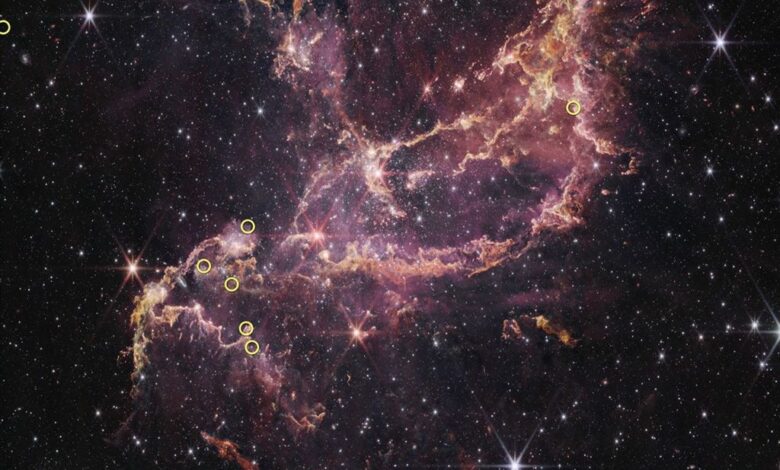
NASA’s Webb Finds Planet-Forming Disks Lived Longer in Early Universe
NASA’s James Webb Space Telescope just solved a conundrum by proving a controversial finding made with the agency’s Hubble Space Telescope more than 20 years ago. In 2003, Hubble provided evidence of a massive planet around a very old star, almost as old as the universe. Such stars possess only small amounts of heavier elements that are the building blocks of planets.…
Read More » -
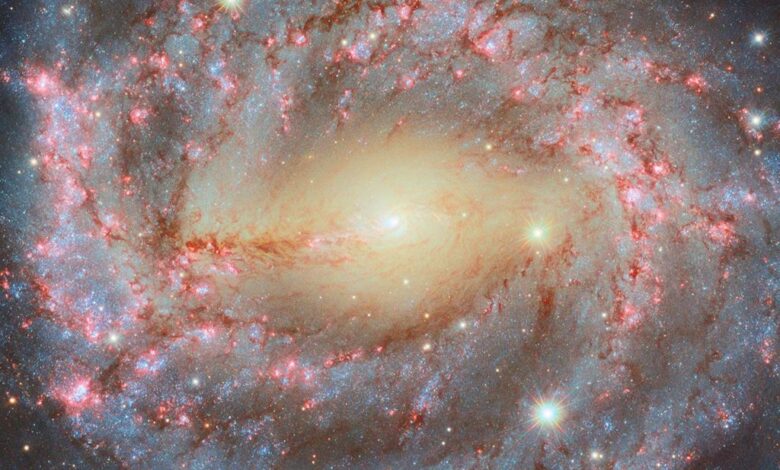
Hubble Images a Grand Spiral
This NASA/ESA Hubble Space Telescope image features the glorious spiral galaxy NGC 5643, which is located roughly 40 million light-years away in the constellation Lupus, the Wolf. NGC 5643 is a grand design spiral, which refers to the galaxy’s symmetrical form with two large, winding spiral arms that are clearly visible. Bright-blue stars define the galaxy’s spiral arms, along with lacy reddish-brown…
Read More » -
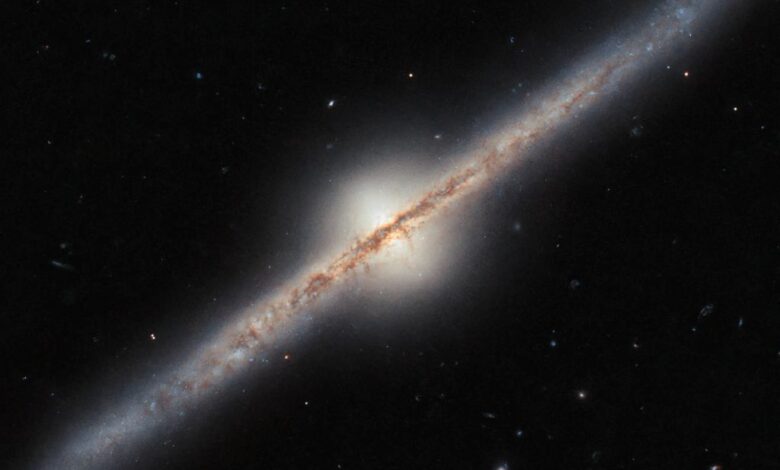
Hubble Captures an Edge-On Spiral with Curve Appeal
This NASA/ESA Hubble Space Telescope image features a spiral galaxy, named UGC 10043. We don’t see the galaxy’s spiral arms because we are seeing it from the side. Located roughly 150 million light-years from Earth in the constellation Serpens, UGC 10043 is one of the somewhat rare spiral galaxies that we see edge-on. This edge-on viewpoint makes the galaxy’s disk appear as…
Read More » -

NASA’s Perseverance Rover Reaches Top of Jezero Crater Rim
The road ahead will be even more scientifically intriguing, and probably somewhat easier-going, now that the six-wheeler has completed its long climb to the top. NASA’s Perseverance Mars rover has crested the top of Jezero Crater’s rim at a location the science team calls “Lookout Hill” and rolling toward its first science stop after the monthslong climb. The rover made…
Read More » -
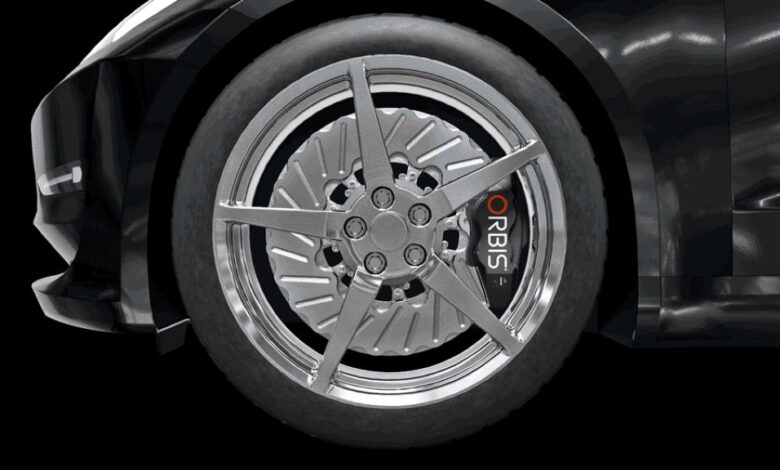
NASA Gives The World a Brake
Just as NASA needs to reduce mass on a spacecraft so it can escape Earth’s gravity, automotive manufacturers work to reduce weight to improve vehicle performance. In the case of brake rotors, lighter is better for a vehicle’s acceleration, reliable stopping, and even gas mileage. Orbis Brakes Inc. licensed a NASA-patented technology to accomplish that and more. This revolutionary brake…
Read More » -

Key Considerations When Developing Avionics for Safety-Critical Systems
This article is from the 2024 Technical Update. Multiple human spaceflight programs are underway at NASA including Orion, Space Launch System, Gateway, Human Landing System, and EVA and Lunar Surface Mobility programs. Achieving success in these programs requires NASA to collaborate with a variety of commercial partners, including both new spaceflight companies and robotic spaceflight companies pursuing crewed spaceflight for…
Read More » -
6DOF Check Cases
This article is from the 2024 Technical Update. In 2015, the NESC released benchmark Earth-based check-cases for well specified, rigid-body, six-degree-of-freedom (6DOF) aero/spacecraft models to promote consistent and accurate flight simulations across multiple Agency tools and facilities. Recently, the NESC expanded upon that effort to add Lunar-based check-cases to support new lunar exploration initiatives. This study produced a smaller, focused…
Read More »