
NASA
-
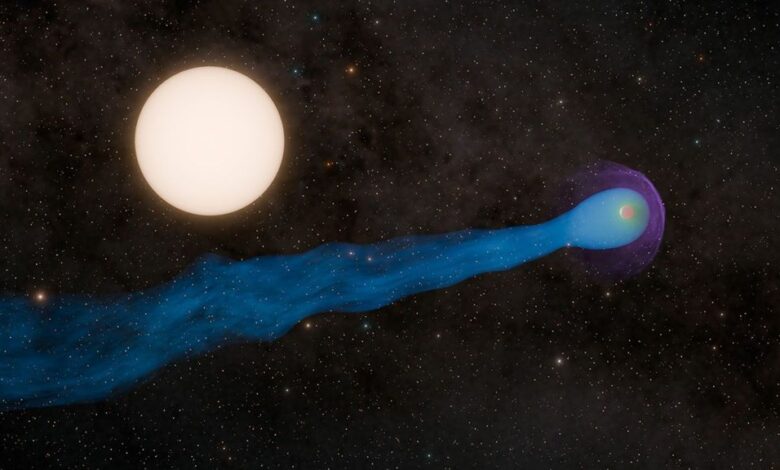
Discovery Alert: A Planet with a ‘Tail’
The Planet WASP-69 b The Discovery The exoplanet WASP-69 b has a “tail,” leaving a trail of gas in its wake. Key Takeaway WASP-69 b is slowly losing its atmosphere as light hydrogen and helium particles in the planet’s outer atmosphere escape the planet over time. But those gas particles don’t escape evenly around the planet, instead they are swept…
Read More » -
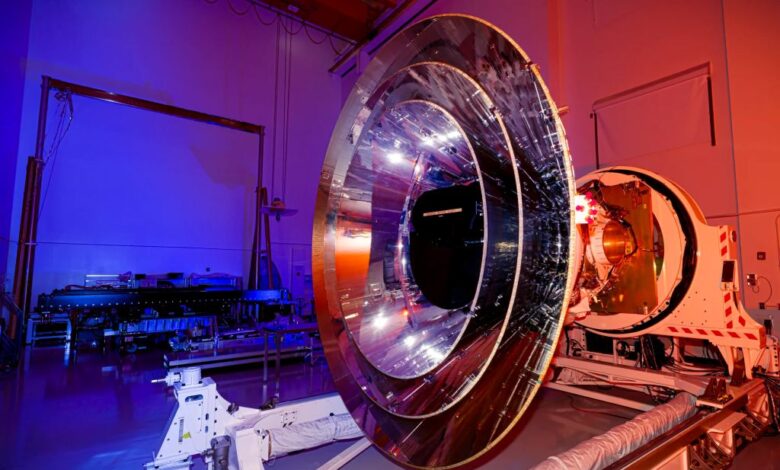
NASA Invites Social Creators for Launch of Two NASA Missions
Registration is open for digital content creators to attend the launch of NASA’s Spectro-Photometer for the History of the Universe, Epoch of Reionization and Ices Explorer (SPHEREx) mission, and NASA’s Polarimeter to Unify the Corona and Heliosphere (PUNCH) mission. SPHEREx will provide the first all-sky spectral survey, collecting data on more than 450 million galaxies along with more than 100 million stars…
Read More » -
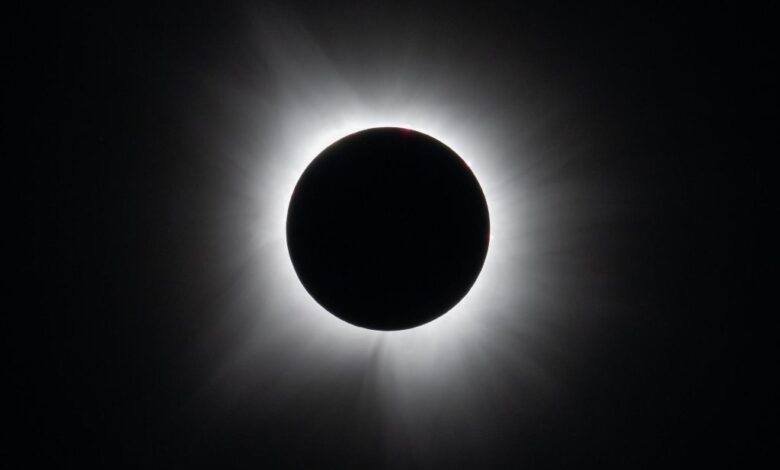
Scientists Share Early Results from NASA’s Solar Eclipse Experiments
On April 8, 2024, a total solar eclipse swept across North America, from the western shores of Mexico, through the United States, and into northeastern Canada. For the eclipse, NASA helped fund numerous research projects and called upon citizen scientists in support of NASA’s goal to understand how our home planet is affected by the Sun – including, for example,…
Read More » -
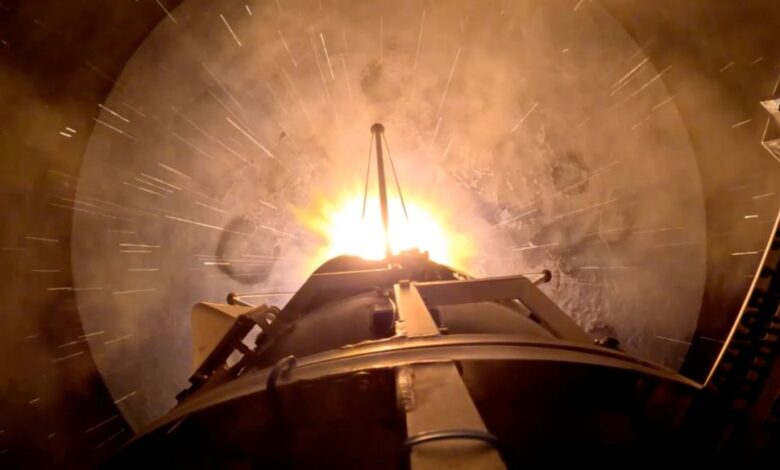
NASA TechLeap Prize: Space Technology Payload Challenge
The Space Technology Payload Challenge invites individuals, teams, and organizations to submit applications for systems that advance technology to address one or more of NASA’s shortfalls. These shortfalls identify technology areas where further technology development is required to meet future exploration, science, and other mission needs. In addition, technologies to address these select shortfalls are also potentially well suited for…
Read More » -
3D Printable Bioreactor for Deep Space Food Production
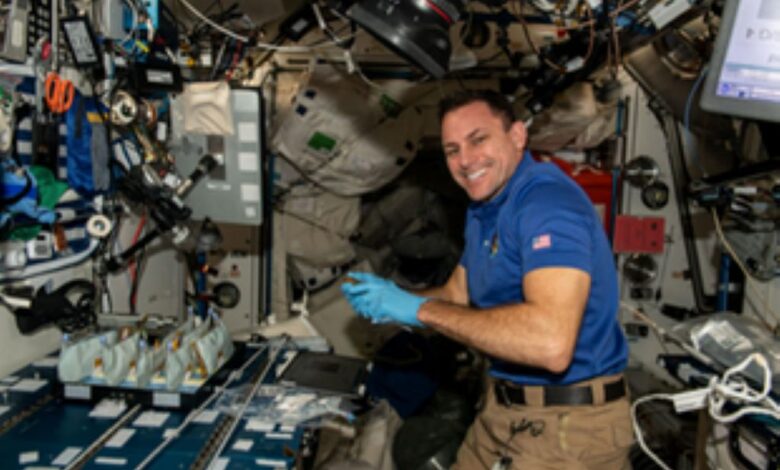
NASA’s Synthetic Biology Project is turning to the 3D printing experts in the GrabCAD community for ideas and or designs that could lead to the ability to reuse and recycle small scale bioreactors to reduce the mass and volume requirements for deep space missions. Ideally, designs that could be printed using a 3D printer, using recyclable plastics, or a design…
Read More » -

Sols 4386-4388: Powers of Ten
Earth planning date: Friday, Dec. 6, 2024 We successfully arrived in our new exploration quadrangle — the Altadena quad — which is named after a town on Earth very near our own Jet Propulsion Laboratory! The names from this quad will recognize the incredible interaction between Altadena and its surrounding environs with the San Andreas and other major faults, which led…
Read More » -
30 Years Ago: NASA Selects its 15th Group of Astronauts
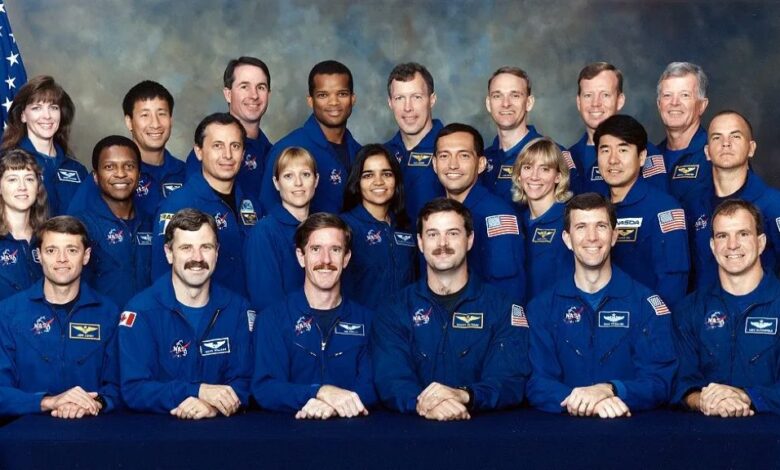
On Dec. 8, 1994, NASA announced the selection of its 15th group of astronauts. The diverse group comprised 19 candidates – 10 pilots and nine mission specialists, and included five women, two African Americans, one Asian American, and the first Peruvian-born and Indian-born astronauts. Four international astronauts, one each from Canada and Japan and two from France, joined the group later…
Read More » -

The Next Full Moon is the Cold Moon
The Next Full Moon is the Cold Moon, Frost Moon, or the Winter Moon; the Moon before Yule or the Oak Moon; the Long Night Moon; the Child Moon; the Datta or Dattatreya Jayanti Festival Moon; the Karthika Deepam Festival Moon; Unduvap Poya; and the Chang’e Moon. The phases of the Moon for December 2024. NASA/JPL-Caltech The next full Moon…
Read More » -
NASA Awards Contract for NOAA’s Next Generation Space Weather Program
NASA, on behalf of the National Oceanic and Atmospheric Administration (NOAA), has selected Southwest Research Institute of San Antonio to build the Next-Generation Space Weather Magnetometer for the Lagrange 1 Series project as a part of NOAA’s Space Weather Next program. This cost-plus-fixed-fee contract is valued at approximately $26.1 million and includes the development of two magnetometer instruments. The anticipated…
Read More » -
NASA’s PACE, US-European SWOT Satellites Offer Combined Look at Ocean
One Earth satellite can see plankton that photosynthesize. The other measures water surface height. Together, their data reveals how sea life and the ocean are intertwined. The ocean is an engine that drives Earth’s weather patterns and climate and sustains a substantial portion of life on the planet. A new animation based on data from two recently launched missions —…
Read More »