
NASA
-
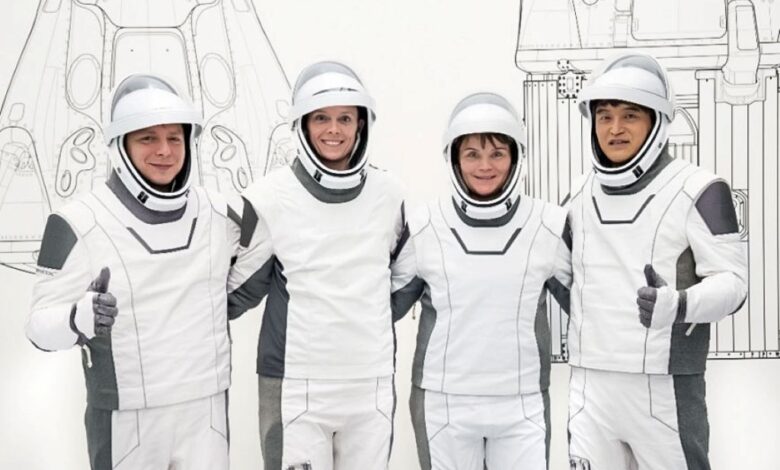
Experience the Launch of NASA’s SpaceX Crew-10 Mission
Digital content creators are invited to register to attend the launch of NASA’s SpaceX Crew-10 mission to carry astronauts to the International Space Station for a science expedition mission as part of NASA’s Commercial Crew Program. This will be the 14th time a SpaceX Dragon spacecraft launched by a Falcon 9 rocket takes crews to the orbital laboratory. Launch of NASA’s SpaceX…
Read More » -

New Artemis Virtual Meeting Backgrounds Released Celebrating Artemis I, Looking to Artemis II and Beyond
Virtual meetings feeling a little stale? NASA has just unveiled a suite of new Artemis backgrounds to elevate your digital workspace. From the majesty of the Artemis I launch lighting up the night sky to the iconic image of the Orion spacecraft with the Moon and Earth in view, these virtual backgrounds allow viewers to relive the awe-inspiring moments of Artemis I…
Read More » -

December’s Night Sky Notes: Spot the King of Planets
by Kat Troche of the Astronomical Society of the Pacific Jupiter is our solar system’s undisputed king of the planets! Jupiter is bright and easy to spot from our vantage point on Earth, helped by its massive size and banded, reflective cloud tops. Jupiter even possesses moons the size of planets: Ganymede, its largest, is bigger than the planet Mercury.…
Read More » -
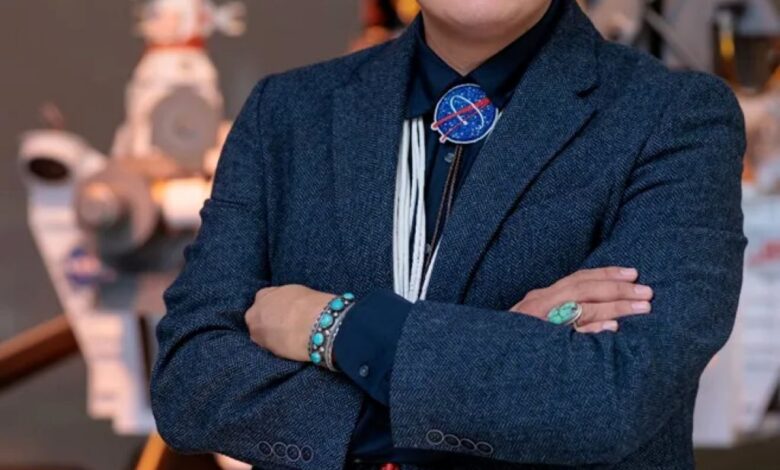
Aaron Yazzie: Bridging Indigenous Heritage and Space Exploration
Aaron Yazzie’s dream of being part of humanity’s exploration of space took him on a journey from his childhood home on the Navajo Nation to working at NASA’s Jet Propulsion Laboratory (JPL) in Southern California. His journey reflects not only his personal ambition, but also a commitment to elevating Indigenous representation in science, technology, engineering, and mathematics (STEM) fields. “Getting…
Read More » -

Thanksgiving Celebrations in Space
The Thanksgiving holiday typically brings families and friends together in a celebration of common gratitude for all the good things that have happened during the previous year. People celebrate the holiday in various ways, with parades, football marathons, and attending services, but food remains the over-arching theme. For astronauts embarked on long-duration space missions, separation from family and friends is…
Read More » -

John Herrington Performs a Spacewalk
On Nov. 30, 2002, NASA astronauts John Herrington (pictured) and Michael Lopez-Alegria performed the third and final spacewalk of the STS-113 mission. The goal of the mission was to install and activate the Port 1 Integrated Truss Assembly (P1). The first major component installed on the left side of the Station, the P1 truss provides an additional three External Thermal…
Read More » -
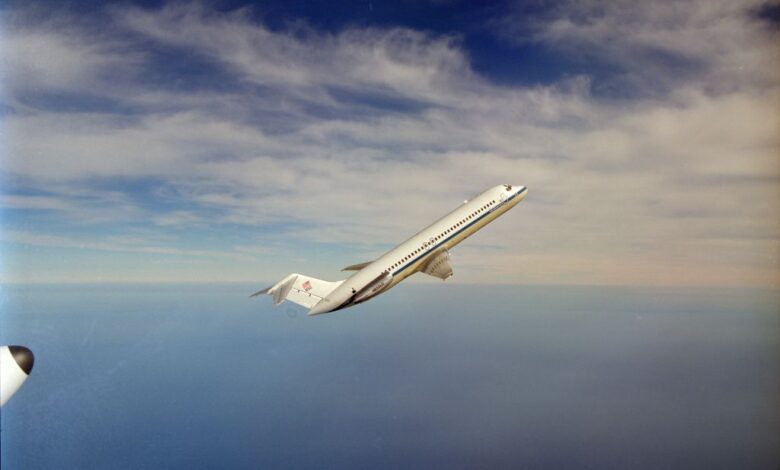
NASA Plane Supported Innovative Microgravity Research in ‘90s
A bell rings and a strobe light flashes as a pilot pulls the nose of the DC-9 aircraft up sharply. The blood quickly drains from researchers’ heads as they are pulled to the cabin floor by a force twice that of normal gravity. Once the acceleration slows to the desired level, and the NASA aircraft crests over its arc, the…
Read More » -
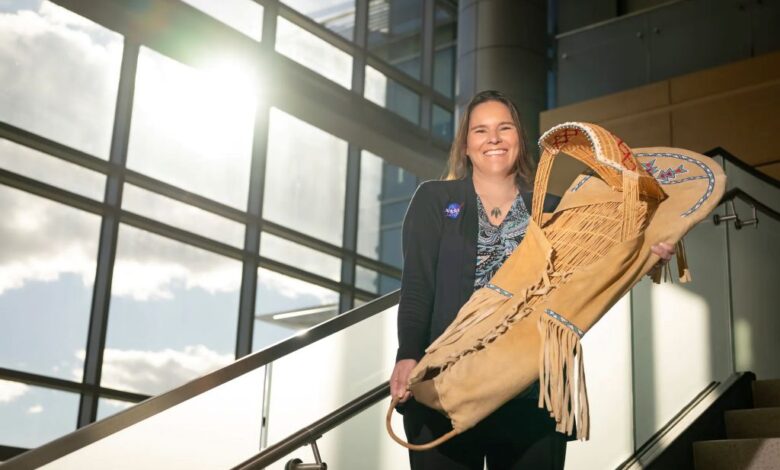
Manager and Program Analyst Tami Wisniewski
“I love my country. I love serving my country. I think that was ingrained in me in the military, where I grew to realize how lucky we are to live in America and have the freedoms that we have. When I returned from [my first duty station] in Germany, I separated from the Air Force for about nine months, but…
Read More » -
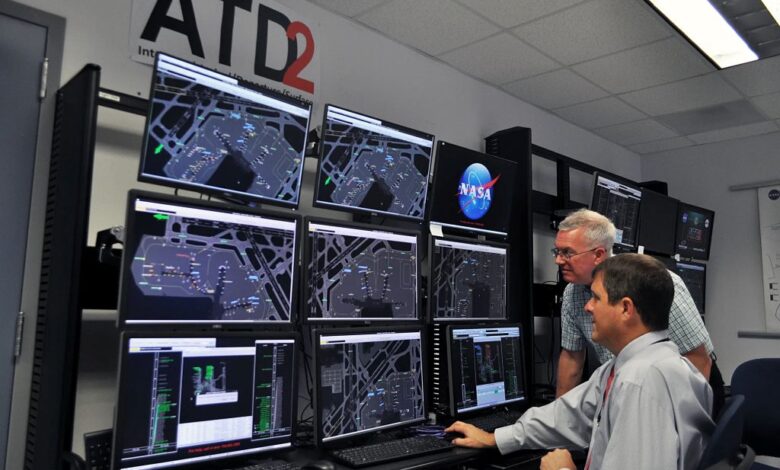
An Electronic Traffic Monitor for Airports
Ground traffic management program saves passengers and airlines time while cutting fuel costs The focus of Airspace Technology Demonstration 2 was IADS, a software that coordinates flight schedules between the ramp, tower, terminal, and center control facilities. This visual representation of data helps minimize delays on the ground. NASA / Jim Banke If every commuter drove the same few roads…
Read More » -
NASA Awards Contract for NOAA’s Next-Generation Space Weather Sensors
NASA, on behalf of the National Oceanic and Atmospheric Administration (NOAA), has selected Johns Hopkins University’s Applied Physics Laboratory of Laurel, Maryland, to build the Suprathermal Ion Sensors for the Lagrange 1 Series project, part of NOAA’s Space Weather Next Program. This cost-plus-fixed-fee contract is valued at approximately $20.5 million and includes the development of two Suprathermal Ion Sensor instruments.…
Read More »