
NASA
-
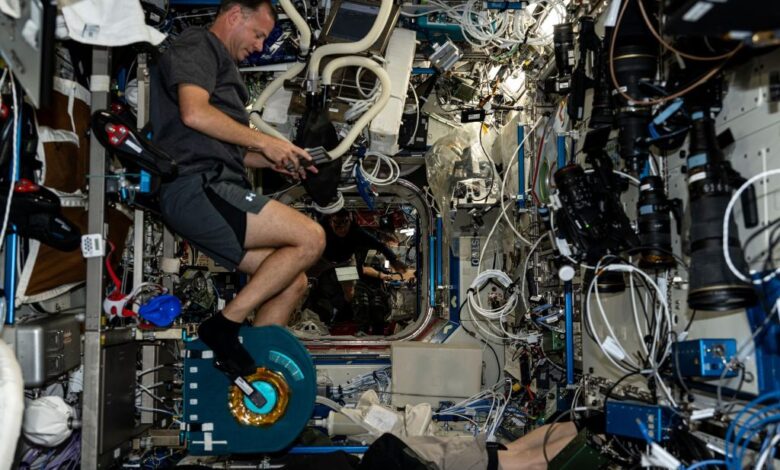
FAQ: The Real Story About Astronaut Health Care in Space
Lee esta historia en español aquí. The International Space Station is humanity’s home in space and a research station orbiting about 250 miles above the Earth. NASA and its international partners have maintained a continuous human presence aboard the space station for more than 24 years, conducting research that is not possible on Earth. The people living and working aboard the…
Read More » -

Ready, Set, Action! Our Sun is the Star in Dazzling Simulation
NASA supercomputers are shedding light on what causes some of the Sun’s most complex behaviors. Using data from the suite of active Sun-watching spacecraft currently observing the star at the heart of our solar system, researchers can explore solar dynamics like never before. The animation shows the strength of the turbulent motions of the Sun’s inner layers as materials twist into its…
Read More » -
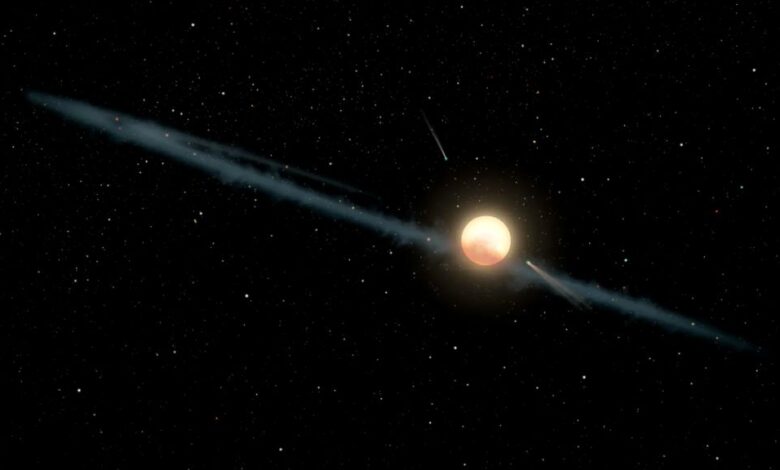
Ring Around Tabby’s Star
This Oct. 4, 2017, illustration shows a hypothetical uneven ring of dust orbiting KIC 8462852, also known as Boyajian’s Star or Tabby’s Star. The star has experienced unusual dips in brightness over a matter of days, as well as much subtler but longer-term dimming trends. Scientists proposed several explanations for this unexpected behavior, ranging from Tabby’s Star swallowing a planet…
Read More » -
Deformable Crumpled Nano-ball Coatings with Adaptable Adhesion and Mechanical Energy Absorption for Lunar Dust Mitigation
ESI24 Nam Quadchart SungWoo NamUniversity of California, Irvine Lunar dust may seem unimposing, but it presents a significant challenge for space missions. Its abrasive and jagged particles can damage equipment, clog devices, and even pose health risks to astronauts. This project addresses such issues by developing advanced coatings composed of crumpled nano-balls made from atomically thin 2D materials such as MoS₂,…
Read More » -
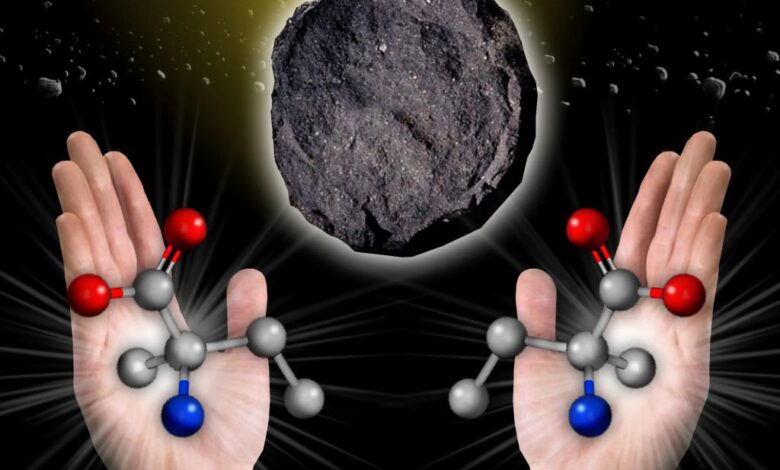
NASA: Mystery of Life’s Handedness Deepens
The mystery of why life uses molecules with specific orientations has deepened with a NASA-funded discovery that RNA — a key molecule thought to have potentially held the instructions for life before DNA emerged — can favor making the building blocks of proteins in either the left-hand or the right-hand orientation. Resolving this mystery could provide clues to the origin…
Read More » -
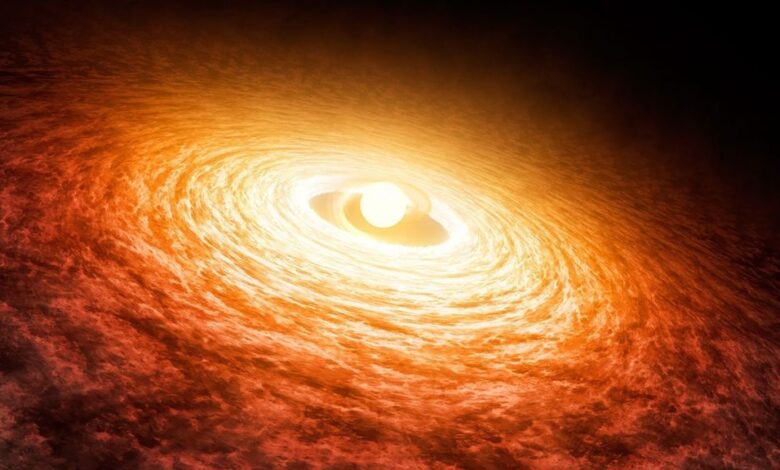
NASA’s Hubble Finds Sizzling Details About Young Star FU Orionis
In 1936, astronomers saw a puzzling event in the constellation Orion: the young star FU Orionis (FU Ori) became a hundred times brighter in a matter of months. At its peak, FU Ori was intrinsically 100 times brighter than our Sun. Unlike an exploding star though, it has declined in luminosity only languidly since then. Now, a team of astronomers…
Read More » -
Weld-ASSIST: Weldability Assessment for In-Space Conditions using a Digital Twin
ESI24 Haghighi Quadchart Azadeh HaghighiUniversity of Illinois, Chicago In-space manufacturing and assembly are vital to NASA’s long-term exploration goals, especially for the Moon and Mars missions. Deploying welding technology in space enables the assembly and repair of structures, reducing logistical burdens and supply needs from Earth. The unique challenges and extreme conditions of space–high thermal variations, microgravity, and vacuum–require advanced welding…
Read More » -
Engineering the Adhesion Mechanisms of Hierarchical Dust-Mitigating Nanostructures
ESI24 Chang Quadchart Chih-Hao ChangUniversity of Texas at Austin Establishing a permanent base on the moon is a critical step in the exploration of deep space. One significant challenge observed during the Apollo missions was the adhesion of lunar dust, which can build up on vehicle, equipment, and space suit. Highly fine and abrasive, the dust particles can have adverse mechanical,…
Read More » -
Integrated Computational Materials Modelling Framework for Investigating the Process-Structure-Property Linkage of the Lunar Metal Welding with Internal Defects
ESI24 Li Quadchart Wei LiUniversity of Texas at Dallas Internal defects are always formed in laser welding process due to the keyhole instability, molten pool collapse, and rapid solidification. The extreme lunar environment complicates the reliable implementation of welding, thereby enhancing the welding defects formation. The welding defects are critical material barriers preventing the metal components from Moon exploration. Professor Wei…
Read More » -
Studying Passive Dust Mitigation on Anisotropic Structured Surface
ESI24 Zhai Quadchart Lei ZhaiUniversity of Central Florida Lunar dust, with its chemical reactivity, electrostatic charge, and potential magnetism, poses a serious threat to astronauts and equipment on the Moon’s surface. To address this, the project proposes developing structured coatings with anisotropic surface features and electrostatic dissipative properties to passively mitigate lunar dust. By analyzing lunar dust-surface interactions at multiple scales,…
Read More »