
NASA
-
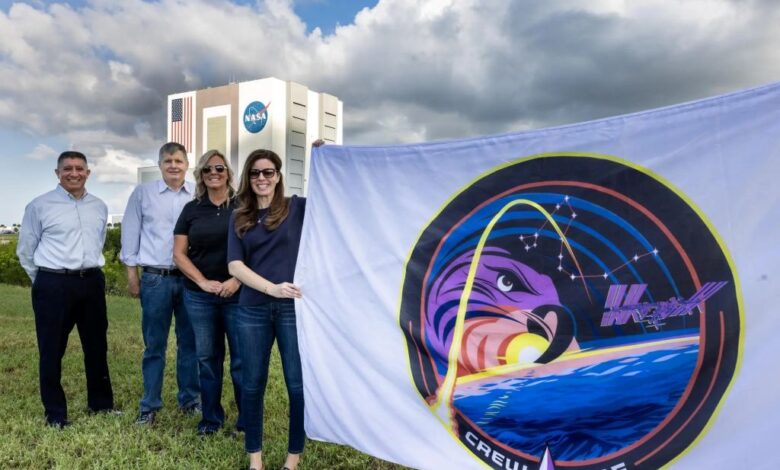
Meet the Space Ops Team: Diana Oglesby
Diana Oglesby’s love for NASA began long before she started working for the agency. A native of Decatur, Texas, Oglesby knew at the age of eight that she would make NASA her future destination. That dream became a reality when Oglesby joined the agency, first as an intern and later as a NASA full-time employee, marking the beginning of a…
Read More » -
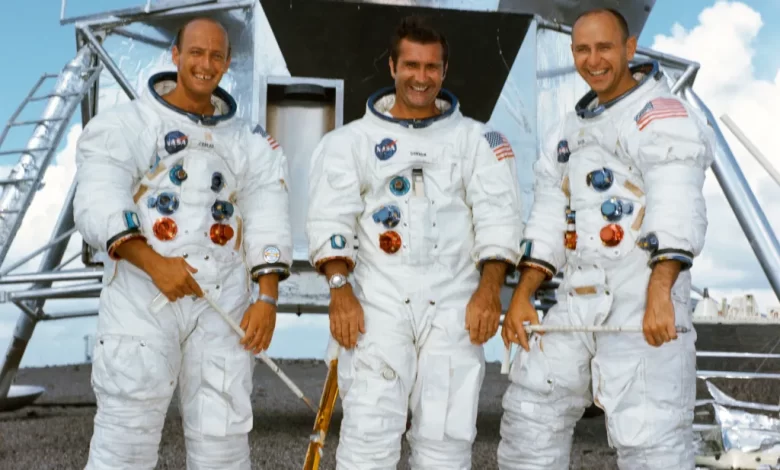
55 Years Ago: Apollo 12 Makes a Pinpoint Landing on the Moon
In November 1969, Apollo 12 astronauts Commander Charles “Pete” Conrad, Command Module Pilot (CMP) Richard F. Gordon, and Lunar Module Pilot (LMP) Alan L. Bean completed the second crewed lunar landing mission. Conrad and Bean achieved a pinpoint landing in the Ocean of Storms within walking distance of the Surveyor 3 spacecraft that landed there in April 1967. While Gordon conducted science from lunar…
Read More » -
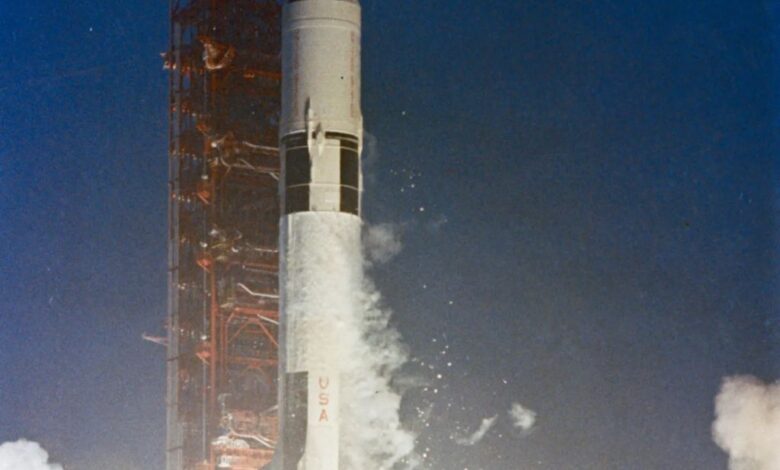
55 Years Ago: Apollo 12 Launches
The Apollo 12 spacecraft launches from NASA’s Kennedy Space Center in Florida in this image from Nov. 14, 1969, with astronauts Charles Conrad Jr., Richard F. Gordon Jr., and Alan L. Bean aboard. During liftoff, the Saturn V rocket which carried the Apollo capsule was struck twice by lightning. On Nov. 19, 1969, the lunar module landed on the Moon.…
Read More » -
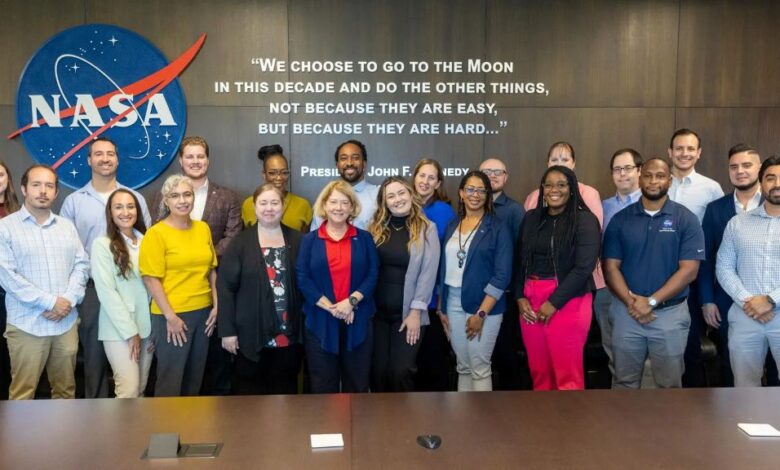
NASA Leadership Hosts Future-Focused Dialogues with Kennedy Employees
NASA Deputy Administrator Pam Melroy (front center left) discusses NASA 2040 on Wednesday, Nov. 13, 2024, the agency’s strategic initiative for aligning workforce, infrastructure, and technologies to meet the needs of the future with various groups of employees at the agency’s Kennedy Space Center in Florida. The initiative launched in June 2023 to implement meaningful changes to ensure the agency remains…
Read More » -
Precision Pointing Goes the Distance on NASA Experiment
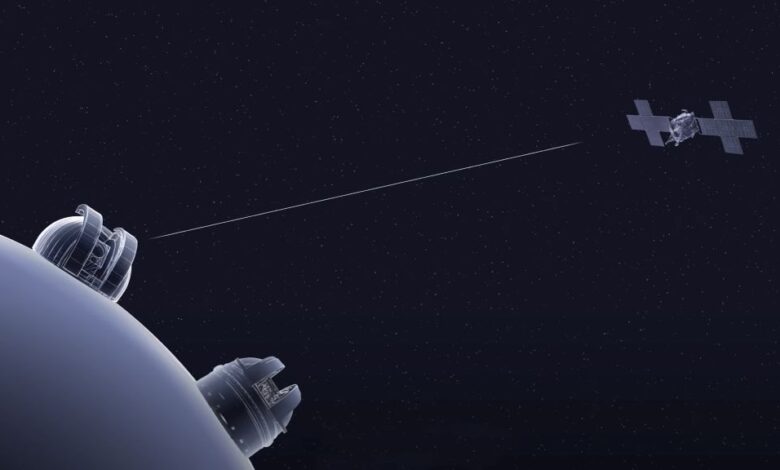
One year ago today, the future of space communications arrived at Earth as a beam of light from a NASA spacecraft nearly 10 million miles away. That’s 40 times farther than our Moon. That’s like using a laser pointer to track a moving dime from a mile away. That’s pretty precise. That laser — transmitted from NASA’s DSOC (Deep Space Optical Communications)…
Read More » -
South Pole Safety: Designing the NASA Lunar Rescue System
In the unforgiving lunar environment, the possibility of an astronaut crewmember becoming incapacitated due to unforeseen circumstances (injury, medical emergency, or a mission-related accident) is a critical concern, starting with the upcoming Artemis III mission, where two astronaut crewmembers will explore the Lunar South Pole. The Moon’s surface is littered with rocks ranging from 0.15 to 20 meters in diameter…
Read More » -
NASA, Peru Agree to Study Potential Sounding Rocket Campaign
Lee esta nota de prensa en español aquí. NASA and Peru’s National Commission for Aerospace Research and Development (CONIDA) laid the groundwork for a potential multi-year scientific rocket launch campaign in the South American country. Both countries signed a non-binding memorandum of understanding Thursday that includes safety training, a joint feasibility study for the potential campaign, and technical assistance for CONIDA…
Read More » -
NASA and Forest Service Use Balloon to Help Firefighters Communicate
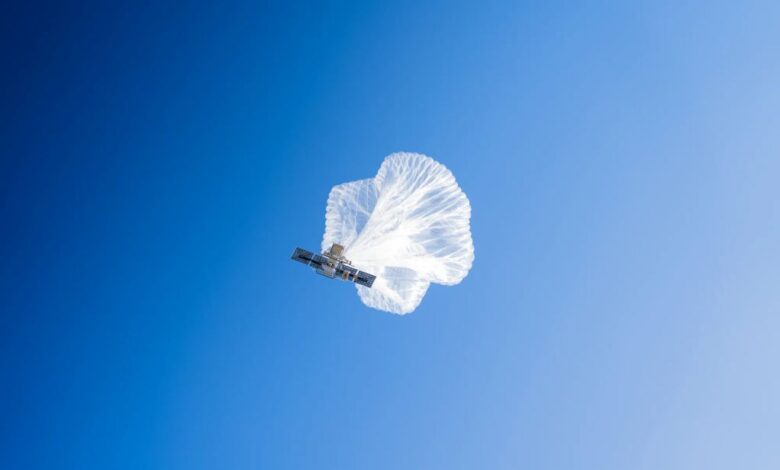
NASA is participating in a collaborative effort to use high-altitude balloons to improve real-time communications among firefighters battling wildland fires. The rugged and often remote locations where wildland fires burn mean cell phone service is often limited, making communication between firefighters and command posts difficult. The flight testing of the Strategic Tactical Radio and Tactical Overwatch (STRATO) technology brought together…
Read More » -

NASA’s EMIT Will Explore Diverse Science Questions on Extended Mission
The imaging spectrometer measures the colors of light reflected from Earth’s surface to study fields such as agriculture, hydrology, and climate science. Observing our planet from the International Space Station since July 2022, NASA’s EMIT (Earth Surface Mineral Dust Source Investigation) mission is beginning its next act. At first the imaging spectrometer was solely aimed at mapping minerals over Earth’s desert regions…
Read More » -
Summary of Aura 20th Anniversary Event
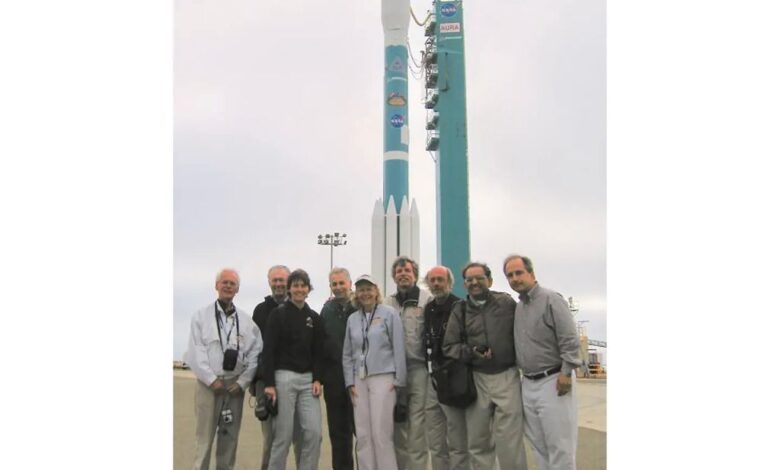
Snippets from The Earth Observer’s Editor’s Corner The last of NASA’s three EOS Flagships – Aura – marked 20 years in orbit on July 15, 2024, with a celebration on September 18, 2024, at the Goddard Space Flight Center’s (GSFC) Recreational Center. The 120 attendees – including about 40 virtually – reminisced about Aura’s (originally named EOS-CHEM) tumultuous beginning, from…
Read More »