
NASA
-

Witch Nebula Casts Starry Spell
This 2013 image taken by NASA’s Wide-Field Infrared Survey Explorer, or WISE, captures a nebula that looks like a witch screaming. Perhaps that imagined scream is a creation spell, for the Witch Hat nebula’s billowy clouds are a star nursery. We can see these clouds thanks to massive stars lighting them up; dust in the cloud is being hit with…
Read More » -
Halloween on the International Space Station
Although no ghouls or goblins or trick-or-treaters come knocking at the International Space Station’s front hatch, crew members aboard the orbiting facility still like to get in the Halloween spirit. Whether individually or as an entire crew, they dress up in sometimes spooky, sometimes scary, but always creative costumes, often designed from materials available aboard the space station. Please enjoy…
Read More » -

Why NASA’s SPHEREx Mission Will Make ‘Most Colorful’ Cosmic Map Ever
The space telescope will detect over 100 colors from hundreds of millions of stars and galaxies. Here’s what astronomers will do with all that color. NASA’s SPHEREx mission won’t be the first space telescope to observe hundreds of millions of stars and galaxies when it launches no later than April 2025, but it will be the first to observe them…
Read More » -

Artemis I Moon Tree Stewards
Artemis I Moon Tree seedlings continue to find new homes with schools, museums, libraries, universities, and community organizations across the contiguous United States. An open call to NASA’s Artifacts Module in Fall, 2023 welcomed over 1000 organization submissions, which were reviewed and ranked by a joint USDA Forest Service and NASA panel. Final recipient selection and seedling assignments for each…
Read More » -
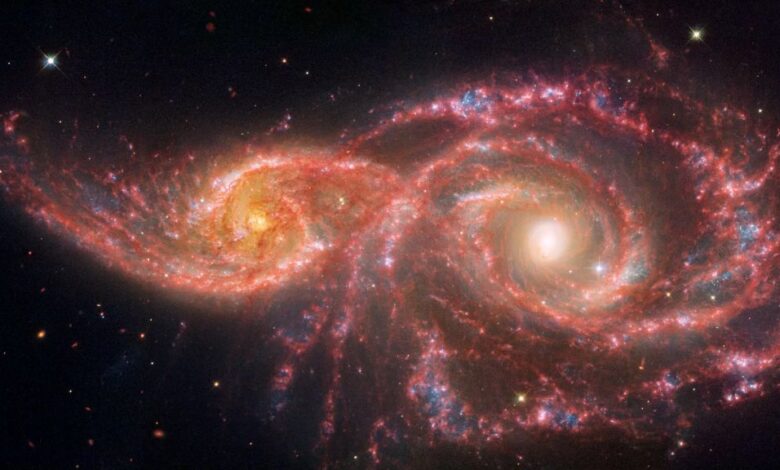
‘Blood-Soaked’ Eyes: NASA’s Webb, Hubble Examine Galaxy Pair
Stare deeply at these galaxies. They appear as if blood is pumping through the top of a flesh-free face. The long, ghastly “stare” of their searing eye-like cores shines out into the supreme cosmic darkness. It’s good fortune that looks can be deceiving. These galaxies have only grazed one another to date, with the smaller spiral on the left, cataloged…
Read More » -
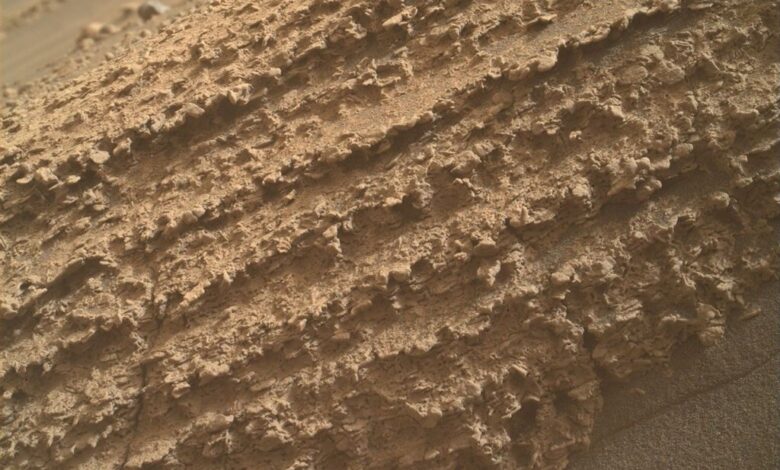
Sols 4348-4349: Smoke on the Water
Earth planning date: Monday, Oct. 28, 2024 Before the science team starts planning, we first look at the latest Navcam image downlinked from Curiosity to see where the rover is located. It can be all too easy to get lost in the scenery of the Navcam and find new places in the distance we want to drive towards, but there’s…
Read More » -
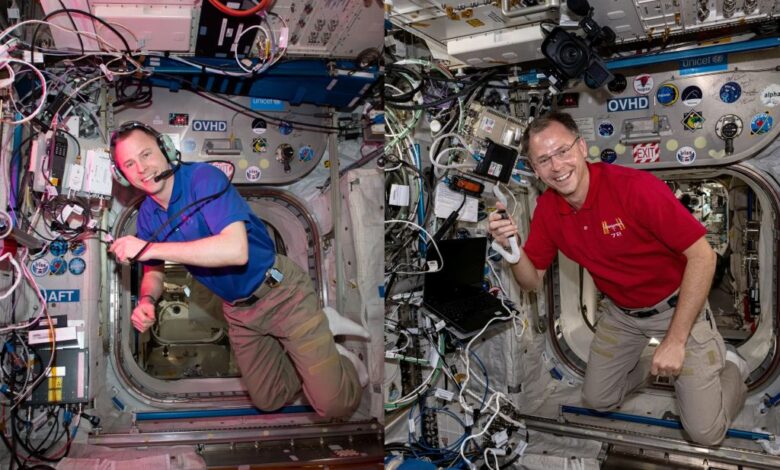
Hello Earth? Space Calling
How it started versus how it’s going for astronaut Nick Hague with ISS Ham Radio on the space station. Since November 2000, crew members like Hague have used ham radio to communicate with people on Earth through this educational program, also known as Amateur Radio on the International Space Station or ARISS. So far, there have been more than 1,700 events, directly…
Read More » -
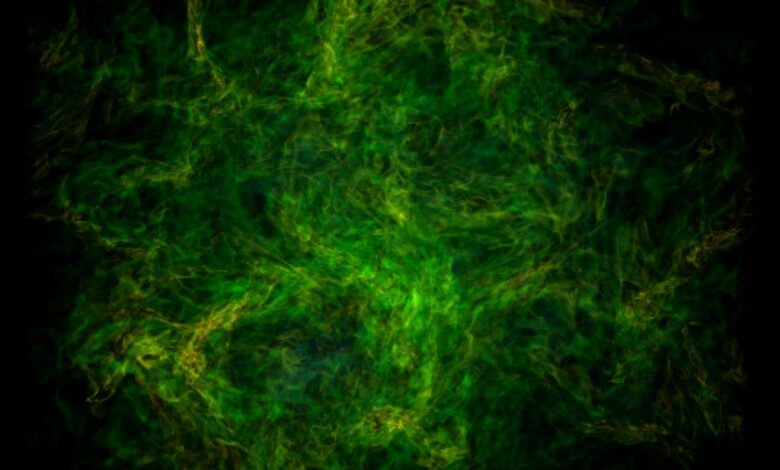
Buckle Up: NASA-Funded Study Explores Turbulence in Molecular Clouds
On an airplane, motions of the air on both small and large scales contribute to turbulence, which may result in a bumpy flight. Turbulence on a much larger scale is important to how stars form in giant molecular clouds that permeate the Milky Way. In a new NASA-funded study in the journal Science Advances, scientists created simulations to explore how turbulence…
Read More » -
A Small Business Success Story: Mentor-Protégé Agreements Drive Growth in Aerospace Sector
In the ever-evolving aerospace industry, collaboration and mentorship are vital for fostering innovation and growth. Recent achievements highlight the positive impact of Mentor-Protégé Agreements (MPA) facilitated by Jacobs Engineering Group, now known as Amentum Space Exploration Group. Two standout partnerships have demonstrated remarkable success and expansion, underscoring the value of such initiatives. CODEplus and Amentum Space Exploration Group The 24-Month…
Read More » -
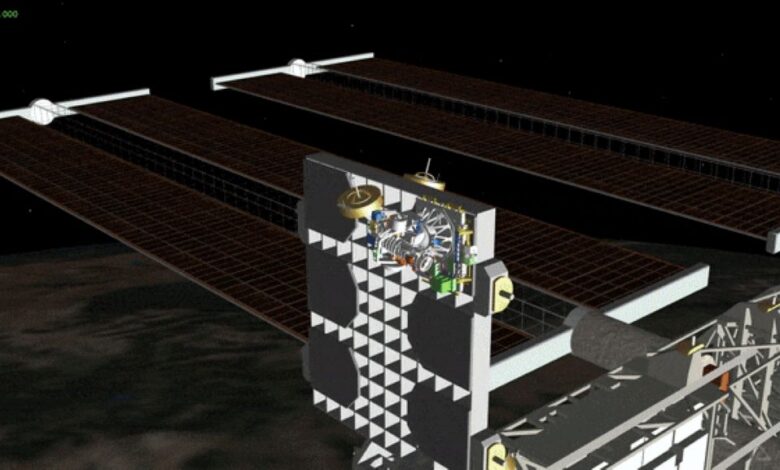
NASA to Launch Innovative Solar Coronagraph to Space Station
This launch is just the latest step in a long history for the instrument. In the early 2000s and in August 2017, NASA scientists ran ground-based experiments similar to CODEX during total solar eclipses. A coronagraph mimics what happens during a total solar eclipse, so this naturally occurring phenomena provided a good opportunity to test instruments that measure the temperature…
Read More »