
NASA
-

Exploring Deep Space: NASA Announces 2025 RASC-AL Competition
NASA has officially announced the 2025 Revolutionary Aerospace Systems Concepts – Academic Linkage (RASC-AL) competition, an initiative to fuel innovation for aerospace systems concepts, analogs, and technology prototyping through university engagement. RASC-AL, one of NASA’s longest-running student competitions, solicits concepts from the next generation of engineers and scientists to explore the future of deep space exploration. RASC-AL is seeking proposals…
Read More » -
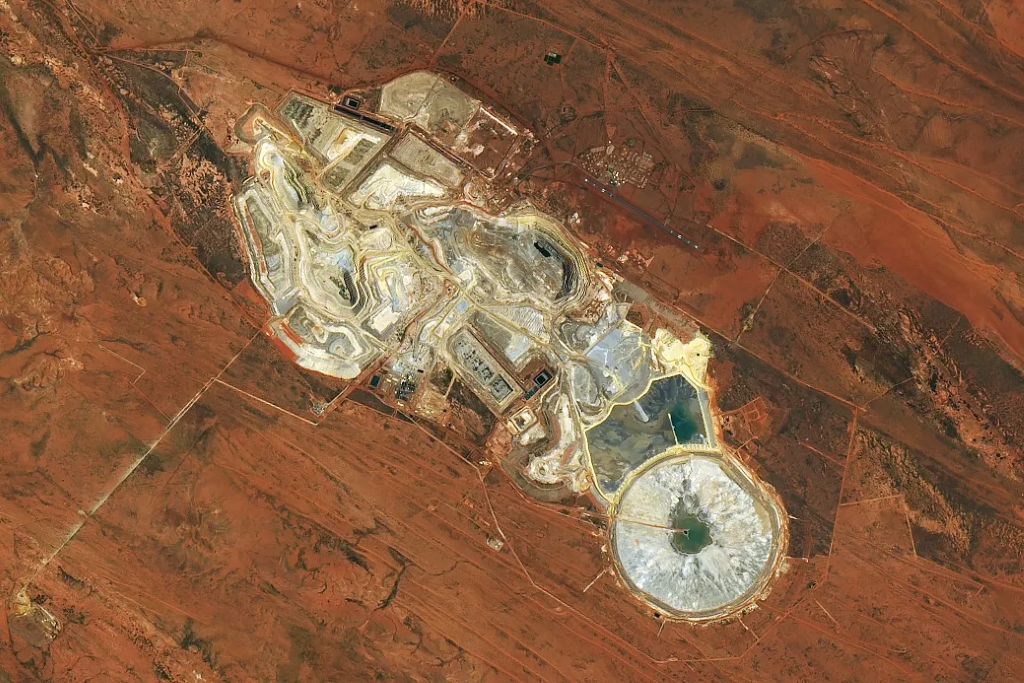
Telfer Mine, Western Australia
Landsat 9’s Operational Land Imager-2 captured this image of the open pits and ponds of Telfer Mine and the surrounding rust-colored soil on Dec. 15, 2023. The soils have a reddish tint from the iron oxides that have accumulated from millions of years of weathering. This part of Western Australia is known for being rich in natural resources, including petroleum, iron ore, copper, and certain precious…
Read More » -

NASA Additive Manufacturing Project Shapes Future for Agency, Industry Rocket Makers
The widespread commercial adoption of additive manufacturing technologies, commonly known as 3D printing, is no surprise to design engineers at NASA’s Marshall Space Flight Center in Huntsville, Alabama whose research created stronger, lighter weight materials and new manufacturing processes to make rocket parts. NASA’s RAMPT (Rapid Analysis and Manufacturing Propulsion Technology) project is on the cutting-edge of additive manufacturing –…
Read More » -
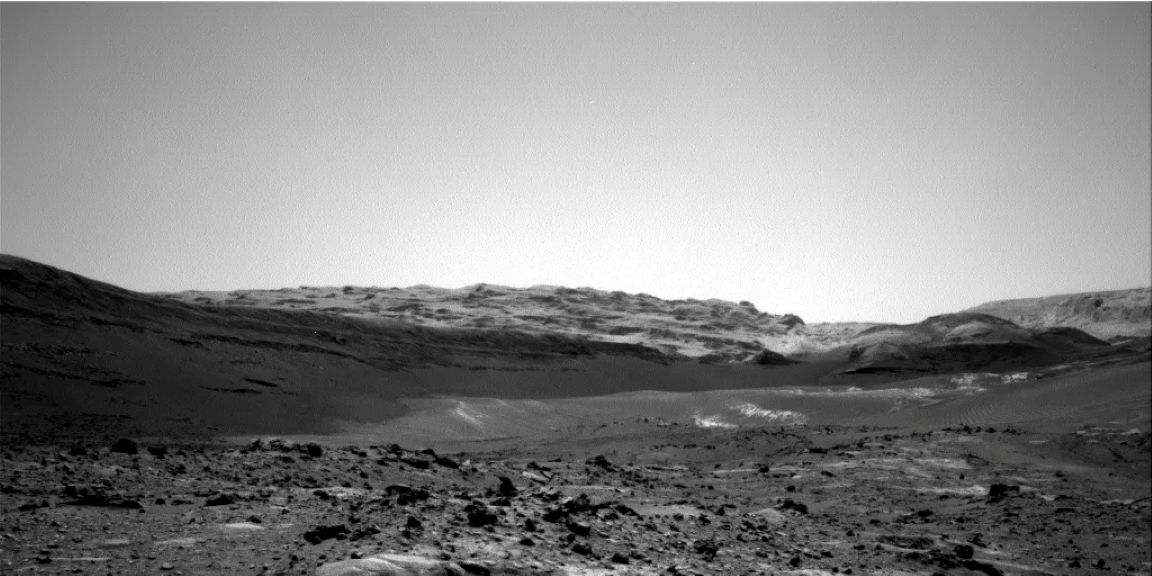
Sols 4261-4262: Drill Sol 1…Take 2
Earth planning date: Wednesday, July 31, 2024 As Cat mentioned on Monday, today’s plan is a second attempt at our Drill Sol 1 activities. We’ve shifted the target on Kings Canyon a little bit, but the activities remain the same — a preload test to ensure that we’re able to safely drill here, and contact science to get a preview of what…
Read More » -

System-Wide Safety Project Description
A new era of aviation is here, and NASA’s System-Wide Safety (SWS) project is developing innovative data solutions to assure safe, rapid, and repeatable access to a transformed National Airspace System (NAS). SWS was created in 2018 and is part of NASA Aeronautics’ Airspace Operations and Safety Program. SWS evaluates how the aerospace industry and aircraft modernization impacts safety by…
Read More » -

A Picture-Perfect Portrait: Eliza Hoffman’s Take on Dorothy Vaughan
On July 19, 2024, NASA officially named Johnson Space Center’s building 12 the “Dorothy Vaughan Center in Honor of the Women of Apollo.” A portrait of Dorothy Vaughan is now the central feature at the entrance of the newly named building. This portrait was hand-painted by Eliza Hoffman, an accomplished artist who is also a recent graduate from Clear Creek…
Read More » -
2024 Software of the Year Award Co-Winner -Prognostics Python Packages (ProgPy)
NASA Ames Research Center: ProgPy is an open-source Python package supporting research and development of prognostics, health management, and predictive maintenance tools. Prognostics is the science of prediction, and the field of Prognostics and Health Management (PHM) aims at estimating the current physical health of a system (e.g., motor, battery, etc.) and predicting how the system will degrade with use.…
Read More » -
2024 Software of the Year Co-Winner – Orbital Debris Engineering Model (ORDEM)
NASA Johnson Space Center: ORDEM represents the state of the art in orbital debris models intended for engineering analysis. It is a data-driven model, relying on large quantities of radar, optical, in situ, and laboratory measurement data. When released, it was the first software code to include a model for different orbital debris material densities, population models from low Earth orbit…
Read More » -
2024 Invention of the Year Winner – Thrust Chamber Liner and Fabrication Method
NASA Marshall Space Flight Center: A thrust chamber assembly (TCA) is the critical and central component in a rocket engine that provides thrust to propel a launch vehicle into space. Since the 1960s, while small improvements in TCA performance have been made, little has been done to reduce weight, improve development timelines, and reduce manufacturing cost. This invention makes dramatic improvements…
Read More » -
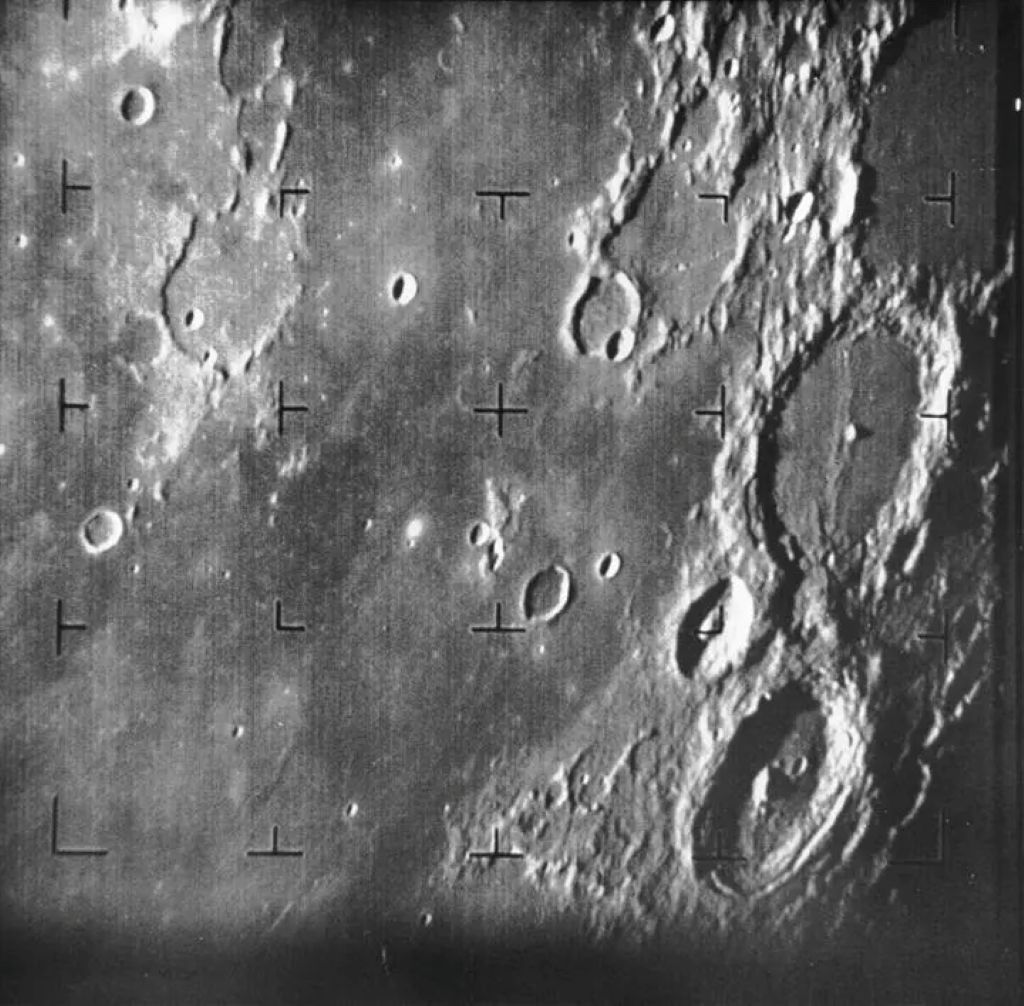
Ranger 7 Snaps the Moon
On July 31, 1964, the Ranger 7 spacecraft took this photo, the first image of the Moon taken by a United States spacecraft. 17 minutes later, it crashed into the Moon on the northern rim of the Sea of Clouds as intended. The 4,316 images sent back helped identify safe Moon landing sites for Apollo astronauts. Until 1964, no closeup photographs of…
Read More »