The Future is Now: Continental Innovates Mobility from the Road to the Cloud at CES® 2024

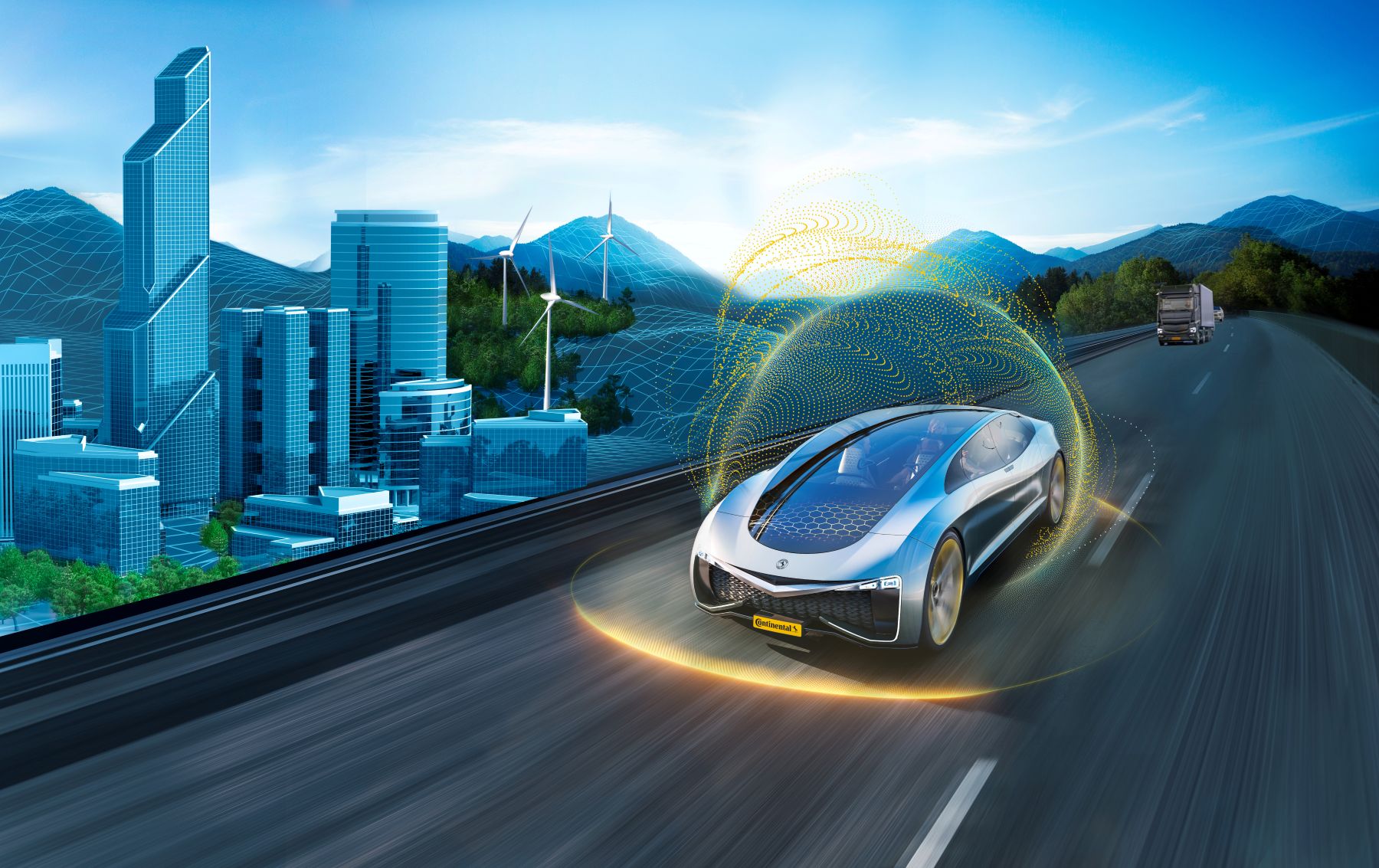
At CES 2024 in Las Vegas, technology company Continental will demonstrate its vision for future mobility. In a brand-new location, within Central Plaza (CP-25 and CP-26), Continental is showcasing advancements with its latest partnerships, award-winning displays and driving solutions aimed at making roadways safer. Visitors to the company’s private exhibit will experience Continental’s latest advancements in software-driven mobility. Additionally, Continental will demonstrate, along with several of its strategic partners, its vision for the future of mobility.
“Continental has an impact on almost every aspect of the vehicle. By leveraging our expertise in software-driven mobility, we are shaping the future of mobility. At CES 2024, we’ll demonstrate how we’re making mobility safer, exciting, and autonomous.”Post this
“We are advancing technology solutions for the new era of mobility,” said Aruna Anand, President and CEO, Continental Automotive, North America. “Continental has an impact on almost every aspect of the vehicle. By leveraging our expertise in software-driven mobility, we are shaping the future of mobility. At CES 2024, we’ll demonstrate how we’re making mobility safer, exciting, and autonomous.”
Building a new space within the vehicle
As the car becomes an essential integrated space to interact with all aspects of personal and professional life, the user experience becomes a key factor for car buyers. Continental will demonstrate innovations that enable a novel and creative user experience.
During CES 2024, exciting, intuitive, and award-winning user displays will be front and center for Continental. Showcased for the first time, the Crystal Center Display demonstrates the next generation of technology and highlights innovative design possibilities while matching the trend for luxury appearance. For a more subtle effect, the Curved In2visible Display integrates seamlessly into the cockpit enabling new design possibilities and turning a vehicle into a living room on wheels.
As vehicles integrate more software and take on functions like computers and smartphones, they must also become more secure. Continental has considered this with its Face Authentication Displays. These are the highest security standards for smooth car entry and safe vehicle start. The “liveness check” ensures only the driver, or those registered to the vehicle’s profile, can secure access.
Increasing mobile computing power
In addition to becoming more automated, vehicle technology is increasingly more connected. Connected vehicles make driving safer and more convenient. To support such new functions, cars have become computers on wheels. Software-defined vehicles and connected mobility require more intelligence and computing power, but current vehicle architectures are reaching their limits. Continental’s Smart Cockpit High-Performance Computer (HPC), in collaboration with Google Cloud, demonstrates how the Smart Cockpit HPC enables the mobility experience of the future. Together, the two companies are equipping cars with generative Artificial Intelligence (AI), making Continental one of the first automotive suppliers to integrate Google Cloud capabilities directly into vehicle computers. With this, drivers can interact with their car in a natural dialogue. Whether drivers need help finding the right tire pressure when the car is fully loaded or want to know more about local places of interest at their destination or along the route when they are on vacation, the generative AI can compile the required information and answer the drivers’ questions.
Developing the future of driverless transportation
The Radar Vision Parking solution, named a CES 2024 Innovation Award Honoree, enables Level 3 and Level 4 driving and parking functions of software-defined vehicles. By combining high-resolution surround radars with high-resolution cameras, Continental enables parking use cases that require very precise and close-range measurement around the vehicle. Early parking slot detection, for example, lets users park in a single stroke without driving past the spot.
Visitors will also experience the power of partnerships with Aurora Innovation’s autonomous technology. In this first-of-its-kind partnership, Continental is responsible for industrializing the autonomous driving system kits which will leverage a wide spectrum of Continental’s extensive automotive product portfolio from sensors, automated driving control units (ADCU), high performance computers (HPC), telematics units and more, to the complete fallback system which covers the full chain of effects. Continental will integrate these hardware components into pods which will be supplied to Aurora’s vehicle manufacturing partners. This will advance the product offering for autonomous trucking customers.
Also on display will be the Full Stack Automated Driving Solution with Ambarella. Continental contributes the hardware and large parts of the software to this partnership, while Ambarella provides the System-on-Chip (SoC) platform and further software functionalities. Compared to other domain controller SoCs, Ambarella’s “CV3-AD” chip family provides higher performance to process sensor data faster and more comprehensively for greater environmental perception and safer mobility, at up to five times higher power efficiency. As a result of this strategic partnership, the next generation of vehicles, ranging from L2+ to the highest automation levels, will be able to utilize the powerful, energy-efficient, and scalable mobility system solutions from Continental and Ambarella.
Continental at CES 2024
Continental will showcase its latest technologies at a private structure exhibit in Central Plaza across from the Las Vegas Convention Center from Tuesday, January 9 through Friday, January 12. The technology company has numerous solutions that highlight mobility innovations, from the road to the cloud. An invitation-only media event has been scheduled for January 9. Please contact Christina Clarke for details.
Follow Continental CES 2024 highlights on Facebook, Instagram, and X: #ContinentalCES
About Continental
Continental develops pioneering technologies and services for sustainable and connected mobility of people and their goods. Founded in 1871, the technology company offers safe, efficient, intelligent and affordable solutions for vehicles, machines, traffic and transportation. In 2022, Continental generated sales of €39.4 billion and currently employs around 200,000 people in 57 countries and markets.
Social Media
For the latest Continental news and information, follow us on:
Facebook: Continental USA
X: @ContiPressUSA
Instagram: Continental.USA
LinkedIn: Continental