
Andromeda Galaxy
-
NASA
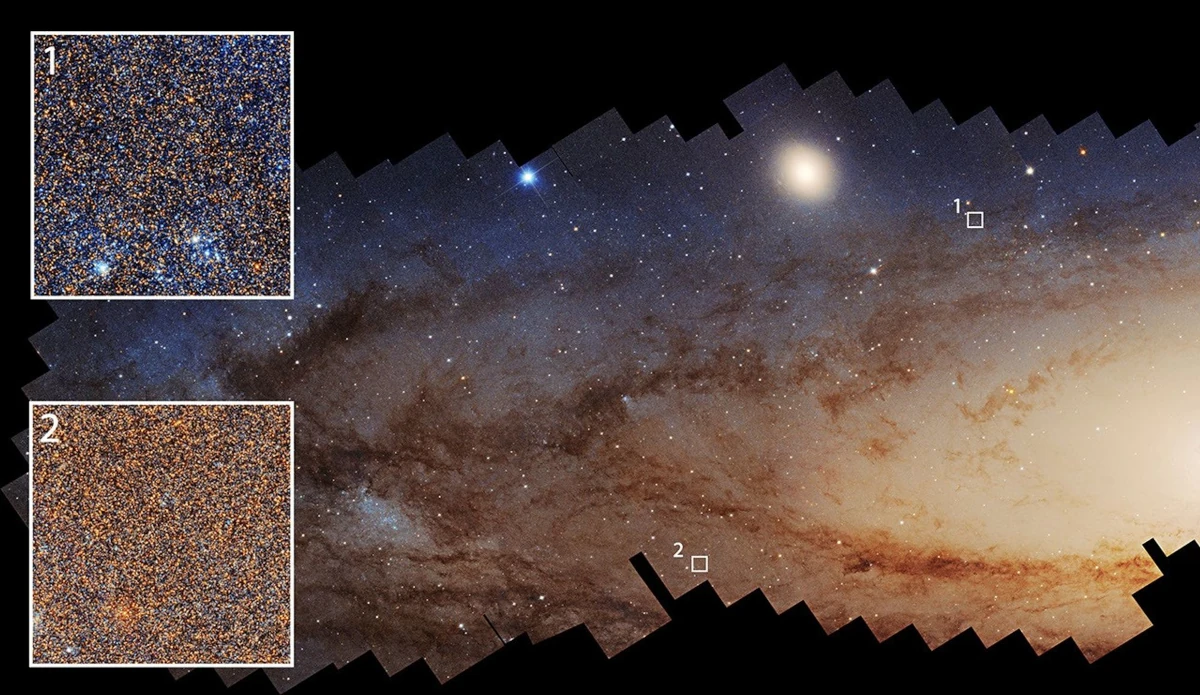
NASA’s Hubble Shows Star Formation in Andromeda Galaxy Winding Down
A new study using data from NASA’s Hubble Space Telescope finds that star formation in the nearby Andromeda galaxy has undergone a 500-million-year decline, with an even steeper drop in the last 40 million years. Andromeda, a spiral galaxy comparable in size to our Milky Way, is close enough to be seen with the unaided eye from areas with dark skies. Located…
Read More » -
NASA
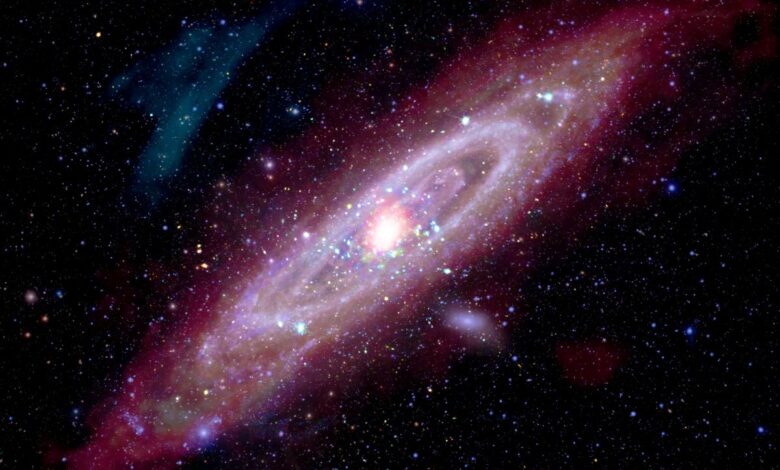
Sparkling Andromeda
The Andromeda galaxy, also known as Messier 31 (M31), is a glittering beacon in this image released on June 25, 2025, in tribute to the groundbreaking legacy of astronomer Dr. Vera Rubin, whose observations transformed our understanding of the universe. In the 1960s, Rubin and her colleagues studied M31 and determined that there was some unseen matter in the galaxy that…
Read More » -
NASA
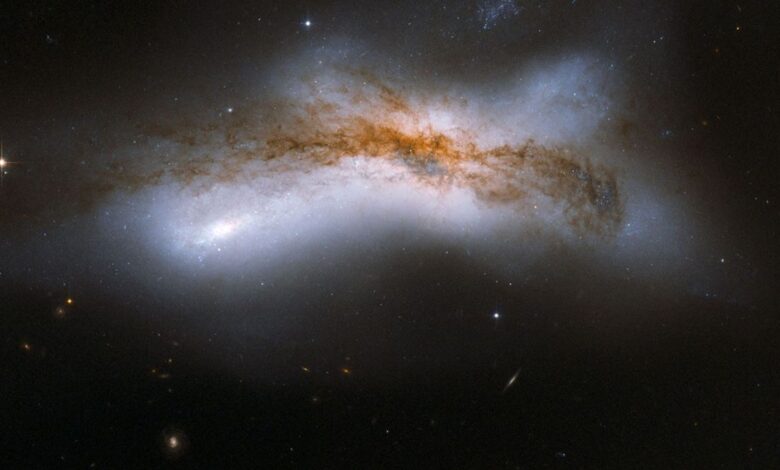
Apocalypse When? Hubble Casts Doubt on Certainty of Galactic Collision
As far back as 1912, astronomers realized that the Andromeda galaxy — then thought to be only a nebula — was headed our way. A century later, astronomers using NASA’s Hubble Space Telescope were able to measure the sideways motion of Andromeda and found it was so negligible that an eventual head-on collision with the Milky Way seemed almost certain. A smashup between our…
Read More » -
NASA

NASA’s Hubble Provides Bird’s-Eye View of Andromeda Galaxy’s Ecosystem
Located 2.5 million light-years away, the majestic Andromeda galaxy appears to the naked eye as a faint, spindle-shaped object roughly the angular size of the full Moon. What backyard observers don’t see is a swarm of nearly three dozen small satellite galaxies circling the Andromeda galaxy, like bees around a hive. These satellite galaxies represent a rambunctious galactic “ecosystem” that…
Read More » -
NASA
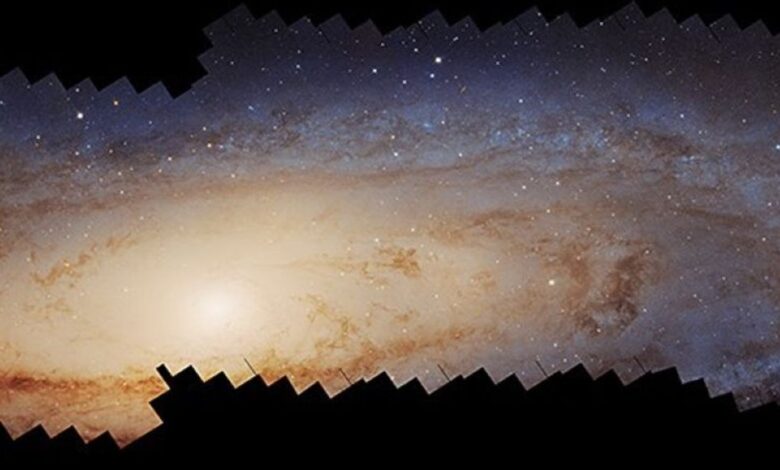
NASA’s Hubble Traces Hidden History of Andromeda Galaxy
n the years following the launch of NASA’s Hubble Space Telescope, astronomers have tallied over 1 trillion galaxies in the universe. But only one galaxy stands out as the most important nearby stellar island to our Milky Way — the magnificent Andromeda galaxy (Messier 31). It can be seen with the naked eye on a very clear autumn night as a faint…
Read More » -
NASA

NASA Celebrates Edwin Hubble’s Discovery of a New Universe
For humans, the most important star in the universe is our Sun. The second-most important star is nestled inside the Andromeda galaxy. Don’t go looking for it — the flickering star is 2.2 million light-years away, and is 1/100,000th the brightness of the faintest star visible to the human eye. Yet, a century ago, its discovery by Edwin Hubble, then an…
Read More » -
NASA
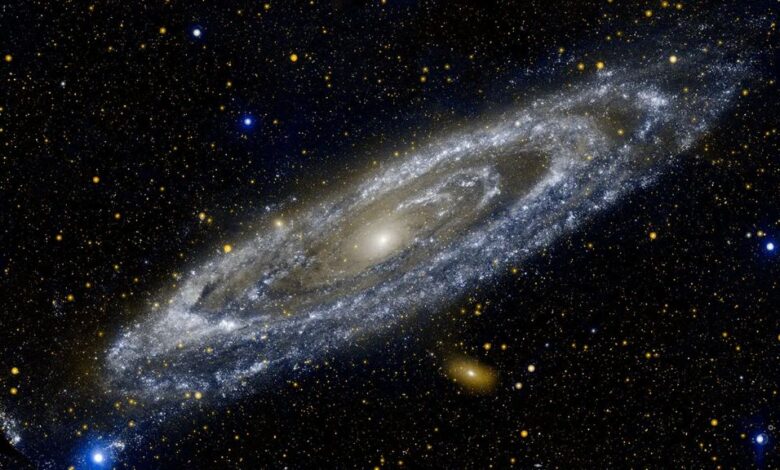
October’s Night Sky Notes: Catch Andromeda Rising!
If you’re thinking of a galaxy, the image in your head is probably the Andromeda Galaxy! Studies of this massive neighboring galaxy, also called M31, have played an incredibly important role in shaping modern astronomy. As a bonus for stargazers, the Andromeda Galaxy is also a beautiful sight. Spot the Andromeda Galaxy! M31’s more common name comes from its parent…
Read More » -
NASA
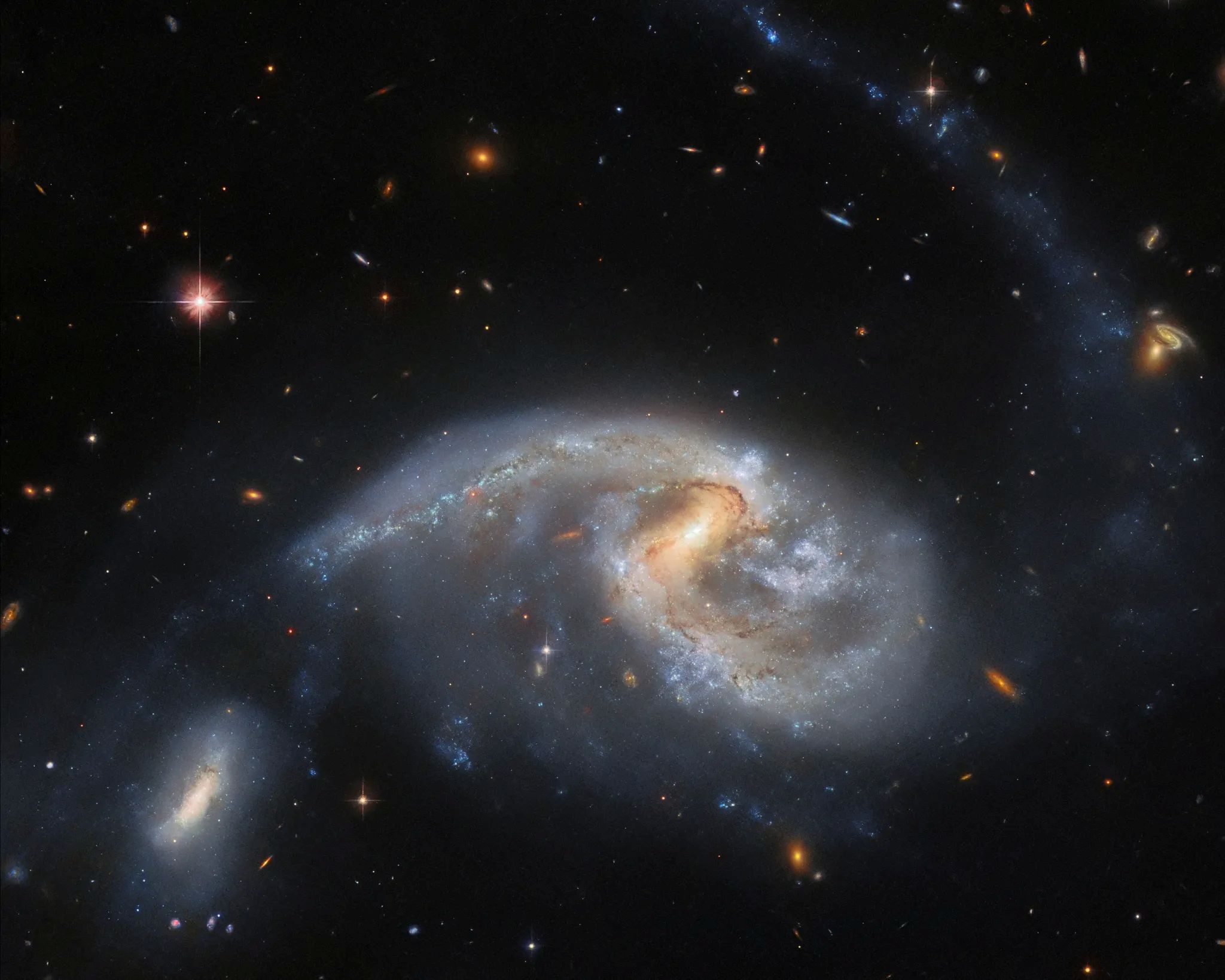
Hubble Peers at Pair of Closely Interacting Galaxies
This image from the NASA/ESA Hubble Space Telescope features Arp 72, a very selective galaxy group that only includes two galaxies interacting due to gravity: NGC 5996 (the large spiral galaxy) and NGC 5994 (its smaller companion, in the lower left of the image). Both galaxies lie approximately 160 million light-years from Earth, and their cores are separated from each other by…
Read More »