
APOD
-
NASA
Astronomy Picture of the Day
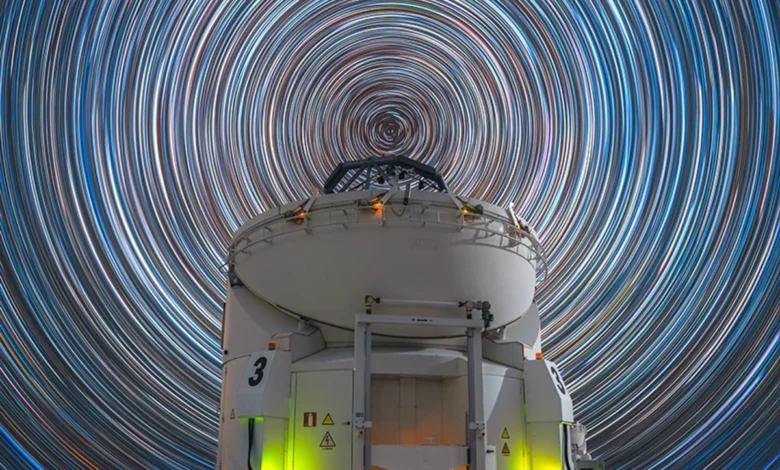
The Sky Turns Above Paranal Explanation: At the latitude of ESO’s Paranal Observatory in Chile, about 25 degrees south, Earth’s rotation moves the planet’s surface eastward at over 1,500 kilometers per hour. And while that’s faster than the speed of sound at sea level, the motion is imperceptible. Still, that motion can be revealed in the apparent rotation of the night sky by photographing star trails. This star trail image was composed…
Read More » -
NASA
Astronomy Picture of the Day
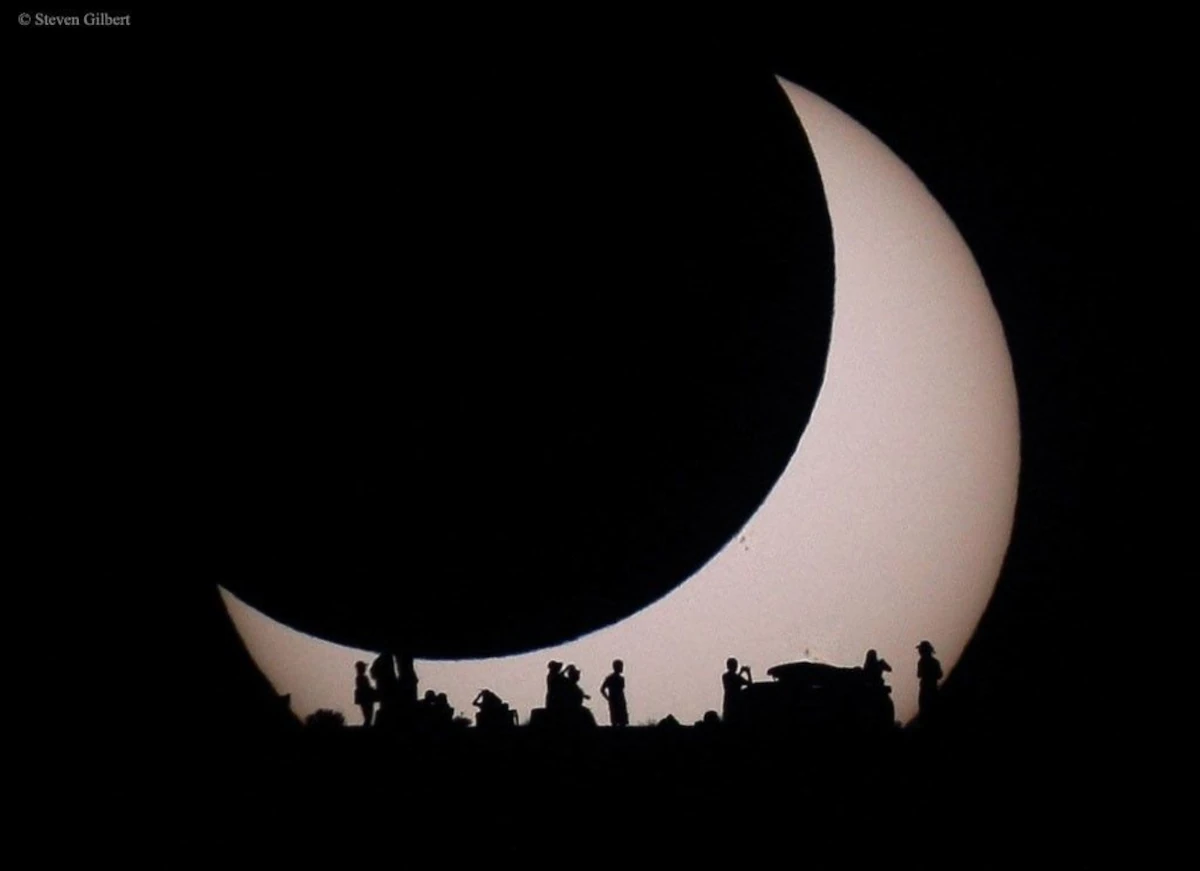
Contemplating the Sun Explanation: Have you contemplated your home star recently? Featured here, a Sun partially eclipsed on the top left by the Moon is also seen eclipsed by earthlings contemplating the eclipse below. This spectacular menagerie of silhouettes was taken in 2012 from the Glen Canyon National Recreation Area near Page, Arizona, USA, where park rangers and astronomers expounded on the unusual event to interested gatherers. Also, faintly visible on the Sun’s disk, just to…
Read More » -
NASA
APOD: 2026 August 10 – Three Galaxy Pairs
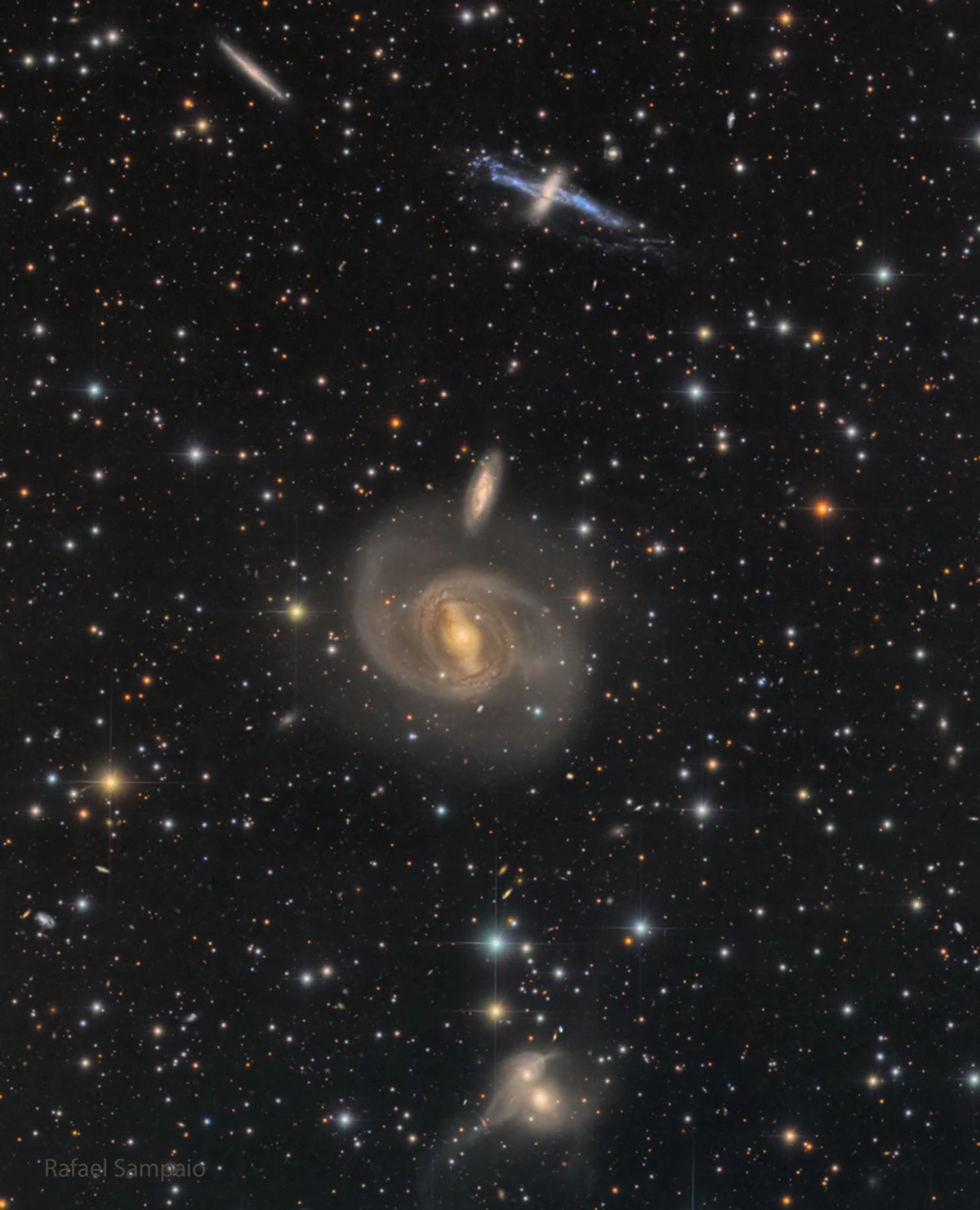
Three Galaxy Pairs Explanation: Each of these pairs of galaxies is different. The two galaxies at the top are likely not interacting, at least presently. However, the top galaxy with the blue stripe, NGC 4650A, is a polar ring galaxy and may be the result of a past galaxy collision. The two galaxies in the middle of the featured image appear like they could be interacting gravitationally — but their relative speeds make this…
Read More » -
NASA
Astronomy Picture of the Day
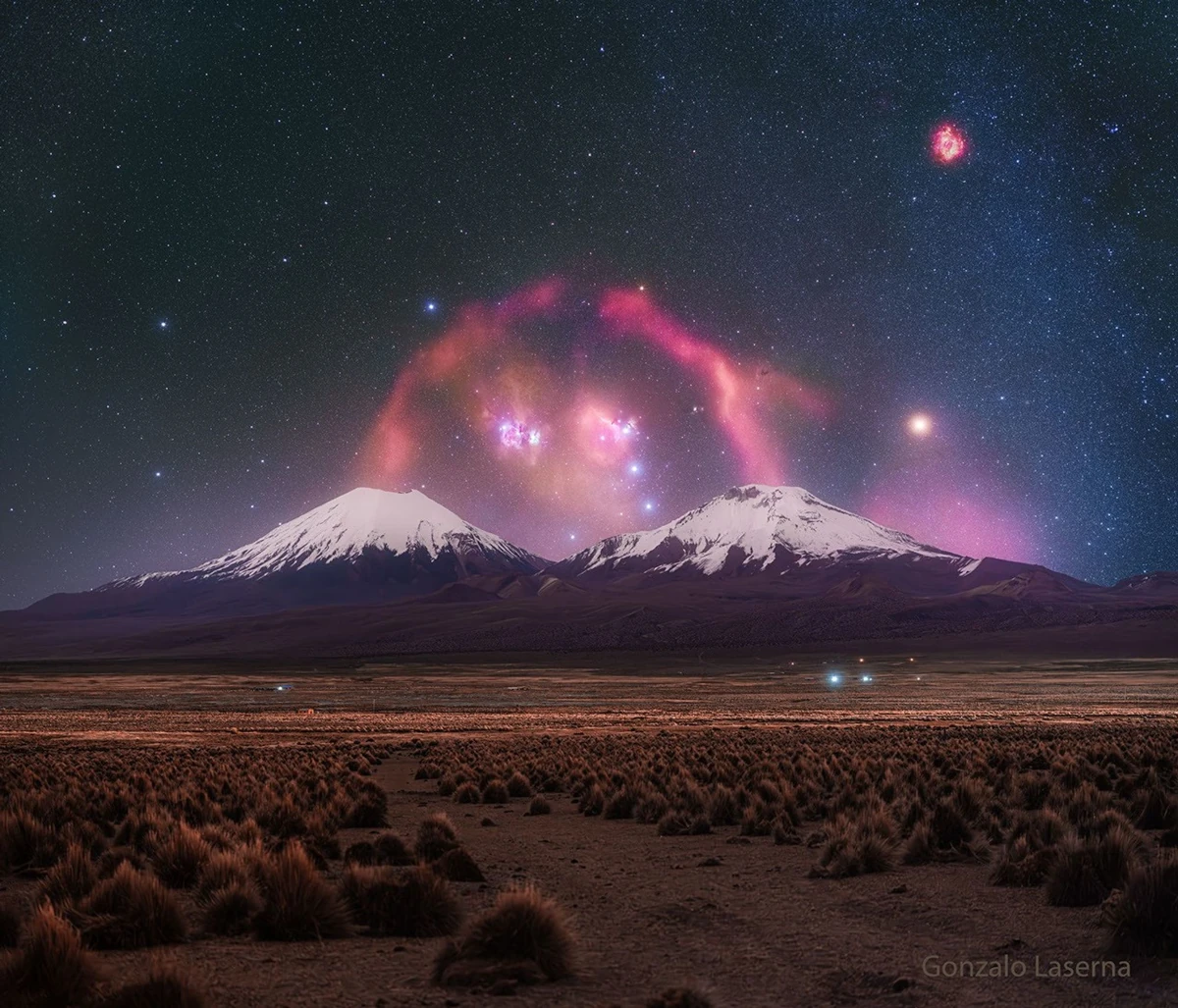
Barnards Loop over Twin Volcanoes Explanation: What’s connecting these two volcanoes? In ancient folklore, the two volcanoes, Parinacota (left) and Pomerape (right), are connected by representing a mythical prince and princess who engaged in a forbidden romance. Beneath the ground, the two peaks are not known to be connected by a common pool of hot magma, and neither volcano has erupted in the past 1000 years. Above…
Read More »