
Artemis
-
NASA

NASA’s Artemis II Orion Service Module Buttoned Up for Launch
Technicians with NASA and Lockheed Martin fitted three spacecraft adapter jettison fairing panels onto the service module of the agency’s Orion’s spacecraft. The operation completed on Wednesday, March 19, 2025, inside the Neil A. Armstrong Operations and Checkout Building at NASA’s Kennedy Space Center in Florida. The European-built service module is the powerhouse that will propel the spacecraft to the…
Read More » -
NASA
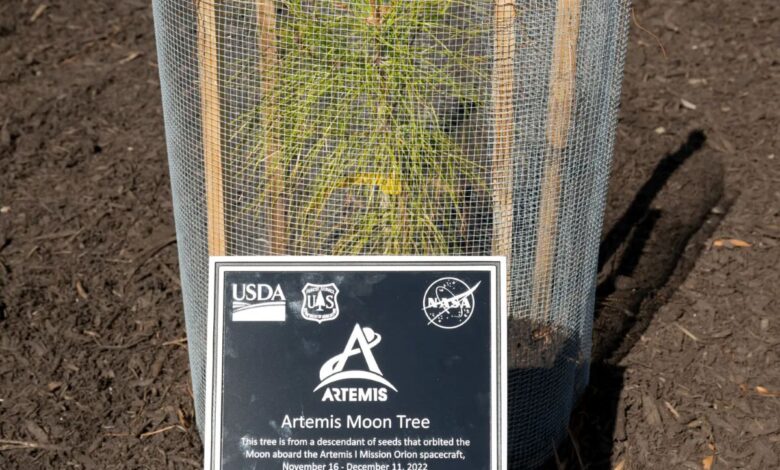
NASA Langley Dedicates Artemis Moon Tree
A tree that sprouted from a seed that journeyed around the Moon and back is growing at NASA’s Langley Research Center in Hampton, Virginia. NASA’s Acting Associate Administrator for NASA’s Exploration Systems Development Mission Directorate Lori Glaze and NASA Langley Acting Center Director Trina Dyal spoke at a dedication ceremony for the Artemis Moon Tree, a loblolly pine, at the…
Read More » -
NASA
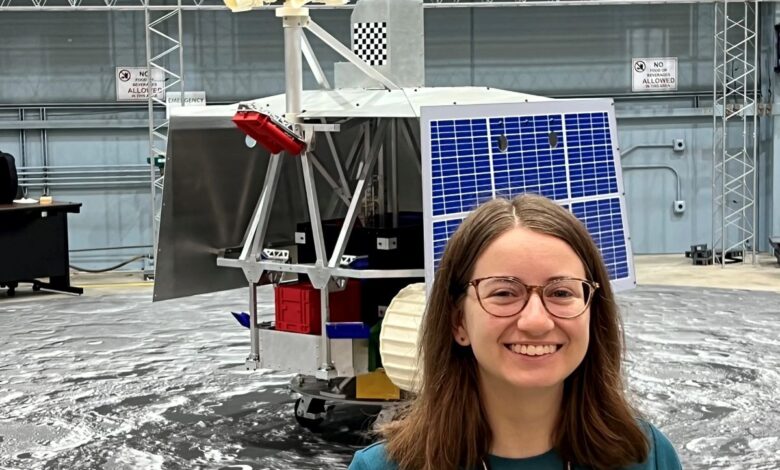
Bringing the Heat: Abigail Howard Leads Thermal Systems for Artemis Rovers, Tools
Depending on where you stand at the lunar South Pole, you may experience temperatures of 130°F (54°C) during sunlit periods, or as low as -334°F (-203°C) in a permanently shadowed region. Keeping crews comfortable and tools and vehicles operational in such extreme temperatures is a key challenge for engineers at Johnson Space Center working on elements of NASA’s Artemis campaign.…
Read More » -
NASA
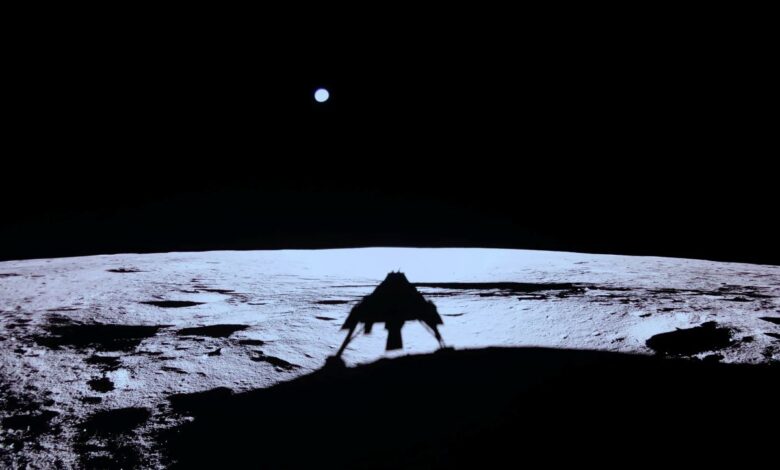
Meet the Johnson CLPS Team Supporting NASA’s Lunar Exploration Goals
As part of NASA’s Artemis campaign, the Commercial Lunar Payload Services (CLPS) initiative, managed out of Johnson Space Center in Houston, is paving the way for conducting lunar science for the benefit of humanity. Through CLPS, NASA teams worked closely with commercial companies to develop a new model for space exploration, enabling a sustainable return to the Moon. These commercial missions deliver…
Read More » -
NASA

Risk to Crew Health Due to Electrical Shock (Electrical Shock Risk)
It is important to protect humans from unintended electrical current flow during spaceflight. The thresholds for contact electrical shock are well established, and standards and requirements exist that minimize the probability of contact electrical shock. Current thresholds were chosen (vs. voltage thresholds) because body impedance varies depending on conditions such as wet/dry, AC/DC, voltage level, large/small contact area, but current…
Read More » -
NASA
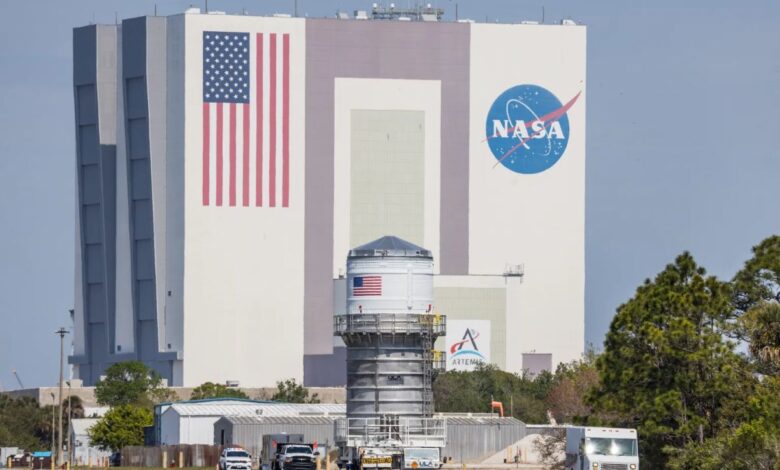
Artemis II Upper Stage Delivered to Kennedy
NASA received the upper stage for the agency’s Artemis II SLS (Space Launch System) rocket on Mar. 9 supplied by Boeing and United Launch Alliance (ULA). Known as the interim cryogenic propulsion stage, it arrived at the Multi Payload Processing Facility (MPPF) at NASA’s Kennedy Space Center in Florida. The upper stage traveled to the spaceport from ULA’s Delta Operations Center…
Read More » -
NASA

Moon Mascot: NASA Artemis II ZGI Design Challenge
Will you design the zero gravity indicator (ZGI) that accompanies the Artemis II mission around the Moon? If your design is one of the most compelling and resonates with the global community and the Artemis II astronauts, your design might fly into space aboard the Orion spacecraft and you could win US$1225. Zero gravity indicators are small items carried aboard spacecraft…
Read More » -
NASA
James Gentile: Shaping the Artemis Generation, One Simulation at a Time
James Gentile always wanted to fly. As he prepared for an appointment to the U.S. Air Force Academy to become a pilot, life threw him an unexpected curve: a diagnosis of Type 1 diabetes. His appointment was rescinded. With his dream grounded, Gentile had two choices—give up or chart a new course. He chose the latter, pivoting to aerospace engineering.…
Read More » -
NASA
NASA Invites Creators to Design Mascot for Artemis Moon Mission
NASA is seeking design ideas from global creators for a zero gravity indicator that will fly aboard the agency’s Artemis II test flight. Zero gravity indicators are small, plush items carried aboard spacecraft to provide a visual indication of when the spacecraft and its crew reach space. This opportunity, with a submission deadline of May 27, asks for original designs representing the…
Read More » -
NASA

Engineers Install Orion Solar Array Wings for Artemis II
Technicians with ESA (European Space Agency) and Airbus installed the four solar array wings on NASA’s Orion spacecraft for Artemis II on March 3. The solar array wings, attached to the service module, deploy after Orion reaches space to power the spacecraft. Orion’s service module provides propulsion, thermal control, and electrical power, as well as air and water for the crew during…
Read More »