
Astronaut
-
NASA
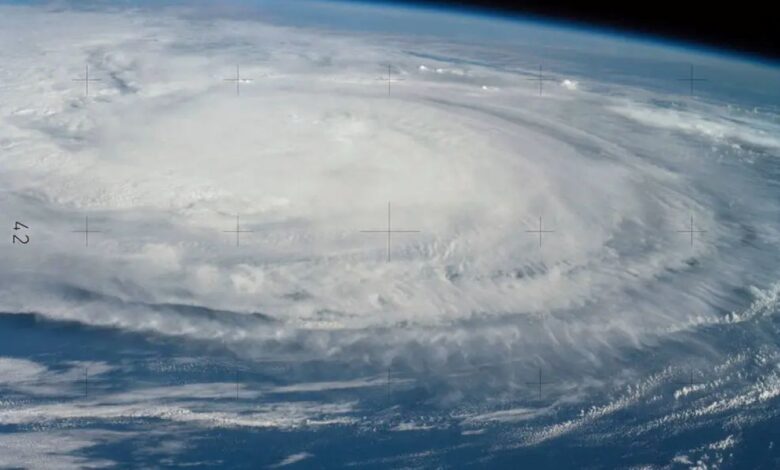
Observing Storms from Skylab
Skylab 3 astronauts witnessed many spectacular sights during their 858 orbital trips around the Earth in the summer of 1973. One involved watching powerful Hurricane Ellen take shape off the West African coast. “There’s a nice storm down there. She looks pretty big. She’s got a lot of clouds,” said astronaut Alan L. Bean upon viewing the storm from Skylab’s low-Earth orbit. Knowing…
Read More » -
NASA
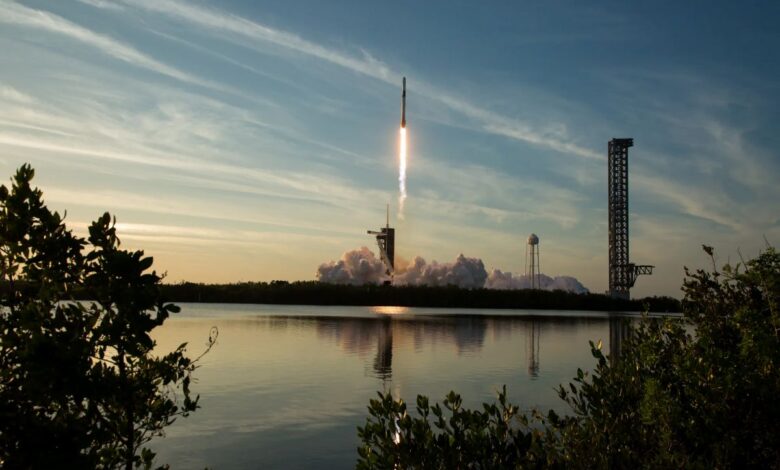
NASA’s SpaceX Crew-10 Launch
A SpaceX Falcon 9 rocket carrying the company’s Dragon spacecraft is launched on NASA’s SpaceX Crew-10 mission to the International Space Station with NASA astronauts Anne McClain and Nichole Ayers, JAXA (Japan Aerospace Exploration Agency) astronaut Takuya Onishi, and Roscosmos cosmonaut Kirill Peskov onboard, Friday, March 14, 2025, from NASA’s Kennedy Space Center in Florida. NASA’s SpaceX Crew-10 mission is the tenth crew rotation…
Read More » -
NASA
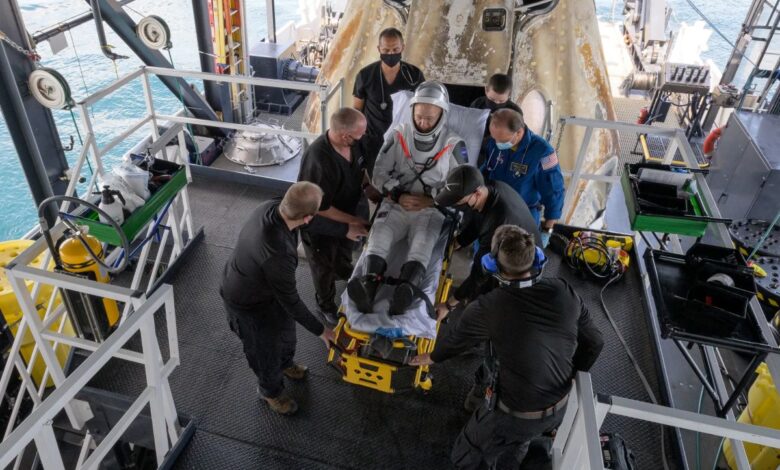
Risk to Vehicle Crew Egress Capability and Task Performance as Applied to Earth and Extraterrestrial Landings
New spacecraft that will transport crews to the Lunar and Martian surfaces and return them to Earth may have diverse landing modalities which will function in different landing environments. Additionally, the crew may be deconditioned on landing, impacting their ability to independently egress the vehicles, perform post-landing tasks in a timely manner, and perform surface EVAs post-landing -including those required…
Read More » -
NASA
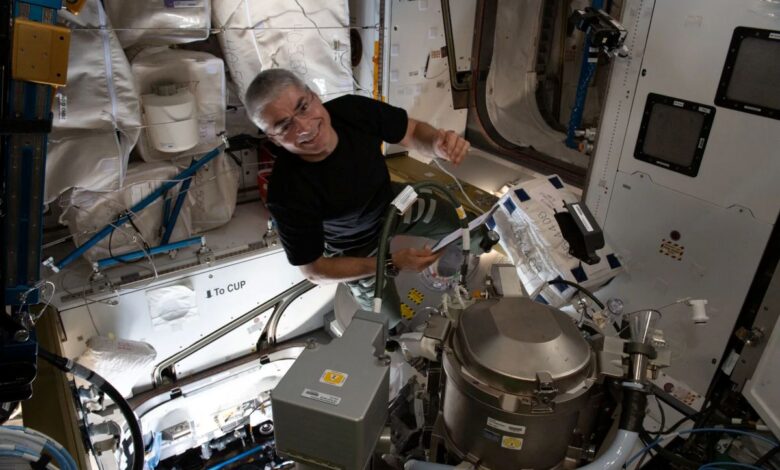
Risk of Urinary Retention
Exposure to the altered gravity in the spaceflight environment may cause physiological changes. One of these changes is the inability to completely empty the bladder or urinary retention. Causes of urinary retention in the early phases of flight include altered baseline physiology seen with exposure to microgravity, the anticholinergic side effects of medications that are taken to combat space motion…
Read More » -
NASA
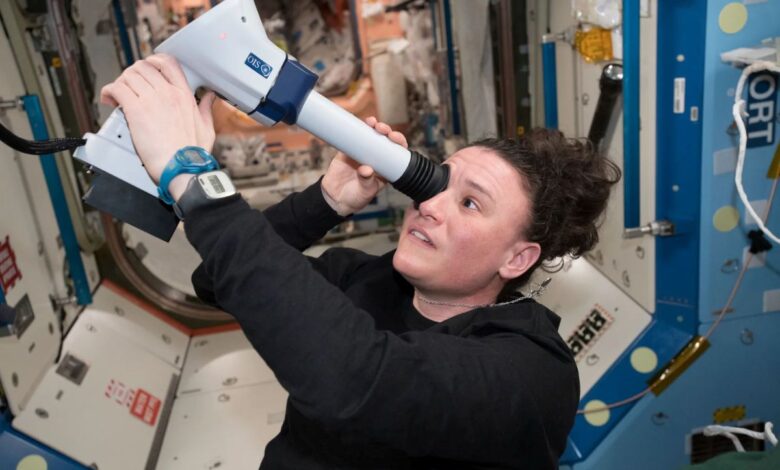
Risk of Spaceflight Associated Neuro-ocular Syndrome
Exposure to altered gravity can cause ocular and brain structural changes to develop during spaceflight; these changes could lead to vision alterations, cognitive effects, or other deleterious health effects. SANS is a syndrome unique to humans that fly in space, and there is no terrestrial disease equivalent. Brain structural changes appear small but seem to indicate that over half of…
Read More » -
NASA

Risk of Reduced Physical Performance Capabilities Due to Reduced Muscle Size, Strength, and Endurance (Muscle Risk)
Exposure to the microgravity environment causes muscle size, strength, and endurance to decline. Based on ISS data, if crew adhere to the exercise schedule and have access to adequate exercise countermeasure systems then on average, they return with minimal losses of muscle size, strength, and endurance. New exploration countermeasures systems will be different from ISS and may not have the…
Read More » -
NASA

Risk of Toxic Substance Exposure
Safe, breathable air is essential for crew health. Human spaceflight has involved toxicological events ranging in severity from trivial to life-threatening. Toxic exposure to chemical contaminants can originate from environmental system leaks, payload leaks, pyrolysis of polymeric materials, off-gassing of polymeric materials, use of utility compounds, propellant entry, microbial products, and human metabolism. To ensure crew safety, these risks are…
Read More » -
NASA

Risk of Reduced Physical Performance Capabilities Due to Reduced Aerobic Capacity (Aerobic Risk)
Spaceflight causes measures of maximum aerobic capacity to decline, which can result in impaired mission task performance. Based on ISS data, if crew adhere to existing exercise schedules and have access to adequate exercise countermeasure systems, then on average, they return with minimal losses of aerobic fitness. New exploration countermeasures systems will be different from ISS and may not have…
Read More » -
NASA
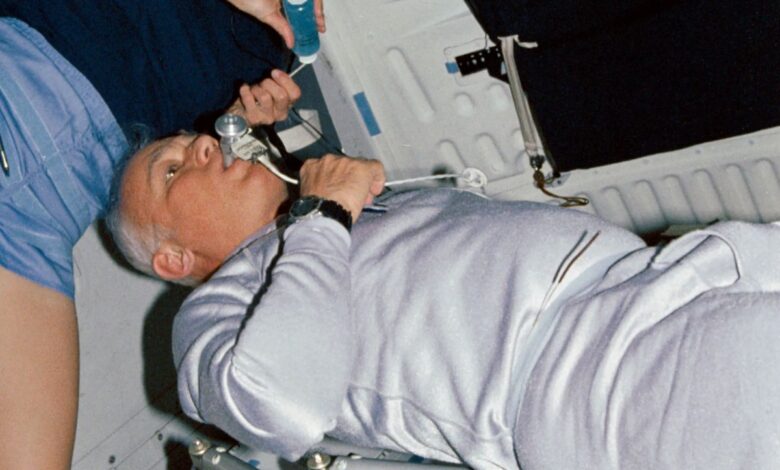
Concern of Venous Thromboembolism
Note: The Concern of Venous Thromboembolism is historical and now a component of CV Risk. Stagnant or reverse flow in the internal jugular vein has been observed in 6 of 11 crew members (55%) tested in-mission on approximately flight day 50; one crewmember was found to have an occlusive internal jugular vein thrombus requiring treatment in-mission. This is an emerging finding…
Read More » -
NASA
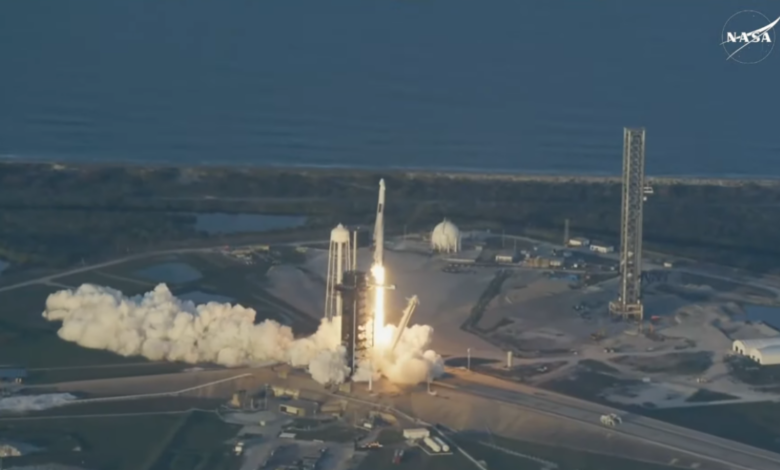
NASA’s SpaceX Crew-10 Launches to International Space Station
Four crew members of NASA’s SpaceX Crew-10 mission launched at 7:03 p.m. EDT Friday from Launch Complex 39A at NASA’s Kennedy Space Center in Florida for a science expedition aboard the International Space Station. A SpaceX Falcon 9 rocket propelled the Dragon spacecraft into orbit carrying NASA astronauts Anne McClain and Nichole Ayers, JAXA (Japan Aerospace Exploration Agency) astronaut Takuya…
Read More »