Karma Automotive’s New Era Dawns with the Market Introduction of the 3rd Generation Karma Revero with Extended Range Electric Vehicle (EREV) Technology


The 3rd Generation Karma Revero, the strikingly beautiful and innovative sport sedan that is the marketplace pioneer of the Extended Range Electric Vehicle (EREV) technology now being adopted by the broader automotive industry, today makes its triumphant return to American and European roads.
With Karma’s EREV technology, drivers have the freedom to choose from either gasoline or electric power, delivering the best of both worlds. Post this
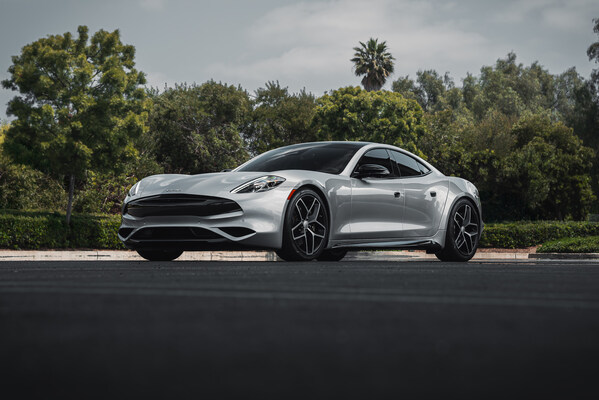
With Karma’s EREV technology, drivers have the freedom to choose from either gasoline or electric power, delivering the best of both worlds. Rather than depending on the availability of public chargers while on their journey, Revero owners can simply refuel should that be more convenient.
Deliveries of the 3rd Generation Karma Revero are now underway, with a base MSRP of $123,100 (USD) in the United States, and €174,463 in Europe. Further, Karma Automotive announces that the new Revero’s ultra-exclusive, performance-focused stablemate, the Karma Invictus, will be priced with a base MSRP of $185,000 (USD) in the United States, and €244,541 in Europe upon introduction in Q1 2025. The new Revero will be limited to 160 examples globally, with Karma Invictus held to only 30 examples. Both vehicles are covered with a 4-year, unlimited mile manufacturer’s warranty which includes Roadside Assistance and access to Karma’s patented Karma Cloud Service product suite.
The new Revero is the marketplace leader in EREV powertrain performance, delivering the benefits of an electric vehicle – instantaneous torque, driver-adjustable regenerative braking, and up to 80 miles of zero-carbon driving range – paired with the confidence-inspiring cruising range of up to 360 miles, replenishable in minutes at any gas station. When married with the all-new Karma Edge Over-the-Air Update and Vehicle Data Management System, owners enjoy real-time concierge support and downloadable vehicle options, now expanded with new features including “Tune” by luxury audio brand Master & Dynamic, premiering for the first time in any production vehicle (available Spring, 2025).
The 3rd Generation Karma Revero brings these bona fides together with a fastidious attention to quality and detail befitting this landmark automobile of which just 160 examples will be available globally. This limited quantity further ensures an unparalleled ownership experience, and Revero’s jaw-droppingly sinuous, low-slung profile – its styling cues subtly evolved through Karma’s signature design aesthetic – make it the standout in any crowd.
“The automotive market has become a sea of sameness, yet a great automobile should reflect freedom of identity, and the freedom to express who you are,” says Marques McCammon, President, Karma Automotive. “The 3rd Generation Karma Revero fully realizes that mission, setting forth beauty, technology, and sheer emotion together in one stunning, Avant-garde automobile that needs not apologize for anything.”
“Our approach to the 3rd Generation Karma Revero and Karma Invictus sets the blueprint for Karma Automotive’s models to come, creating low-volume, driver-focused vehicles which will re-establish the USA as the source for the finest vehicles in the world,” McCammon continues.
The 3rd Generation Karma Revero’s EREV powertrain consists of a 28 kWh HV battery pack together with a 1.5-liter turbocharged powerplant mated to an onboard generator providing electricity to the 400 kW 2-motor propulsion system, offering a compelling combination of drivability, performance, and efficiency. This setup provides 536 horsepower and 550 lb/ft of torque, delivering acceleration to 60mph in 4.5 seconds with up to 80 miles of pure electric range, and 360 miles of total range replenishable in minutes at any gas station. The new Revero is manufactured at Karma Automotive’s KICC assembly facility in Moreno Valley, California.
The recently-revealed Karma Invictus is the first vehicle from the exclusive Karma Reserve line of vehicles. Accelerating from 0-60mph in an estimated 3.97 seconds, this performance-focused expression of the 3rd Generation Revero turns-up the wick in every dimension with unique carbon fiber bodywork, elevated interior appointments and driver-focused performance upgrades underpinned by Karma’s proven and versatile EREV hybrid powertrain. Just 30 examples of Karma Invictus will be available worldwide, with deliveries beginning Q1 2025.
About Karma Automotive
Karma Automotive is America’s only ultra-luxury automaker, and a pioneer of EREV (Extended Range Electric) vehicles which it manufactures at its Karma Innovation and Customization Center (KICC) in Moreno Valley, CA. Its Executive, Product Development, and Design headquarters are located in nearby Irvine, CA. The Karma portfolio embodies California’s spirit of innovation and entrepreneurial boldness, reflected by the signature Comet Line which is the central hallmark of Karma’s new design language. Sales of the 3rd Generation Karma Revero sport sedan, the world’s first luxury EREV plug-in hybrid, are now underway in the USA and EU, offering luxury balanced with conscientiousness delivered without compromise. Sales of Revero’s ultra-exclusive, performance-tuned stablemate, Karma Invictus, will begin in Q1 2025, alongside the Gyesera four-seater. The Karma Kaveya super-coupe, with up to 1,000HP and butterfly-doors, will arrive in Q4 2026, incorporating SDVA (Software-Defined Vehicle Architecture) developed in collaboration with Intel Automotive. Further, Karma Automotive will provide Tier 1’s and Original Equipment Manufacturers (OEMs) with business-to-business SDVA solutions, as it does today with Karma Connect, its proprietary Vehicle Data Management and Over-the-Air services platform, which presently provides services to the world’s second largest OEM. Karma Automotive’s dealer network spans North America, Europe, South America and the Middle East. (www.karmaautomotive.com)