
Chandra X-Ray Observatory
-
NASA

Supernova Remnant Video From NASA’s Chandra Is Decades in Making
Play Video A new video shows changes in Kepler’s Supernova Remnant using data from NASA’s Chandra X-ray Observatory captured over more than two and a half decades with observations taken in 2000, 2004, 2006, 2014, and 2025. In this video, which is the longest-spanning one ever released by Chandra, X-rays (blue) from the telescope have been combined with an optical…
Read More » -
NASA
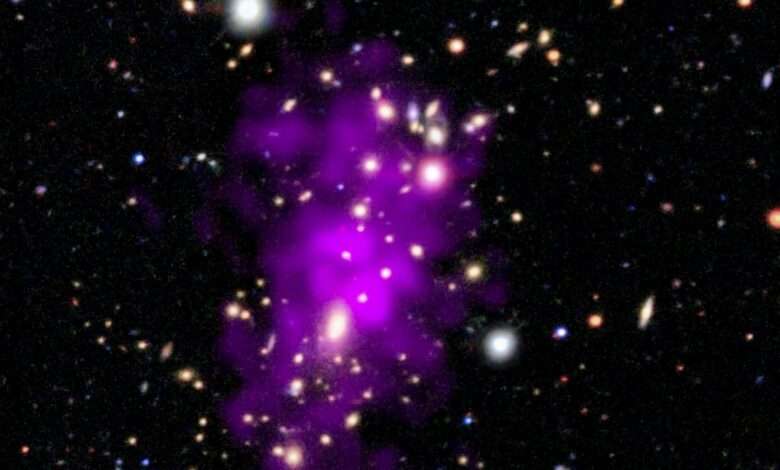
NASA’s Chandra Rings in New Year With Champagne Cluster
Celebrate the New Year with the “Champagne Cluster,” a galaxy cluster seen in this new image from NASA’s Chandra X-ray Observatory and optical telescopes. Astronomers discovered this galaxy cluster Dec. 31, 2020. The date, combined with the bubble-like appearance of the galaxies and the superheated gas seen with Chandra observations (represented in purple), inspired the scientists to nickname the galaxy…
Read More » -
NASA
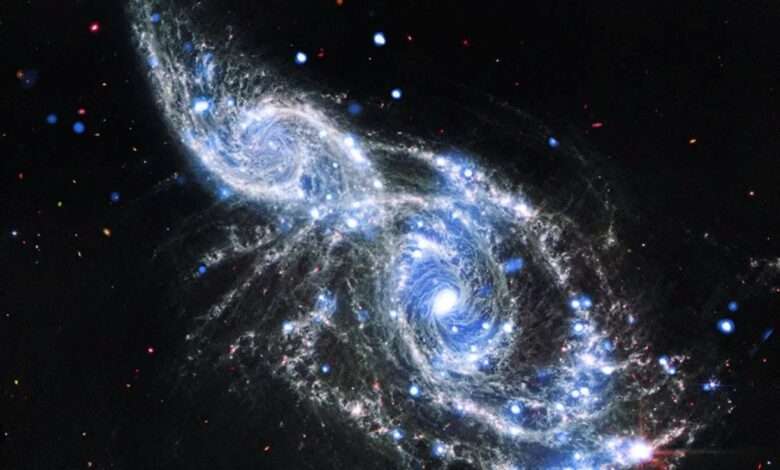
A Galactic Embrace
Mid-infrared data from NASA’s James Webb Space Telescope (in white, gray, and red) and X-ray data from NASA’s Chandra X-ray Observatory (in blue) come together in this photo of colliding spiral galaxies released on Dec. 1, 2025. The pair grazed one another millions of years ago; billions of years in the future, they will merge into a single galaxy. Image…
Read More » -
NASA
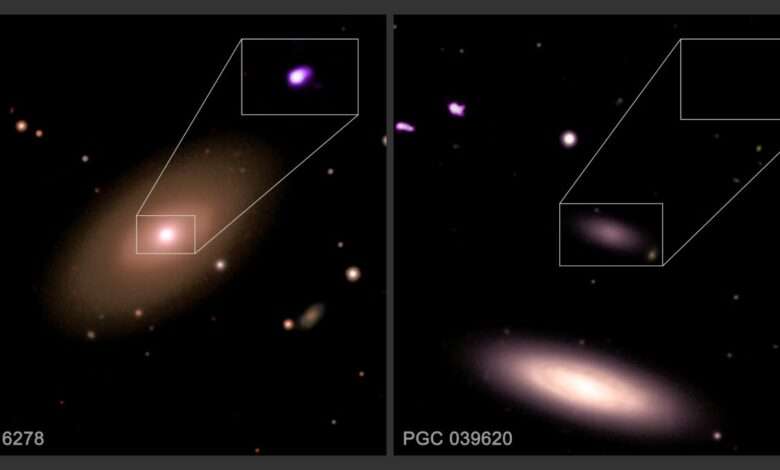
NASA’s Chandra Finds Small Galaxies May Buck the Black Hole Trend
Most smaller galaxies may not have supermassive black holes in their centers, according to a recent study using NASA’s Chandra X-ray Observatory. This contrasts with the common idea that nearly every galaxy has one of these giant black holes within their cores, as NASA leads the world in exploring how our universe works. A team of astronomers used data from…
Read More » -
NASA
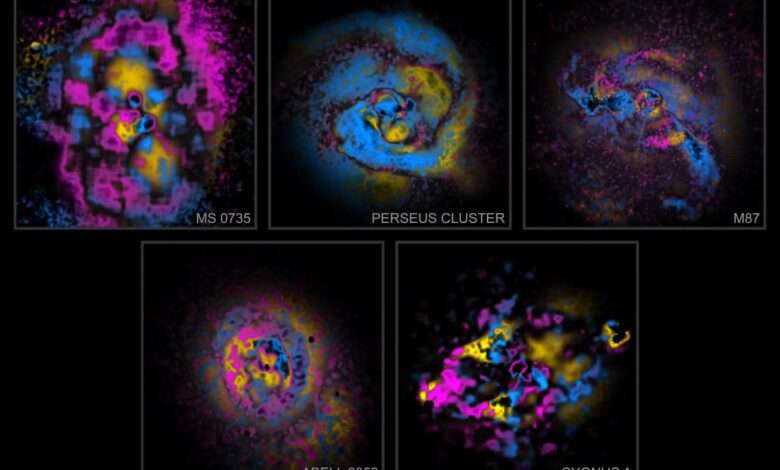
Painting Galaxy Clusters by Numbers (and Physics)
Galaxy clusters are the most massive objects in the universe held together by gravity, containing up to several thousand individual galaxies and huge reservoirs of superheated, X-ray-emitting gas. The mass of this hot gas is typically about five times higher than the total mass of all the galaxies in galaxy clusters. In addition to these visible components, 80% of the…
Read More » -
NASA
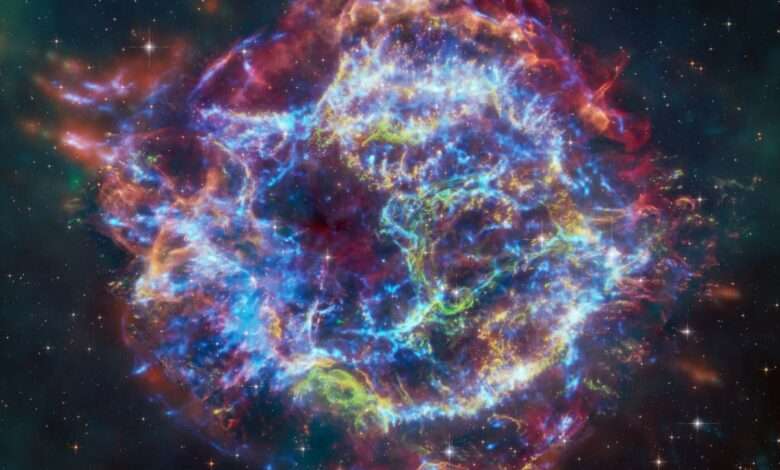
XRISM Finds Chlorine, Potassium in Cas A
The Cassiopeia A supernova remnant glows in X-ray, visible, and infrared light in this Jan. 8, 2024, image that combines data from NASA’s Chandra X-ray Observatory and Hubble, Webb, and Spitzer space telescopes. A study by the XRISM (X-ray Imaging and Spectroscopy Mission) spacecraft has made the first-ever X-ray detections of chlorine and potassium from the wreckage; a paper about…
Read More » -
NASA
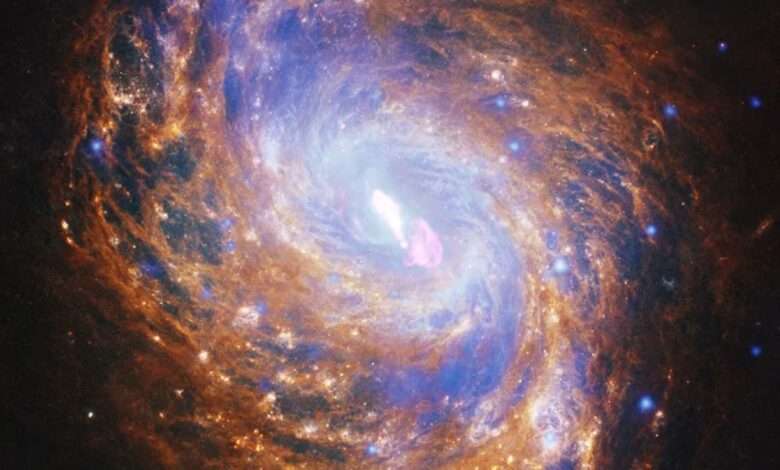
NASA Telescopes View Spiral Galaxy
NGC 1068, a relatively nearby spiral galaxy, appears in this image released on July 23, 2025. The galaxy contains a black hole at its center that is twice as massive as the Milky Way’s. NASA’s Chandra X-ray Observatory data shows a million-mile-per-hour wind is being driven from NGC 1068’s black hole and lighting up the center of the galaxy in X-rays. The image contains…
Read More » -
NASA
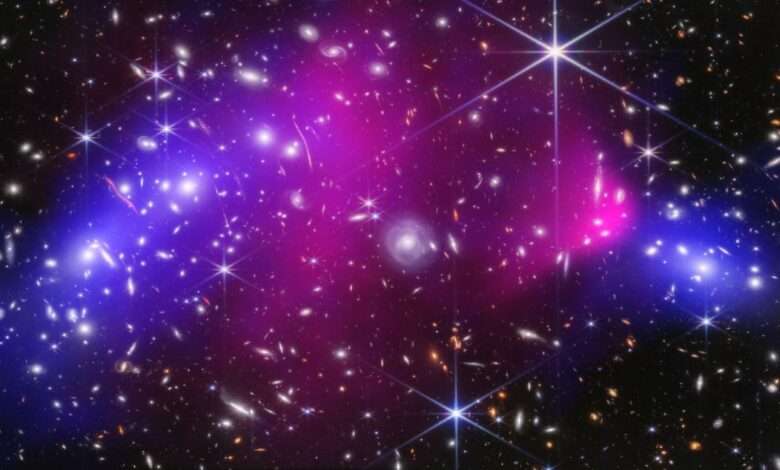
Mapping Dark Matter
This image released on June 30, 2025, combines data from NASA’s James Webb Space Telescope and NASA’s Chandra X-ray Observatory to visualize dark matter. Researchers used Webb’s observations to carefully measure the mass of the galaxy clusters shown here as well as the collective light emitted by stars that are no longer bound to individual galaxies. Learn more. Image credit:…
Read More » -
NASA
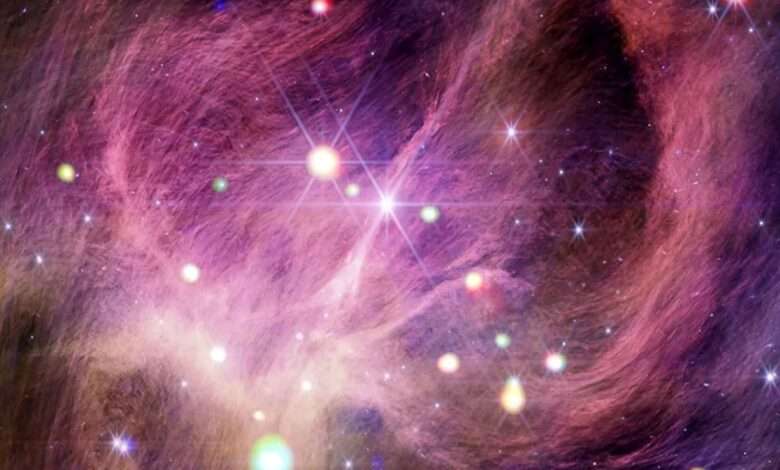
IC Stars
Data from NASA’s Chandra X-ray Observatory and NASA’s James Webb Space Telescope combine to reveal an otherworldly view of the star-forming region IC 348. In this image released on July 23, 2025, X-rays from Chandra are red, green, and blue, while infrared data from Webb are pink, orange, and purple. The wispy structures that dominate the image are interstellar material that reflect…
Read More » -
NASA
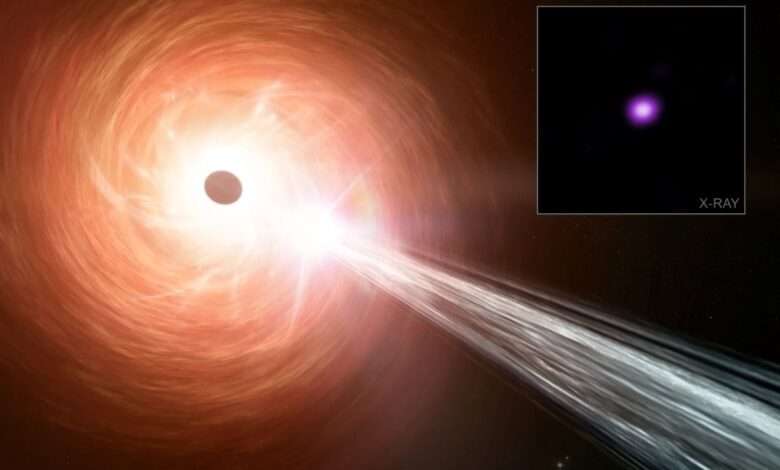
NASA’s Chandra Finds Black Hole With Tremendous Growth
A black hole is growing at one of the fastest rates ever recorded, according to a team of astronomers. This discovery from NASA’s Chandra X-ray Observatory may help explain how some black holes can reach enormous masses relatively quickly after the big bang. The black hole weighs about a billion times the mass of the Sun and is located about…
Read More »