
Chandra X-Ray Observatory
-
NASA

NASA’s Chandra Diagnoses Cause of Fracture in Galactic “Bone”
Astronomers have discovered a likely explanation for a fracture in a huge cosmic “bone” in the Milky Way galaxy, using NASA’s Chandra X-ray Observatory and radio telescopes. The bone appears to have been struck by a fast-moving, rapidly spinning neutron star, or pulsar. Neutron stars are the densest known stars and form from the collapse and explosion of massive stars. They often receive a powerful kick…
Read More » -
NASA
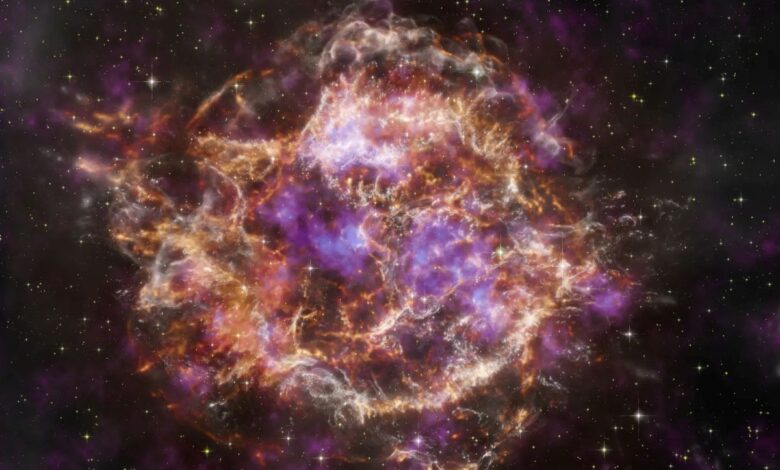
Adding Dimension to Cassiopeia A
Using NASA’s James Webb Space Telescope, astronomers uncovered a mysterious feature within the remnant, nicknamed the “Green Monster,” alongside a puzzling network of ejecta filaments forming a web of oxygen-rich material. When combined with X-rays from NASA’s Chandra X-ray Observatory, the data helped astronomers shed light on the origin of the Green Monster and revealed new insights into the explosion…
Read More » -
NASA
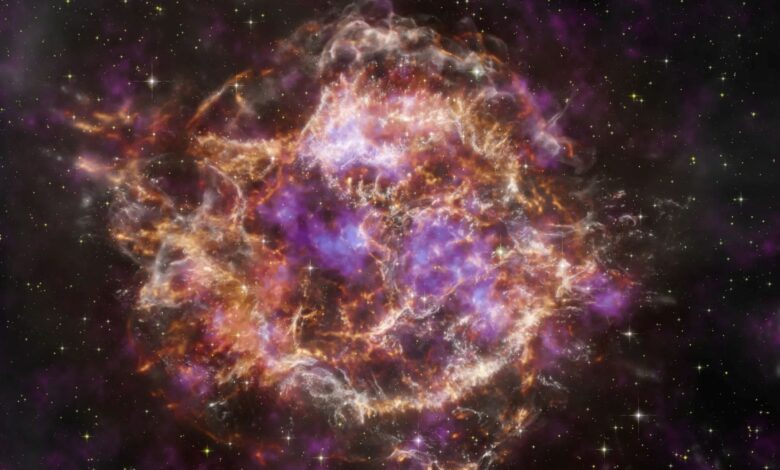
NASA’s Chandra Releases New 3D Models of Cosmic Objects
New three-dimensional (3D) models of objects in space have been released by NASA’s Chandra X-ray Observatory. These 3D models allow people to explore — and print — examples of stars in the early and end stages of their lives. They also provide scientists with new avenues to investigate scientific questions and find insights about the objects they represent. These 3D…
Read More » -
NASA

X-ray Clues Reveal Destroyed Planet
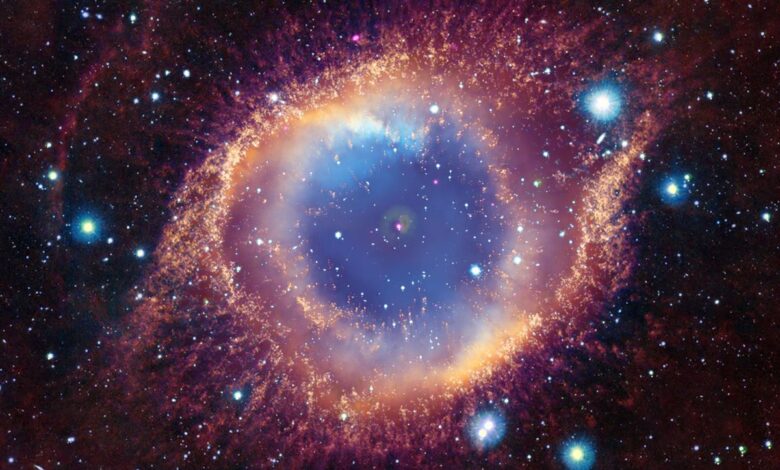
This image of the Helix Nebula, released on March 4, 2025, shows a potentially destructive white dwarf at the nebula’s center: this star may have destroyed a planet. This has never been seen before – and could explain a mysterious X-ray signal that astronomers have detected from the nebula for over 40 years. This view combines X-rays from NASA’s Chandra X-ray Observatory (magenta), optical light data from NASA’s…
Read More » -
NASA

Finding Clues in Ruins of Ancient Dead Star With NASA’s Chandra
People often think about archaeology happening deep in jungles or inside ancient pyramids. However, a team of astronomers has shown that they can use stars and the remains they leave behind to conduct a special kind of archaeology in space. Mining data from NASA’s Chandra X-ray Observatory, the team of astronomers studied the relics that one star left behind after…
Read More » -
NASA
X-ray Signal Points to Destroyed Planet, Chandra Finds
A planet may have been destroyed by a white dwarf at the center of a planetary nebula — the first time this has been seen. As described in our latest press release, this would explain a mysterious X-ray signal that astronomers have detected from the Helix Nebula for over 40 years. The Helix is a planetary nebula, a late-stage star like our Sun that has shed its outer layers…
Read More » -
NASA
A Stellar Bouquet
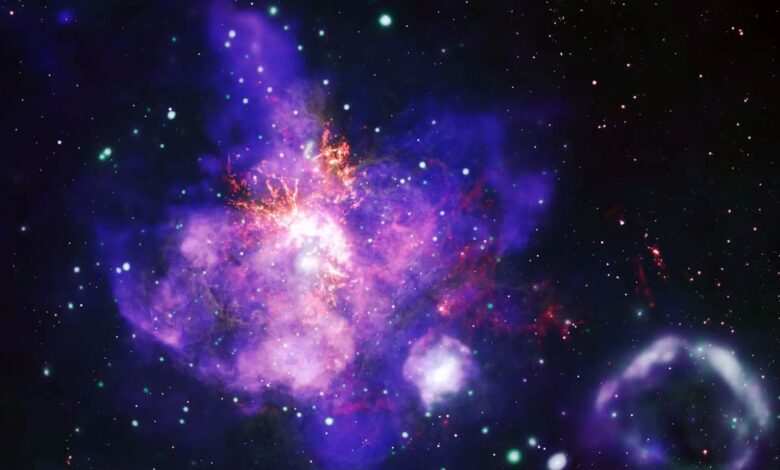
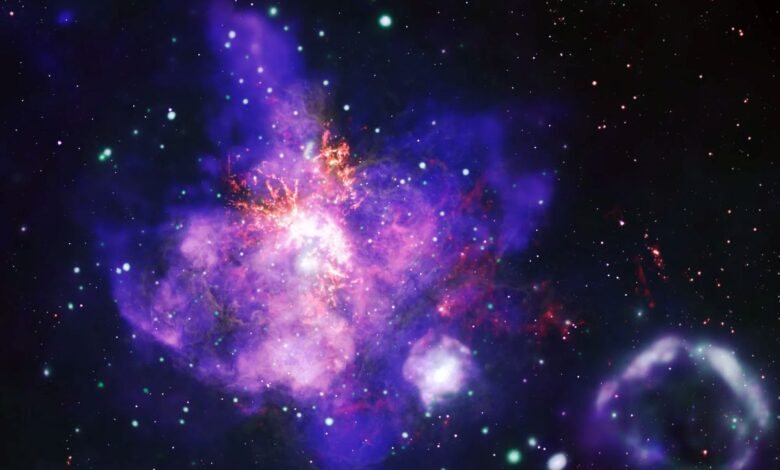
This image, released on Feb. 12, 2025, is the deepest X-ray image ever made of the spectacular star forming region called 30 Doradus. By combining X-ray data from NASA’s Chandra X-ray Observatory (blue and green) with optical data from NASA’s Hubble Space Telescope (yellow) and radio data from the Atacama Large Millimeter/submillimeter Array (orange), this stellar arrangement comes alive. Otherwise known as the Tarantula Nebula, 30…
Read More » -
NASA
Webb Maps Full Picture of How Phoenix Galaxy Cluster Forms Stars
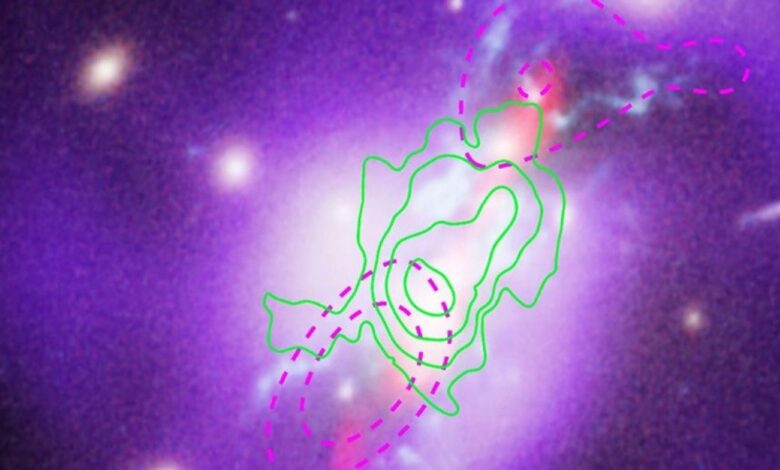
Discovery proves decades-old theory of galaxy feeding cycle. Researchers using NASA’s James Webb Space Telescope have finally solved the mystery of how a massive galaxy cluster is forming stars at such a high rate. The confirmation from Webb builds on more than a decade of studies using NASA’s Chandra X-ray Observatory and Hubble Space Telescope, as well as several ground-based…
Read More » -
NASA
NASA Telescopes Deliver Stellar Bouquet in Time for Valentine’s Day
A bouquet of thousands of stars in bloom has arrived. This composite image contains the deepest X-ray image ever made of the spectacular star forming region called 30 Doradus. By combining X-ray data from NASA’s Chandra X-ray Observatory (blue and green) with optical data from NASA’s Hubble Space Telescope (yellow) and radio data from the Atacama Large Millimeter/submillimeter Array (orange),…
Read More » -
NASA
Black Holes Can Cook for Themselves, Chandra Study Shows
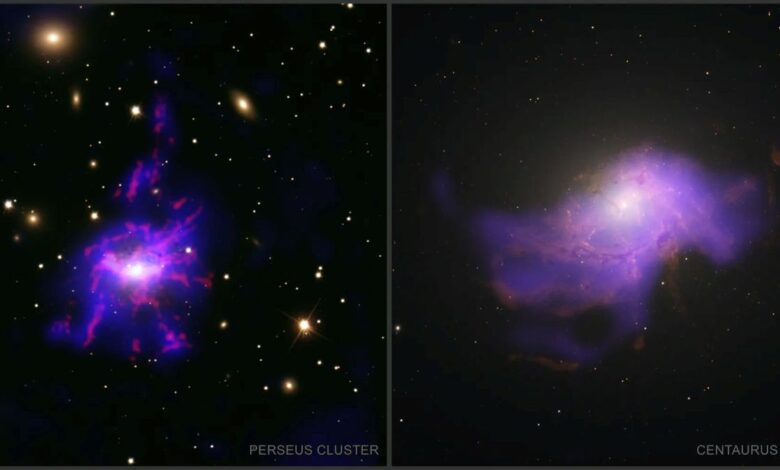
Astronomers have taken a crucial step in showing that the most massive black holes in the universe can create their own meals. Data from NASA’s Chandra X-ray Observatory and the Very Large Telescope (VLT) provide new evidence that outbursts from black holes can help cool down gas to feed themselves. This study was based on observations of seven clusters of galaxies. The centers of galaxy…
Read More »