Curiosity Rover

  • NASA

    Curiosity Blog, Sols 4947-4953: Gale Crater Then and Now

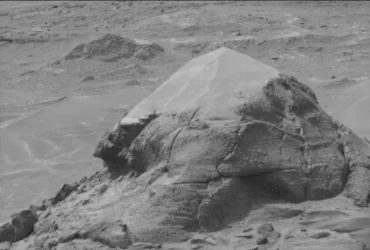
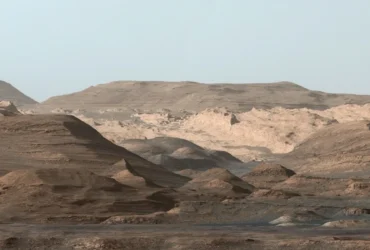
    Written by Alex Innanen, Atmospheric Scientist at York University, Toronto Earth planning date: Friday, July 10, 2026 Curiosity had a successful long weekend and came into this week ready to explore some more. We’ve been moving fairly rapidly through different mapped “units,” or distinct geological areas of interest, visiting a different one at each of our three stops this week.…

    Read More »
  • NASA

    Curiosity Blog, Sols 4941-4947: (Pin)Stripes on the Fourth of July

    Written by Deborah Padgett, MSL Operations Product Ground System Task Lead at NASA’s Jet Propulsion Laboratory Earth planning date: Thursday, July 2, 2026 Curiosity spent the week leading up to the Fourth of July holiday approaching a geologic boundary between a very smooth but somewhat sandy region and a rougher bedrock unit.  Leaving the polygonal terrain behind, the rover arrived…

    Read More »
  • NASA

    Curiosity Blog, Sols 4934-4940: In the Land of the Polygons

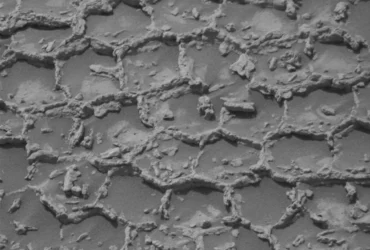
    Written by William Farrand, Senior Research Scientist, Space Science Institute Earth planning date: Friday, June 26, 2026 There were two planning cycles over this span of sols. The Monday planning took place with Curiosity situated within a unit that from orbital imagery appeared light-toned, and from earlier rover positions appeared smooth. Reaching this unit, the rover team was surprised to…

    Read More »
  • NASA

    Curiosity Blog, Sols 4920-4926: Surveying the Bands

    Written by William Farrand, Senior Research Scientist, Space Science Institute Earth planning date: Friday, June 12, 2026 Rather than going from stage to stage at a music festival to hear different bands playing different varieties of music, Curiosity has been ascending up Mount Sharp through physical bands of exposed rocks with textural and tonal differences. Planning for sols 4920 and…

    Read More »
  • NASA

    Curiosity Blog: Sols 4913-4919: Planetary explorers, freewheeling to the Yardang unit!

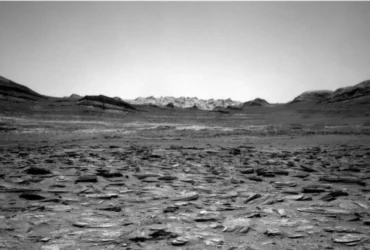
    Written by Catherine O’Connell-Cooper, APXS Strategic Planner and Payload Uplink/Downlink Lead, University of New Brunswick, Canada Earth planning day: Friday, June 5th, 2026 In a very broad sense, Curiosity has two modes of doing science – one centred around a defined science campaign (such as the recent boxwork campaign) and the other as we move between campaigns. During a science…

    Read More »
  • NASA

    Curiosity Blog, Sols 4908-4912: Goodbye Campo Marte, It’s Been Fun!

    By Susanne P. Schwenzer, Professor of Planetary Mineralogy at The Open University, UK Earth planning date: Friday, May 29, 2026 Drilling always keeps the rover in place for a little while, and our 47th successful drill, “Campo Marte,” was no exception. The team used the time wisely and on top of the drilling, we also have many observations. Thinking for…

    Read More »
  • NASA

    NASA Uses Mineralogical Marker to Understand Ancient Martian Climate

    While NASA imagery has shown evidence of ancient rivers and lakes on Mars that transitioned to dry dunes, uncertainty remains over the timing of the environmental changes that may have contributed to these shifts. Now, data collected by NASA’s Curiosity rover has revealed that individual crystals in the iron oxide hematite can be used as a mineralogical marker of changes…

    Read More »
  • NASA

    Curiosity Blog, Sols 4893-4899: Drilling at Campo Marte and a Visit From the Psyche Spacecraft

    Written by Lucy Lim, Planetary Scientist at NASA Goddard Space Flight Center Earth planning date: Friday, May 15, 2026 After freeing the rover’s arm from the “Atacama” block, we are ready to drill again! The new drill target will represent the same geologic stratum as Atacama, which is the layered sulfate unit above the boxwork structures. We’ve named the new block “Campo…

    Read More »
  • NASA

    Curiosity Blog, Sols 4879-4885: Struggle at Atacama

    Written by William Farrand, Senior Research Scientist, Space Science Institute Earth planning date: Friday, May 1, 2026 Chile’s Atacama desert is the driest mid-latitude desert in the world, receiving only 15 millimeters (0.59 inches) of precipitation per year. Only the dry valleys of Antarctica receive less precipitation. These environmental conditions have made the Atacama a challenging place to survive in.…

    Read More »
  • NASA

    NASA’s Curiosity Rover Frees Its Drill From a Rock

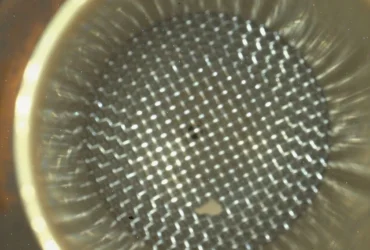
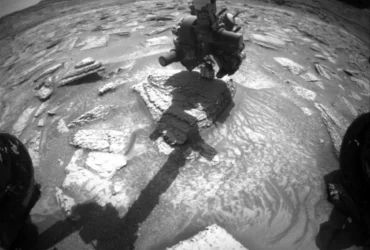
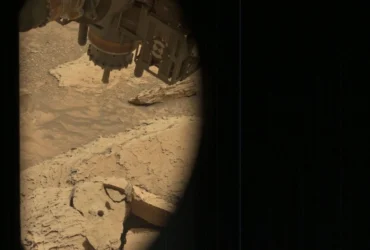
    Description This series of images shows NASA’s Curiosity Mars rover as it got a rock stuck to the drill on the end of its robotic arm and, after waving the arm and running the drill a few times, finally detached the rock. The imagery showing the entire process was captured by the black-and-white hazard cameras on the front of Curiosity’s…

    Read More »
Back to top button