Earth

  • NASA

    Sensing the Poles’ Hidden Heat

    At the top and bottom of the planet, the seasons arrive on a schedule all their own. Satellite data from a mission measuring infrared energy reveal just how differently—and how dramatically—surface temperatures swing across two full years at the poles. In this animation, surface temperatures across the Arctic and Antarctic pulse between cold (dark blue) and milder to warm (lighter…

    Read More »
  • NASA

    The Paradox of Lençóis Maranhenses National Park

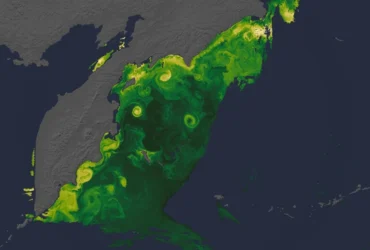
    The coastal dune system in Lençóis Maranhenses National Park in northeastern Brazil is among the most surreal landscapes on Earth. At first glance, the park looks like a desert, but it is far from it. This place receives about 125 centimeters (50 inches) of rain per year—slightly more than Seattle and double what falls in London.  The result is a paradox: rows…

    Read More »
  • NASA

    A New Compact Instrument Enables High-Fidelity Measurements of Energetic Particles on CubeSats

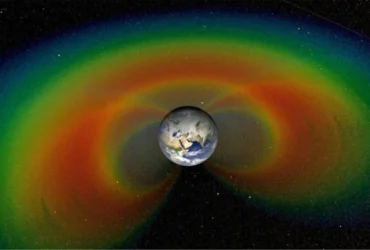
    A team of NASA-sponsored scientists and engineers has developed a novel approach to observing high-energy particles in the near-Earth space environment, incorporating miniaturized sensors into a compact, multi-view particle detection instrument unlike any before it. Built for NASA’s Relativistic Electron Atmospheric Loss (REAL) CubeSat mission, the innovative instrument (also called REAL) enables more complete measurements of how energetic particles are…

    Read More »
  • NASA

    Good Morning, Earth!

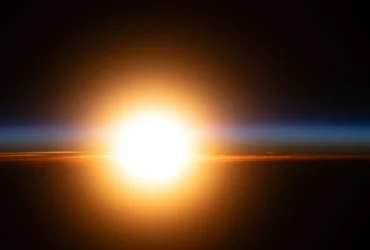
    NASA astronaut Chris Williams took this photo of an orbital sunrise from the International Space Station on June 26, 2026. In 24 hours, the space station makes 16 orbits of Earth, traveling through 16 sunrises and sunsets. Learn more about the orbiting laboratory. Image credit: NASA/Chris Williams

    Read More »
  • NASA

    A Moonlit Earth as Seen From Artemis II

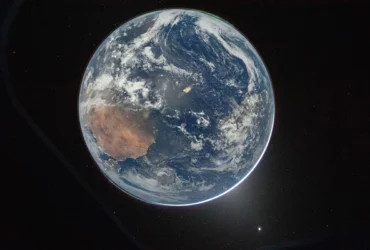
    One of the first images transmitted back to Earth from the Artemis II mission was a stunner. In a single image, Earth’s full disk appears amid celestial phenomena that illustrate its place in the solar system. And although the visible hemisphere appears to be awash in sunlight, it is actually lit by moonlight. The astronauts’ vantage point provided a rare opportunity to…

    Read More »
  • NASA

    NASA Finds New Way Earth May Have Received Elements Needed for Life

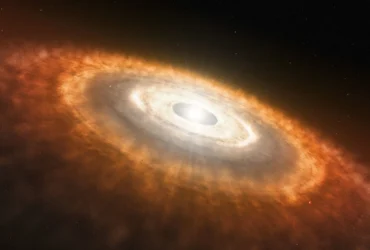
    NASA-supported scientists have provided new information about how the early Earth may have acquired some elements necessary for the planet to become habitable. They also suggest a new role for Jupiter in the distribution of these elements throughout the young solar system. The study, published today in Science Advances, examines this history by looking at the ratio of phosphorus to nitrogen…

    Read More »
  • Press Releases

    Picturing Earth in a New Light

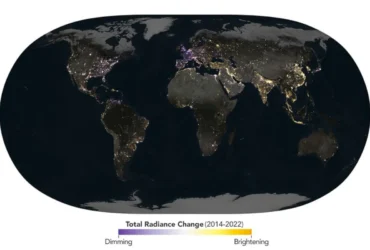
    Maps can show more than just where things are—they can also show how things change. New maps of artificial light reveal a planet that has been reshaping its nights through patterns of brightening and dimming. The maps are based on a recent analysis of NASA’s Black Marble data, which found that instead of a gradual increase in artificial light at night over…

    Read More »
  • NASA

    New NASA Views of Earth, From (S)PACE

    NASA’s photos of Earth released during Artemis II’s mission around the moon show our planet against the dark backdrop of space. Auroras illuminated the thin atmosphere, city lights dotted the outline of continents, and brown deserts gave way to green vegetation. Are those city lights normally this bright? What kind of clouds are swirling over the Atlantic Ocean? Is that hazy brown…

    Read More »
  • NASA

    New Perspective of Home

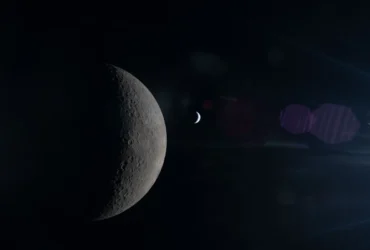
    Seen during Artemis II’s lunar flyby on April 6, 2026, the Moon and Earth align in the same frame, each partially illuminated by the Sun. The Moon’s surface appears in sharp detail in the foreground, while Earth sits much farther away, smaller and softly lit in the background. A faint reflection in the spacecraft window is also visible, subtly overlaying the scene. Though…

    Read More »
  • NASA

    Earthset From the Lunar Far Side

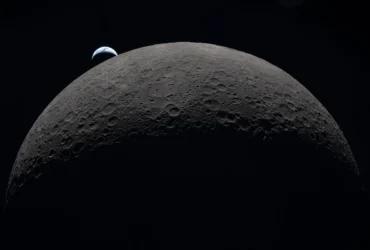
    NASA’s Artemis II mission will conclude its 10-day journey around the Moon on April 10, 2026, when the crew splashes down off the California coast. While additional imagery will continue to be processed after their return, the astronauts have already delivered a remarkable collection of photos. Among them is a shot of Earthset, echoing the iconic Earthrise photos taken by Apollo 8…

    Read More »
Back to top button